Pick Your Pocket: The Three Junctions
Most of West Seattle's shops and services gather at three intersections along California Avenue SW. Find out which junction sits closest to a listing, and you will have a good sense of what your daily routine might look like.
Alaska Junction
Locals just call this the Junction, the main business district centered where California Avenue SW meets SW Alaska Street. Stroll over on a Sunday for the West Seattle Farmers Market at the Junction, which runs every week, year round, and has recently operated from 10 am to 2 pm. Times can change, so check with the market before you plan your morning around it.
Every July the Junction also hosts West Seattle Summer Fest, a multi-day street festival of live music, shopping and art galleries that dates to 1982. If you live close by, expect festival crowds that week.
Admiral Junction
Head to the north end of the peninsula, where California Avenue SW crosses SW Admiral Way. Here the Admiral Theater has stood as a protected City of Seattle landmark since 1993. A few blocks away on 42nd Ave SW, the West Seattle Branch of the Seattle Public Library earned landmark status in 2003.
Keep going north on California Avenue and you reach Hamilton Viewpoint Park, nearly 17 acres the city bought in 1914. It makes an easy spot for an evening walk with a view.
Morgan Junction
To the south, Fauntleroy Way SW, SW Morgan Street and California Avenue SW come together at a smaller hub. You can walk to a city park, a branch library and two landmarks with little effort. Choose this pocket if you want neighborhood conveniences at a gentler pace than the main Junction.
Waterfront Living at Alki
Alki Point is where the Denny Party landed in November 1851, on land already home to Coast Salish villages of the Duwamish and Suquamish peoples. Stop by the Log House Museum near the point, run by the Southwest Seattle Historical Society, to learn that story.
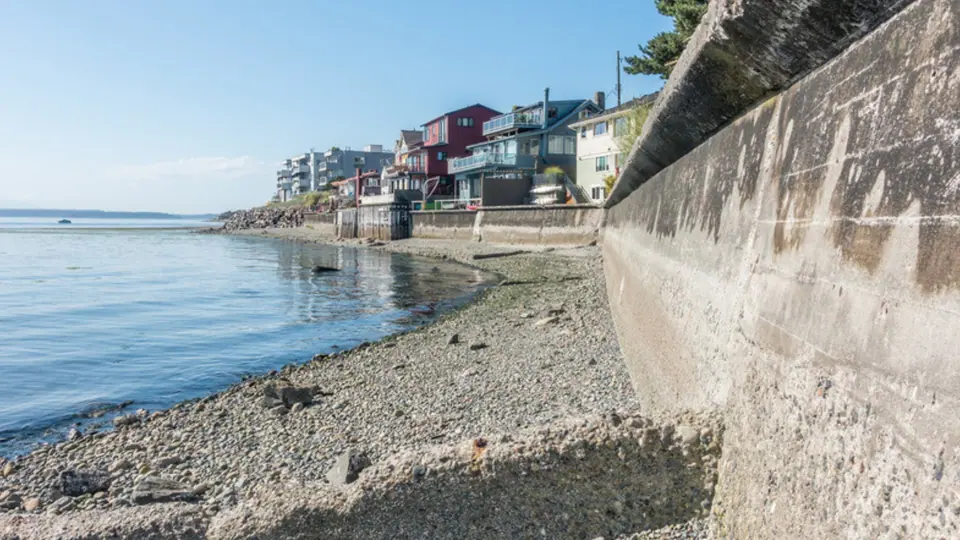
Alki Beach Park stretches along Elliott Bay from Alki Point to Duwamish Head, and it is the most popular beach in the Seattle area. Expect sand, driftwood, fire pits and tidepools to explore at low tide. Bikers and runners love the flat shoreline path, with the skyline and the Olympics in view.
For renters, that popularity cuts both ways: you get a beach and trail at your door, along with visitors on busy summer days. Just south on Beach Drive SW, Me-Kwa-Mooks Park spreads across about 20 acres on the old Schmitz family homestead.
Parks for Everyday Life
Few parts of Seattle pack in this much parkland, much of it within the West Duwamish Greenbelt. If outdoor time matters to you, look for an apartment near one of the larger parks.
Lincoln Park
Spend an afternoon at Lincoln Park, 135 acres on Puget Sound. Wander forest trails over the bluff, then follow the paved path along the beach below. In summer, take a dip in Colman Pool, heated saltwater swimming at the water's edge, while kids hunt for the giant troll in the woods.
Fauntleroy Park and Solstice P-Patch
Fauntleroy Park protects about 33 acres of forest and wetland where Fauntleroy Creek begins. Come here for quiet walks, birdwatching and nature study, since the park is set aside for those rather than sports. Nearby, the Solstice P-Patch has 34 garden plots, a welcome option if you live in an apartment and miss having dirt to dig in.
High Point: Homes on the City's Highest Hill
Climb to Myrtle Reservoir Park near 35th Avenue SW and SW Myrtle Street in High Point, and you are standing on the highest spot in Seattle. It rises 520 feet above sea level, marked by two large water towers.
The neighborhood began as wartime government housing during World War II. Starting in 2003, the Seattle Housing Authority rebuilt it as a mixed-income community of about 1,600 new homes, with porous sidewalks and parking areas, including the only porous pavement street in Washington state.
Seattle Rental Rules for West Seattle Tenants
Renting in West Seattle means renting under Seattle's rules. Washington's Residential Landlord-Tenant Act sets the statewide baseline, and the city adds its own stricter regulations on top. Browse the City of Seattle's Renting in Seattle program for explanations of rental regulations, fair housing laws and practical tips for tenants and landlords.
The Renter's Handbook
Seattle requires landlords to give you a printed copy of the Renter's Handbook when you sign an initial rental agreement. Digital copies are allowed at renewal, annually for month-to-month tenants, and whenever the city updates the handbook. It follows the stages of a tenancy and includes an index for looking up specific terms.
If your landlord does not hand you one at signing, ask for it. You can also download a printer-friendly version from the city's site.
Short-Term Rentals Follow Different Rules
Seattle treats stays of fewer than 30 consecutive nights as short-term rentals, which fall under separate licensing rules, while a unit rented for longer counts as a regular dwelling. If you book a shorter furnished stay while you search, know that a different set of regulations applies.
Before You Sign
- Map your junction: decide whether Alaska, Admiral or Morgan Junction best fits your shopping and transit needs.
- Ride the commute: the peninsula connects by bridges, buses and boats, so try the trip at rush hour.
- Weigh the beach: Alki living brings waterfront views along with summer crowds.
- Get your handbook: a printed Renter's Handbook is required with a new lease.
- Check official sources: for current rental rules, contact the City of Seattle's Renting in Seattle office.