Arctic and cold-water animals
Walk the Arctic Tundra loop to see the zoo's herd of four muskoxen grazing a grassy tundra modeled on the coast near Point Hope, Alaska, along with Arctic foxes. The zoo's last polar bear has moved to the Saint Louis Zoo, so there are no polar bears on view now. Next door at Rocky Shores, look for the Pacific walruses Balzak and Lakina, California sea lions, harbor seals, endangered sea otters, tufted and horned puffins and common murres, with Magellanic penguins nearby.
Point Defiance Park at a Glance
Few city parks feel this wild. According to its history, the land began as a military reservation after the Wilkes Expedition mapped Puget Sound in the 1840s, and President Grover Cleveland approved its use as a public park in 1888. Today it holds the zoo, a rose garden, a rhododendron garden, beaches, a boardwalk, a boathouse, a state ferry dock, Fort Nisqually, an off-leash dog park and roughly 400 acres of old-growth forest, and it draws more than three million visits a year.
The park is generally open from 30 minutes before sunrise to 30 minutes after sunset. Metro Parks Tacoma, now called Parks Tacoma, runs it, and the zoo and Fort Nisqually are the two attractions that charge admission.
Point Defiance Zoo & Aquarium in Tacoma, WA
Head to 5400 North Pearl Street for the Point Defiance Zoo & Aquarium, which dates back to 1891, when it opened with three animals; its first aquarium followed in 1933. Today you can wander habitats including the Asian Forest Sanctuary, Rocky Shores, Arctic Tundra, Red Wolf Woods, Penguin Point and a Kids' Zone, plus two aquariums.
- Pacific Seas Aquarium: The centerpiece is Baja Bay, a 280,000-gallon warm-water habitat with green sea turtles, nurse sharks and spotted eagle rays. Look for the Northwest Waters habitat behind a 25-foot window, a jelly globe the zoo calls one of only two in the country, and a Tidal Touch Zone where kids can feel sea stars and urchins.
- Tropical Reef Aquarium: A second, smaller aquarium focuses on warm reef life, so plan time for both buildings.
- Rocky Shores and the Asian Forest Sanctuary: Sea lions and harbor seals live along Rocky Shores, while tigers, otters and siamangs share the Asian Forest Sanctuary.
Hours change with the seasons. In the cooler months the zoo has kept daytime hours of 9 a.m. to 3:30 p.m. and closed on Tuesdays and Wednesdays, then opened daily over the winter holidays, so check the hours page before you drive down. Because daytime admission ends in mid-afternoon in winter, arrive in the morning if you also want time for the beach and trails.
On prices, the zoo is cashless, online tickets cost less than tickets bought at the front gate, and Pierce County residents and U.S. military visitors get a lower rate at the admission window. Children 2 and under get in free, and parking is free.
Zoolights in Winter
Zoolights usually runs nightly from late November into early January, with the gates opening in the late afternoon and closing around 10 p.m., and it closes on Christmas Eve and Christmas Day. More than 2 million lights fill the grounds, with displays ranging from a giant Pacific octopus to the Narrows bridges and a tunnel of lights.
A few things catch first-timers off guard. The Zoolights page notes that online timed tickets are required, the aquariums are closed and the animals are asleep during the event, and it goes ahead rain or shine with no refunds. Come during the day if you want to see the animals, and dress for a wet evening walk.
Owen Beach, Five Mile Drive and the Trails
Owen Beach
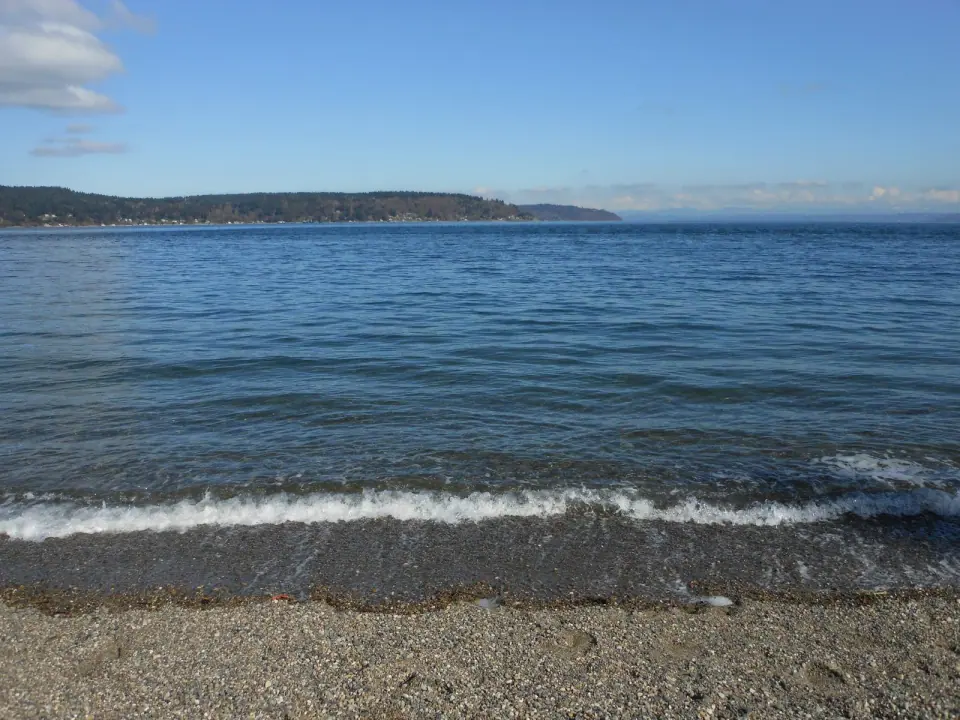
Owen Beach is a pebbly stretch of shoreline looking out across the water toward Vashon Island, and it makes a natural place to slow down after a morning at the zoo. Watch the tide line in late summer and early fall: harbor seal pups often rest on the beaches north of Owen Beach, and you and your dog should keep your distance so they are not disturbed. In winter, sea lions feed in the currents off the northern point.
Five Mile Drive
Five Mile Drive was built in 1913 as a scenic loop around the peninsula. Since May 2022 the outer loop has been closed to cars because of erosion and unstable slopes, leaving a 2.25-mile stretch between the Owen Beach entrance and Fort Nisqually open to walkers, runners and cyclists. Trails off the loop lead to bluff-top viewpoints looking toward Gig Harbor, Vashon Island and the Tacoma Narrows Bridge.
Parks Tacoma has also been building a 1.6-mile paved Loop Trail that links the Wilson Way Bridge, the Pagoda, the zoo, the Environmental Learning Center and Owen Beach, and construction has closed parts of the park road and Owen Beach on some days. Check for current closures before you plan a beach day.
Old-growth forest and bluffs
Trails wind through the forest under Douglas firs that are hundreds of years old and along 250-foot bluffs above the water. Bald eagles nest in the old growth, and the bluffs are a good place to scan for the occasional orca or humpback whale.
Gardens, Fort Nisqually and Dune Peninsula
- Japanese Garden and the Pagoda: The Pagoda was built in 1914 as a streetcar station and later became a gathering space beside the Japanese Garden. Stroll the pond paths, then look for the nearby rose, dahlia, iris, fuchsia, herb and native plant gardens.
- Rhododendron Garden: Wander the shaded paths of this woodland garden, a quiet contrast to the busy zoo lots.
- Fort Nisqually Living History Museum: This is a living history re-creation of a 19th-century Hudson's Bay Company trading post, and some programs bring in volunteers in period dress. It charges its own admission, so check its hours before you go.
- Dune Peninsula and the Frank Herbert Trail: Opened in July 2019 on the site of a former copper smelter, this 11-acre point east of the ferry terminal honors Tacoma-born Dune author Frank Herbert and sits beside the park's sheltered harbor and boat launch.
Getting There From Seattle
By car: The zoo puts the drive at about 40 miles and an hour from Seattle. Its directions page suggests taking I-5 to exit 132, following SR 16 west to the Pearl Street and Ruston exit, then driving north on Pearl Street to the roundabout at the park entrance. For a prettier approach, take I-705 and Schuster Parkway onto Ruston Way and follow the waterfront for 2.8 miles. Parking at the park and the zoo is free.
By transit: Ride ST Express Route 594, which runs every day, or the weekday Sounder train to Tacoma, then connect to Pierce Transit routes 10 or 11, which stop at Pearl Street and Park Way near the park entrance. From that stop, the zoo describes a short walk along North Park Avenue and a paved trail to Five Mile Drive and the zoo entrance.
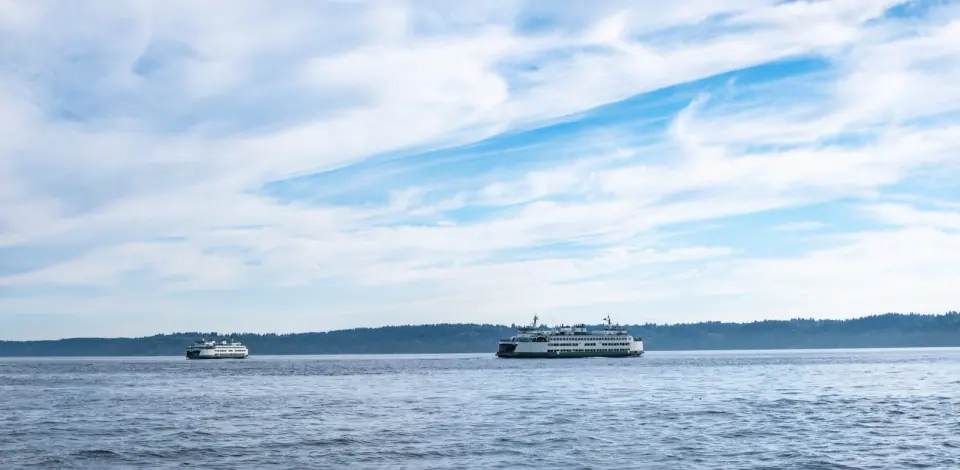
By ferry: If you are coming from Vashon Island, the Point Defiance to Tahlequah ferry crosses in about 15 minutes and docks inside the park; see our Vashon ferry guide and our overview of Seattle ferries.