Start at 34th and Union
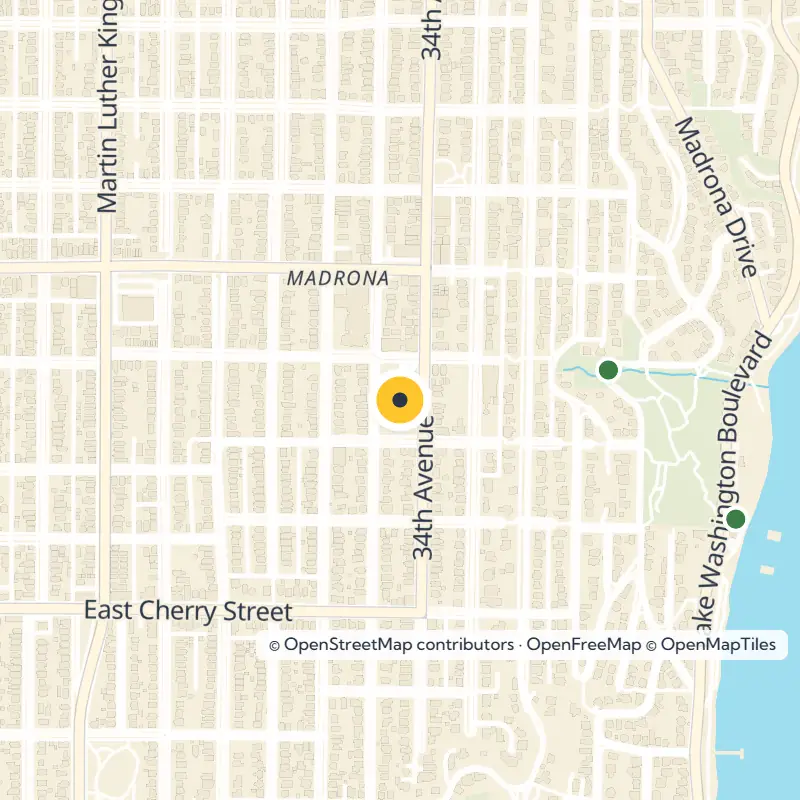
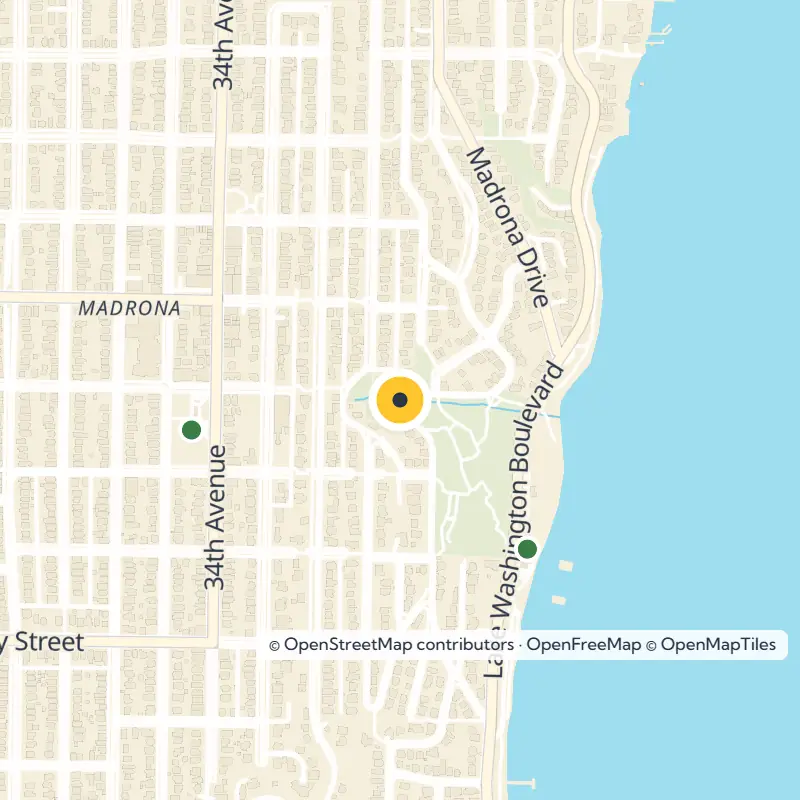
The cluster of shops and eateries around 34th Avenue and E Union is the closest thing Madrona has to a downtown. Begin or end your walk here, since the parks, the library and the landmark buildings are all within easy reach on foot.
The Story Behind the Name and Motto
The neighborhood is named for the madrona tree, a species of Arbutus with peeling reddish bark that grows widely around here. John Ayer chose the name, and he also gave the land that became Madrona Park.
Listen to locals and you will hear the neighborhood's motto, "The Peaceable Kingdom." The phrase points to a long history of racial mixing that sets Madrona apart from many Seattle neighborhoods.
Waves of newcomers
Chinese immigrants arrived in the early twentieth century, drawn by coal mining, and the later shipbuilding boom brought a large number of African American families. For much of the later twentieth century, 34th Avenue served as an informal dividing line, with mostly middle-class Black households to the west and wealthier white households to the east.
A civil rights chapter
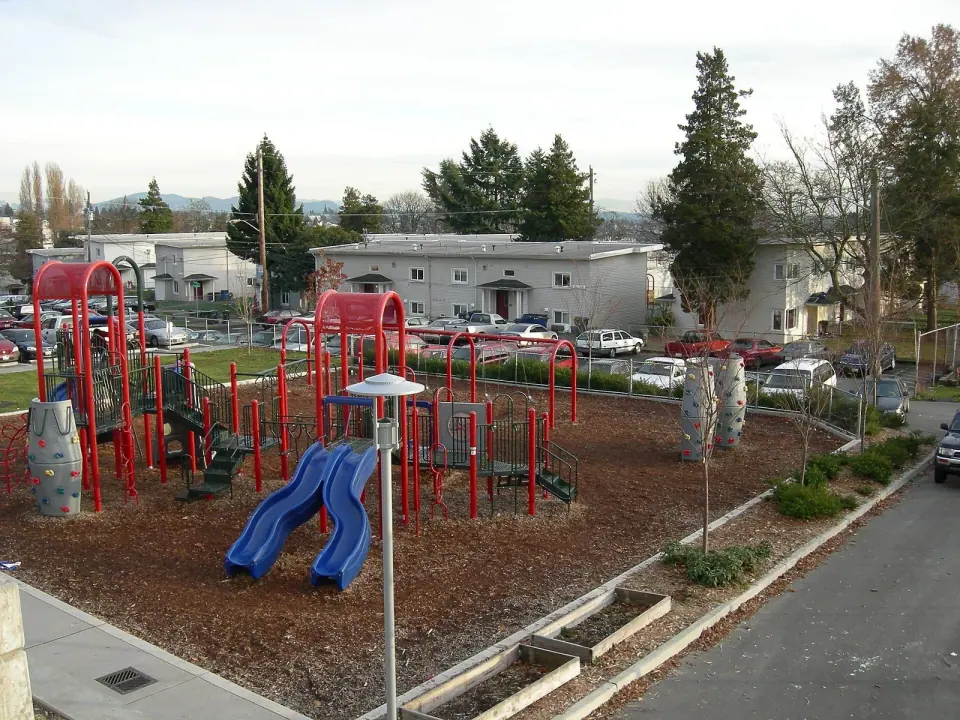
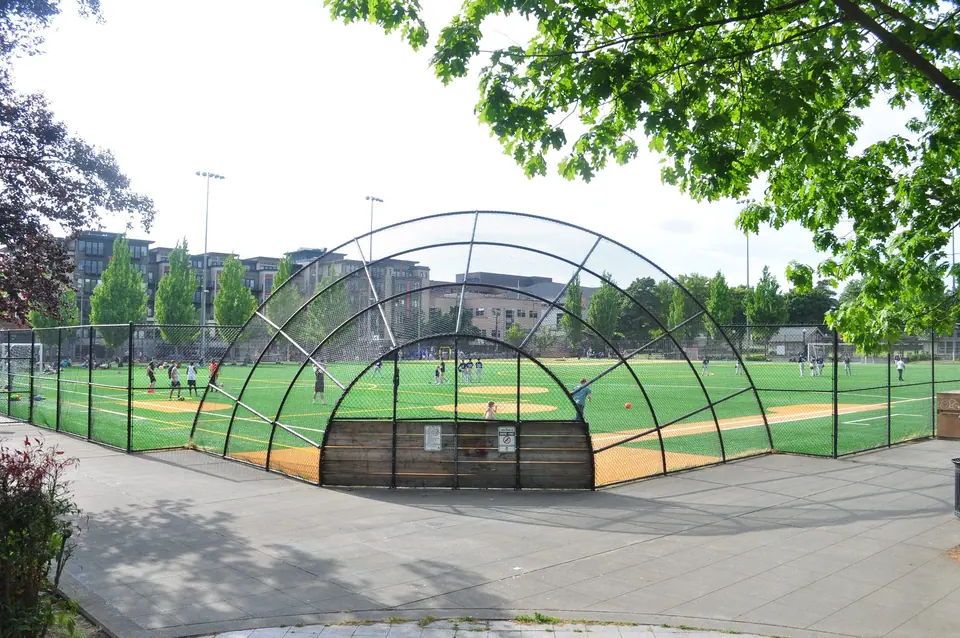
Stop by the playfield at Spring Street and 34th Avenue for a striking piece of local history, because the Black Panthers used it as their marching drill ground in Seattle. Today it is Madrona Playground, a city park that makes a good base for exploring the surrounding blocks.
A neighborhood in change
Gentrification has reshaped Madrona in recent decades. In the census tract covering the area east of 31st Avenue, the Black share of residents fell from 29 percent in 1990 to about 6 percent in the 2018 survey estimates, context that gives real weight to a stroll past the playfield and along the older streets west of 34th.
Lake Beaches and Green Spaces
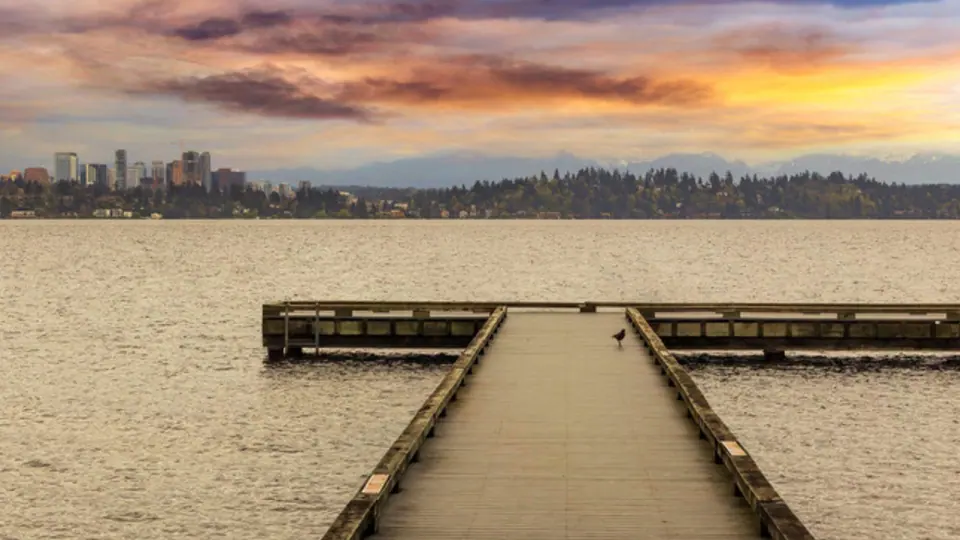
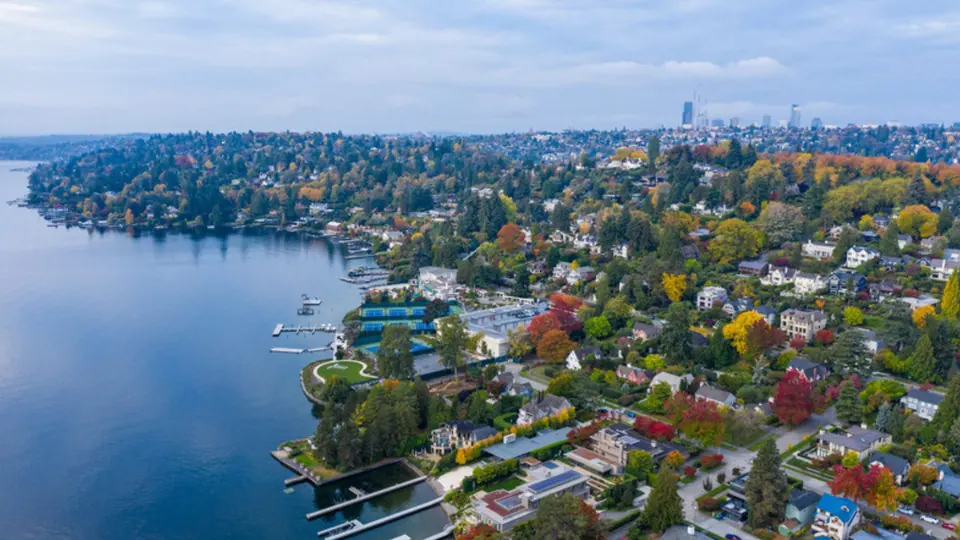
For most visitors, the lakefront is the reason to come. Madrona fits an unusual amount of parkland into a small area, from a full swimming beach to quiet patches of woods.
Madrona Park
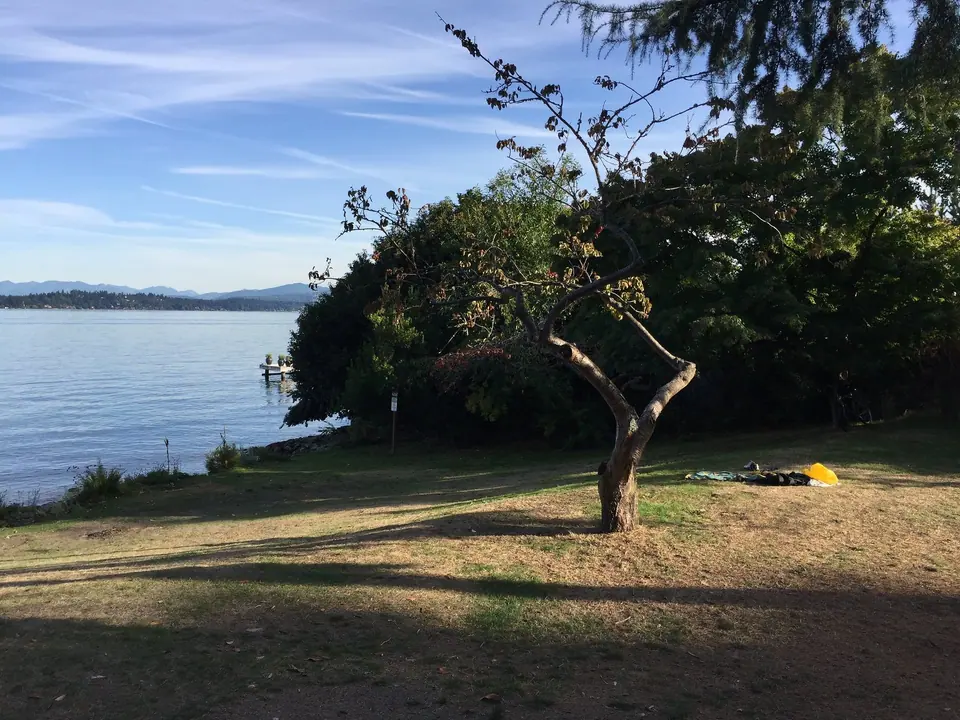
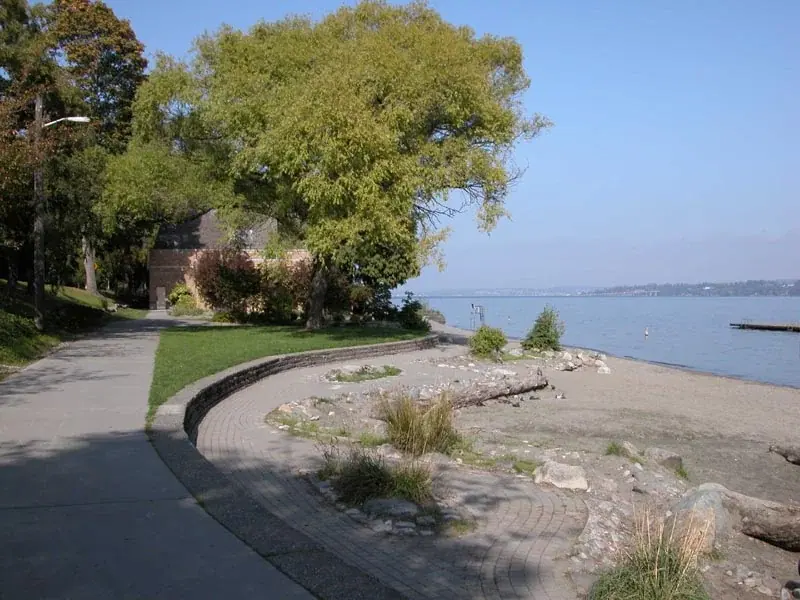
Head to Madrona Park, the neighborhood's signature open space, which stretches across 31.2 acres along the lake. Swim from the beach, use the bathhouse, then follow the wooded trails that climb uphill from the shore beside Madrona Creek. On a warm day, this is the natural place to spend an afternoon.
Howell Park
Near the northern edge you will find Howell Park, a small public beach on Lake Washington. It has long been used for nude recreation and is especially popular with gay men, so know what to expect before you go.
Madrona Ravine and smaller spaces
Climb the slope on E Spring Street to Madrona Ravine, a leafy break a short walk from both Madrona Park and the library. The city also maintains several smaller green spaces nearby, including Nora's Woods, the Madrona Briar Patch, William Grose Park and Alvin Larkins Park. Check with Seattle Parks and Recreation for current details on any of them.
Landmarks to Seek Out
Five of Seattle's more than 400 official landmarks stand in Madrona, and together they span more than a century of building styles. Several are private residences, so admire them from the sidewalk.
The library in a firehouse
Step into the Madrona-Sally Goldmark Branch library, which began life as a fire station built in 1919. After the station closed, the city turned it into a reading center and then, in 1973, the Stationhouse Branch Library. It took the name of community leader Sally Goldmark in 1986, and it holds landmark status as well.
Epiphany Chapel
Look for the Epiphany Chapel on Denny Way near the lake. The Episcopal parish of the Epiphany was founded in 1907, an idea championed by Bishop Frederick W. Keator and members of St. Mark's, and its chapel, designed by Ellsworth Storey, was completed in 1911 and named a city landmark in 1978.
Grand houses
The Charles R. Bussell house looks out toward both Lake Washington and the North Cascades. Built in 1892, its Mediterranean Revival design inside and out earned it landmark status from the City Council in 1979.
Architect Joseph S. Cote designed the Georgian-style Raymond/Ogden house in 1912 for a wealthy surgeon, Dr. Alfred Raymond, with dozens of rooms and a ballroom. Myron Ogden moved in during 1949, foreign governments used the property about ten years later, and it became a landmark in 1978.
The Brehm Brothers Houses
On 36th Avenue E, two Craftsman homes share a single lot, built for a pair of brothers using Northwest materials. Designated together as a landmark in 1979, they make a fine contrast to the grander houses nearby.
Planning Your Madrona Walk
Cover the essentials with a loop that starts at 34th and Union, drops down to Madrona Park and climbs back up through the ravine. Add the playfield and library on Spring Street for the history. The Central District Farmers Market is also close to Madrona Playground, so check its official schedule if you want to fold in a market stop.
- For swimming: head to the beach and bathhouse at Madrona Park.
- For history: pair the playfield with the firehouse library.
- For architecture: stroll the streets near the lake to see the landmark houses and chapel.
Facilities, beach hours and seasonal services can change, so confirm current details with the City of Seattle before you set out.