Sound Transit's $3.9 Billion Budget for 2027: What It Means for Link Riders
Next year's plan adds security staff, more help at Westlake Station and pilot pedestrian gates at Rainier Valley crossings. It is about $600 million larger than this year's.
Seattle Markets News
The Sound Transit Board approved a $3.9 billion budget for 2027 on Thursday, Nov. 19. For people who ride Link, Sounder and Sound Transit buses, the plan puts more security staff on the system, adds hours at the Westlake Station help booth, and pays for power and safety upgrades on the 1 and 2 Lines. Sound Transit's summary of the budget does not mention any change to fares.
Sound Transit describes three priorities: a safe, clean and reliable ride on today's service, building the projects voters approved, and taking care of what is already built.
What you will notice on the trains
- More security. The budget pays for more fare ambassadors and security staff, including 10 percent more King County Sheriff officers on the system.
- More help at Westlake. The customer service booth at Westlake Station is staffed only from 8 a.m. to 5 p.m., Tuesday through Thursday. The budget is meant to expand those hours, though Sound Transit has not said what the new hours will be.
- Cleaner cars and stations. The agency plans pilots of autonomous cleaning technology as part of its Safe, Clean and Welcoming Ride effort.
- Crossing gates in the Rainier Valley. On the 1 Line, where trains cross streets at grade, the budget pays for final design of pilot pedestrian gates at Othello and Columbia City stations and for installing pilot gates at the Royal Brougham crossing near the stadiums.
- Tunnel power. In the downtown Seattle tunnel, crews will replace aging high-voltage feeder cables that power Link trains, to make the 1 and 2 Lines more reliable. Sound Transit has not said whether the work will require service disruptions.
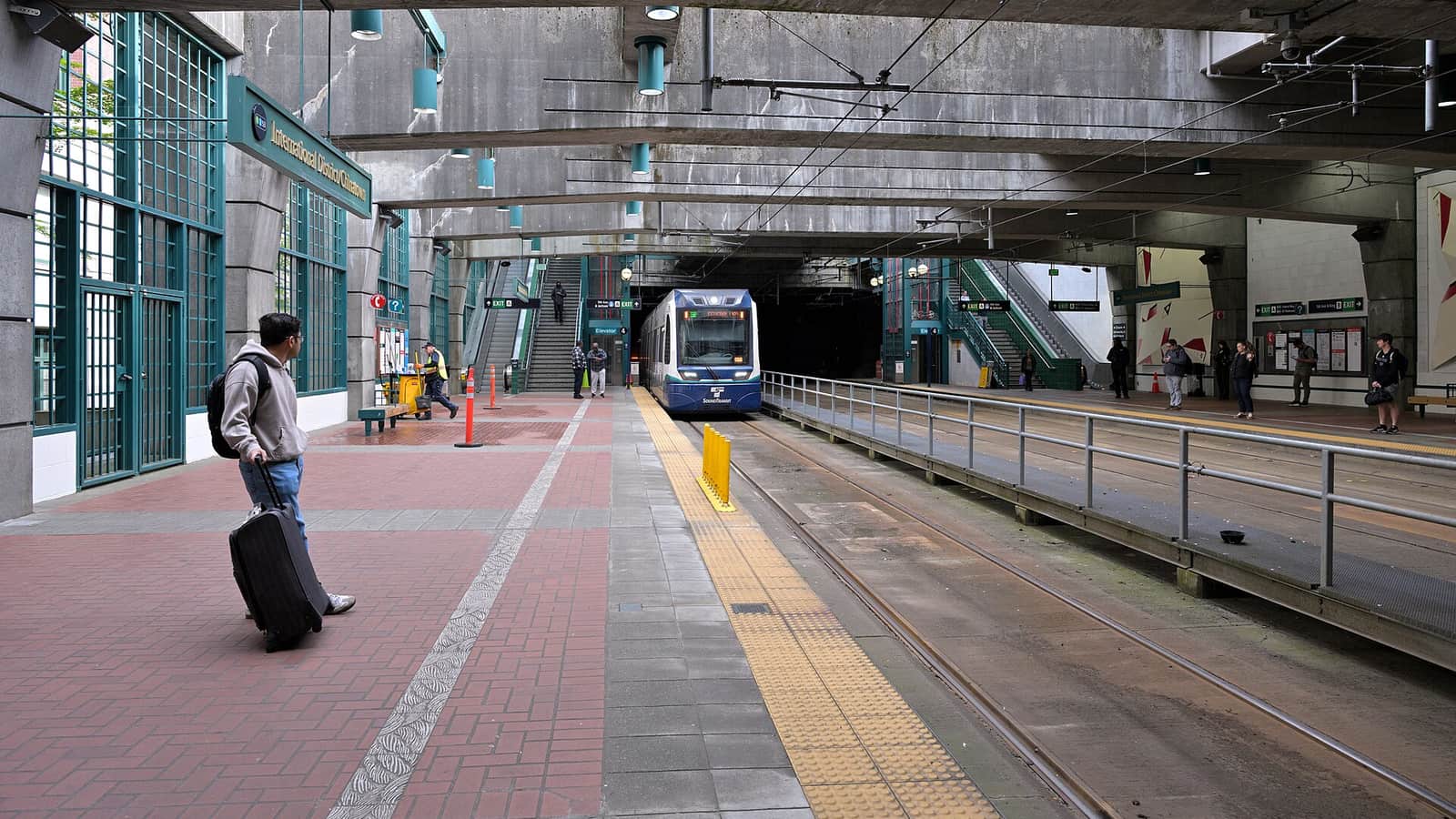
- Elevators and escalators. Upgrades are planned at several stations, which the agency did not name. It finished upgrades at International District/Chinatown Station this year.
Sound Transit also reports that from January through September this year, passenger injuries were down 32 percent, assaults on transit workers down 21 percent and collisions at street crossings down 10 percent.
How it compares with this year
We compared the 2027 plan with Sound Transit's adopted budget for this year:
| 2026 adopted | 2027 approved | |
|---|---|---|
| Total budget | $3.3 billion | $3.9 billion |
| Day to day operating costs, all modes | $912.8 million | $942 million |
That is about $600 million more overall and about $29 million more (3.2 percent) to run the trains and buses. Most of the money goes to construction: $2.3 billion for capital projects next year.
One number puts fares in perspective. This year's budget projected $84.6 million in passenger fares, enough to cover about 9 percent of the operating budget. Most of Sound Transit's money comes from regional taxes: $2.4 billion of this year's projected revenue.
What gets built
The 2027 capital budget includes:
- Opening three Sounder parking garages, in Sumner, Kent and Auburn.
- Building the Stride bus rapid transit lines on I-405 and SR 522, which are set to open in 2028 and 2029.
- Moving the West Seattle Link extension into final design, and publishing final environmental impact statements for the Ballard, Everett and Tacoma Dome extensions.
- Finishing most of the work on the Renton and Burien transit centers in late 2027.
The budget also sets aside $221 million for repairs and upkeep and $425 million for debt payments.
What is not known yet
Sound Transit has not published new Westlake booth hours, a schedule for the tunnel cable work or the list of stations getting elevator and escalator upgrades. We will follow up when it does.
Sources
Photo: 4300streetcar, Wikimedia Commons, CC BY 4.0.
Share this story