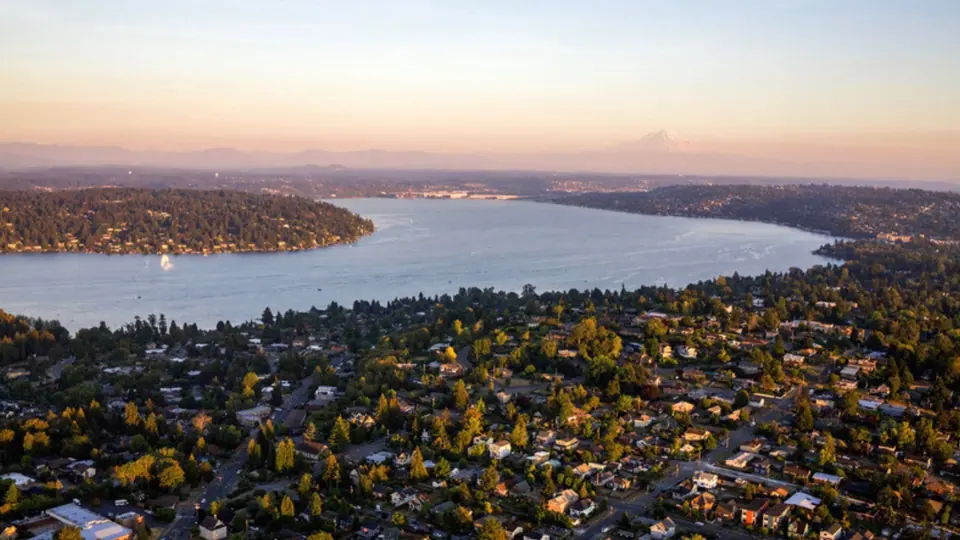
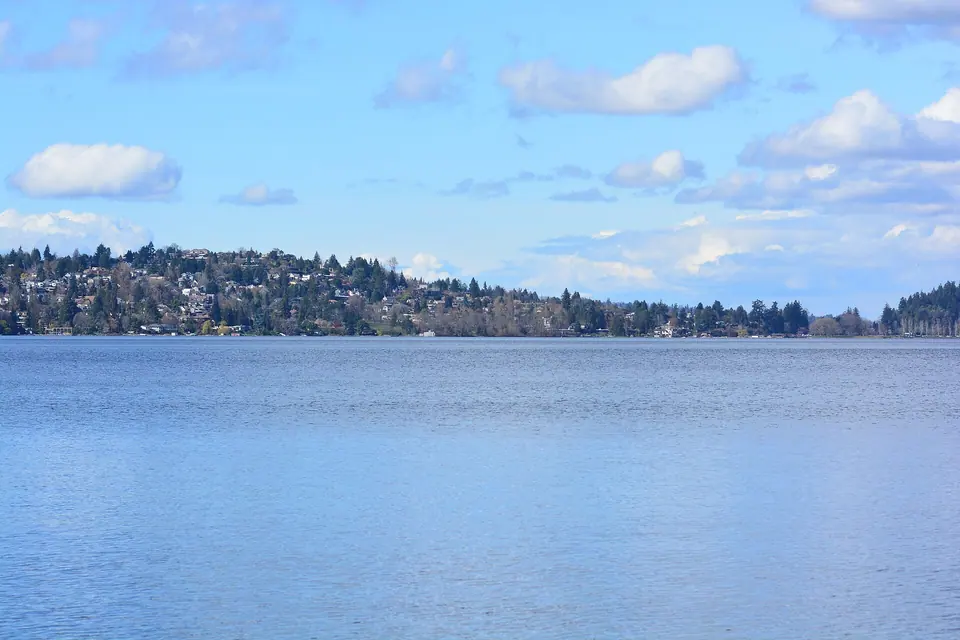
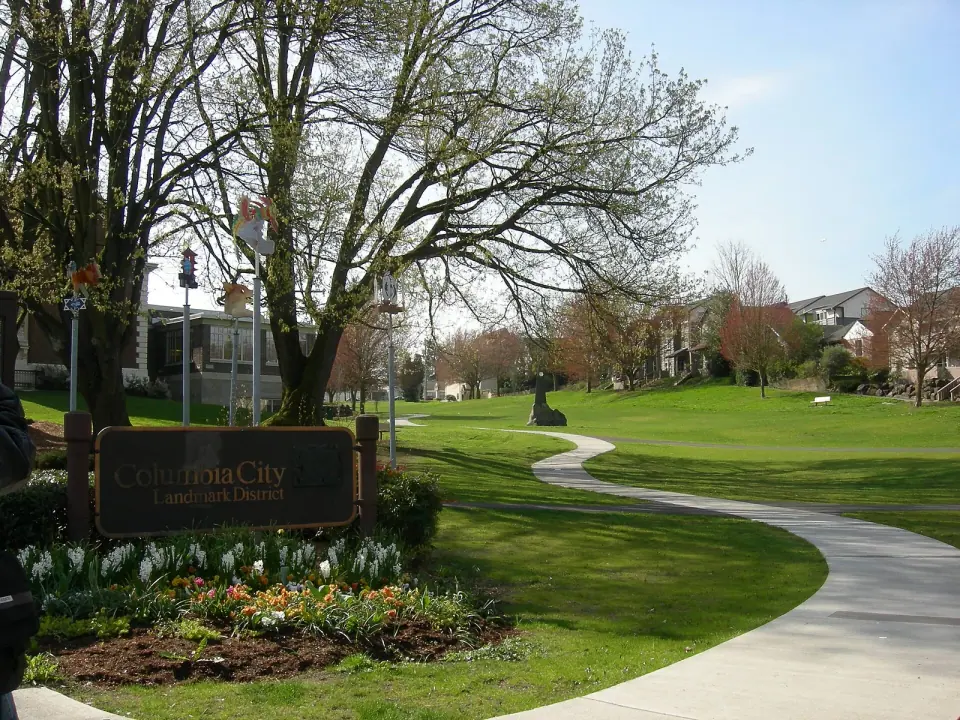
A row of homes lines a ridge just west of the park. The ridge has no official name, though some people call it Graham Hill.
A Forest Older Than the City
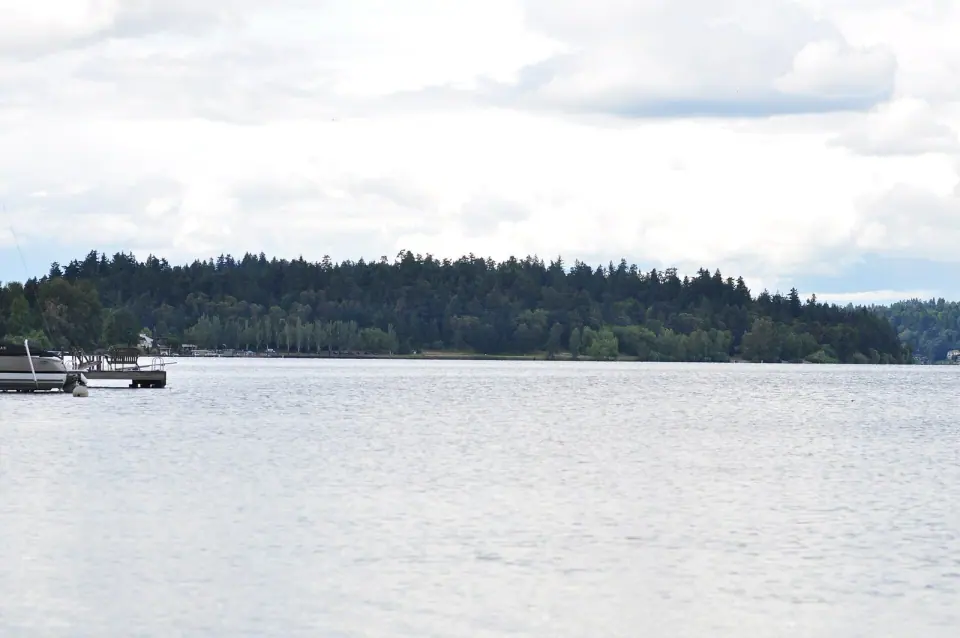
Roughly 120 of the park's 300 acres are surviving old-growth forest. Walking through it gives a sense of how parts of the Lake Washington shore looked before Seattle existed.
The forest is actually young by old-growth standards. Some trees here are more than 250 years old, and many are under 200, while the forests that stood in the Seattle area before the city were often 1,000 to 2,000 years old. A trail with granite markers cuts through the woods, and the outdoor amphitheater looks out over the trees.
The forest has drawn national attention. On April 22, 2022, President Joe Biden came to Seward Park and signed an executive order calling for an inventory of mature and old-growth trees so they could be considered for conservation.
The 2.4-Mile Perimeter Loop
The most used trail in Seward Park is the paved loop around the edge of the peninsula. It is flat, closed to cars and 2.4 miles long, and it was repaved in 2007.
The loop is a multi-use path, so expect a mix of people on it:
- Walkers and hikers
- Runners
- Cyclists
- Rollerbladers
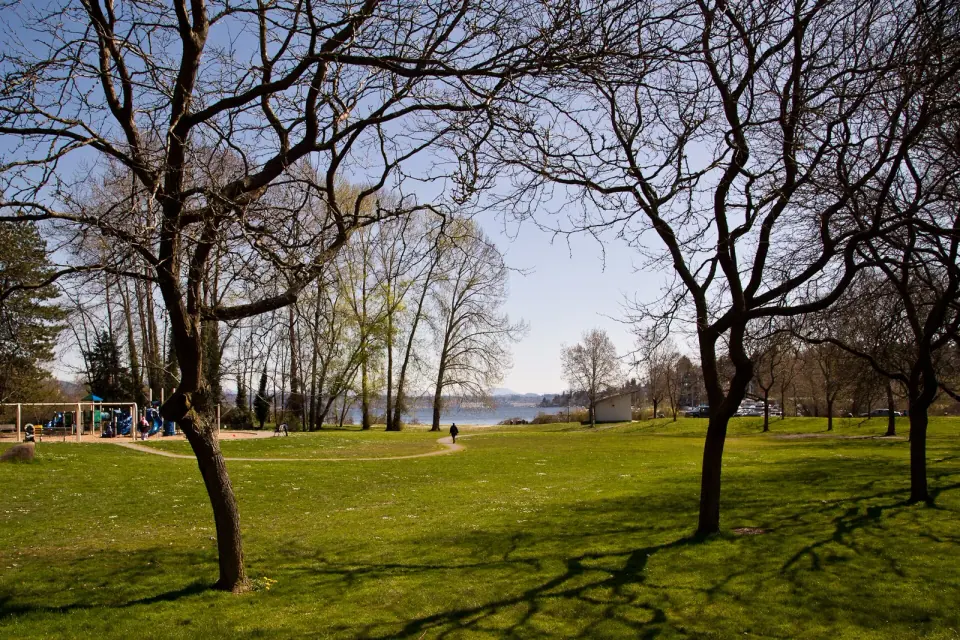
The views change as you circle the peninsula. Along the way you can see Mount Rainier, Lake Washington, Mercer Island and the Leschi and Mount Baker ridge, among other sights.
Beaches, Picnics and Play Areas
Seward Park has at least five distinct areas, each with a different feel. Interior trails and a few roads open to cars connect them, so the picnic area and amphitheater can be reached without walking the full loop.
Andrews Bay Beach
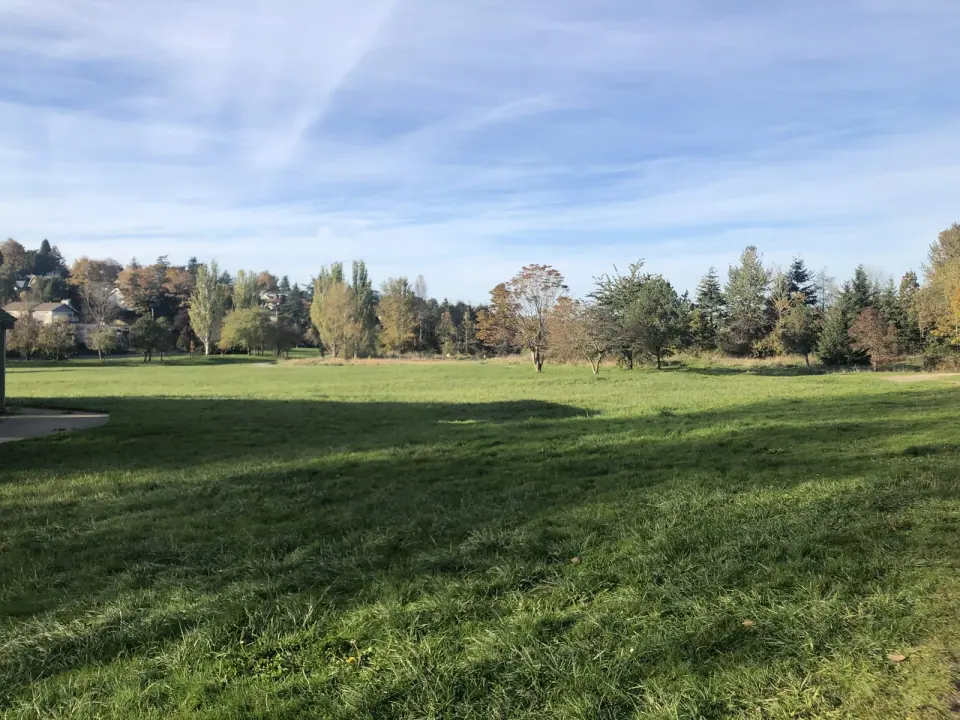
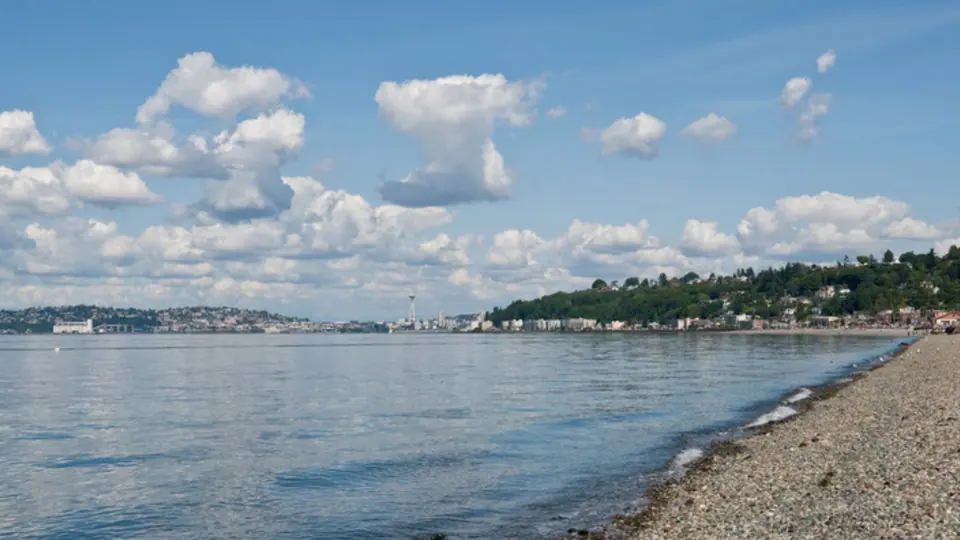
Seward Park has several small beaches, and the largest is on the southwest side along Andrews Bay. A wide lawn and other facilities sit beside it, making it a natural base for a lakeside afternoon. It is one of several lakeshore beaches in Seattle's park system.
Playground and Tennis Courts
Across from the Andrews Bay beach are a playground, tennis courts and several large parking lots. This side of the park works well for families who want everything close to the car.
Picnic Area and Amphitheater
The upper part of Seward Park holds a large picnic area and an outdoor amphitheater. Civic events take place at the amphitheater, which overlooks the old-growth forest. The park also has an arts center.
Eagles, Parrots and Rabbits
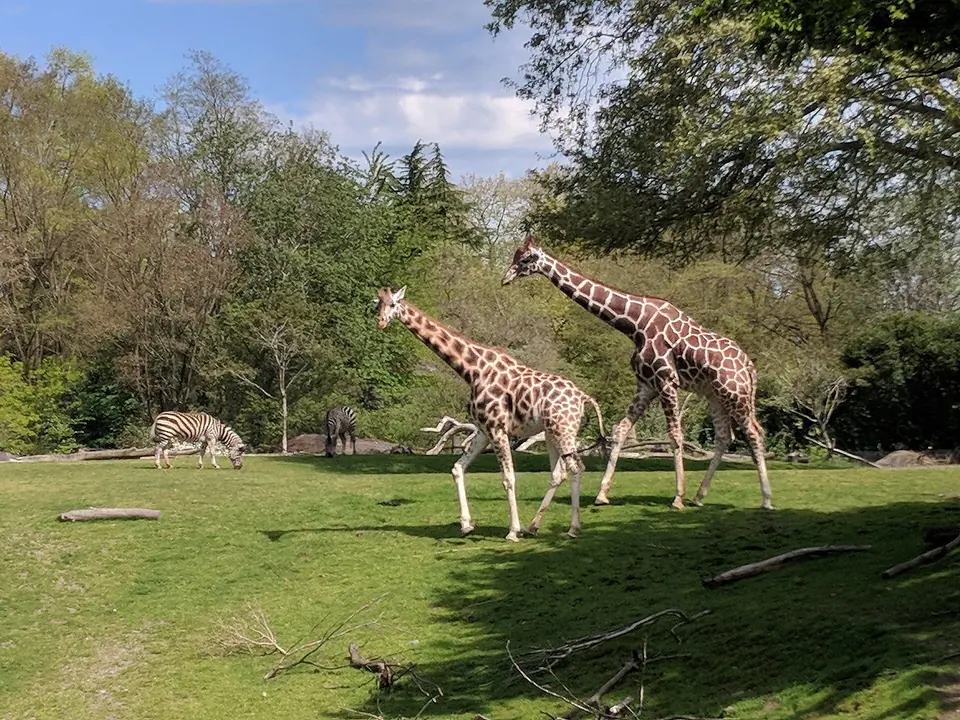
Seward Park is home to two nesting pairs of bald eagles. They are often seen flying over Lake Washington and dropping to the water to catch fish and ducks.
Less expected residents include wild rabbits and a growing colony of feral Peruvian conures, a type of parrot. The conures have been around since at least July 2004, descended from pet birds that were released or escaped. They travel between Seward Park and Maple Leaf in northeast Seattle.
Seward Park Audubon Center
The Tudor-style house at the park entrance was originally the Seward Park Inn, now a Seattle city landmark. After a renovation finished in early 2008, it became the Seward Park Audubon Center.
The center runs programs for schools, youth and the wider community, along with arts in the environment and special events, both indoors and out in the park. Inside are exhibits, an extensive library, a laboratory and a small gift shop. Check the center's official channels for current program details.
Japanese Gifts at the Entrance
Two pieces of Japanese design mark the way into Seward Park. Both are easy to miss if you drive straight to the parking lot.
The Yokohama Stone Lantern
On a small wooded island planted with flowers, between the circular entrance and exit road, stands a taiko-gata stone lantern. The City of Yokohama, Japan, gave it to Seattle in 1931 as thanks for Seattle's help after the 1923 Great Kanto earthquake.
The Torii Gate
A wooden Japanese-style torii, first built for Seattle's Potlatch festival in 1934, stood near the park entrance from 1936 until the mid-1980s, when decay forced its removal. Kichio Allen Arai designed it; he was the first Asian American architect in Seattle to be credited for his work. A new torii with stone columns and timber crossbeams was finished by early 2021 and formally dedicated in 2022.
From sqəbəqsəd to City Park
People have lived in this area since the end of the last glacial period, around 10,000 years ago. The x̌ačuʔabš, today a subgroup of the Duwamish people, traditionally gathered resources here.
The Lushootseed name for Bailey Peninsula, sqəbəqsəd, refers to the rocky points, or noses, at its north and south ends. Those points were visible before the Lake Washington Ship Canal was completed in 1916 and lowered the lake. The marshy strip linking the peninsula to the mainland is called cqalapsəb, meaning neck.
Buying the peninsula for a park was proposed as early as 1892, but it was set aside because the land felt far from the city at the time. The Olmsted Brothers later included it in their plan for Seattle's parks. In 1911 the city bought Bailey Peninsula for $322,000 and named the park for William H. Seward, the former US Secretary of State known for negotiating the Alaska Purchase.
Close By and Further Afield
The Seward Park Inn/Annex landmark is about 0.3 miles away, and Martha Washington Park is roughly 0.6 miles from Seward Park. For a different shoreline outing elsewhere in the city, consider Alki Beach Park, or browse our full list of Seattle parks to plan your next visit.