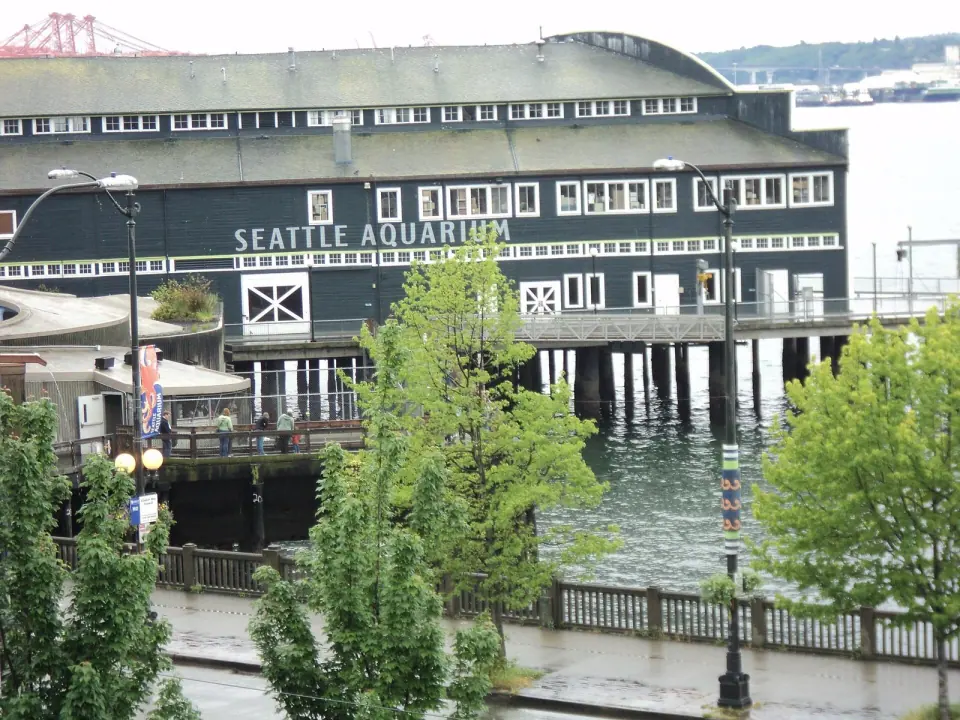
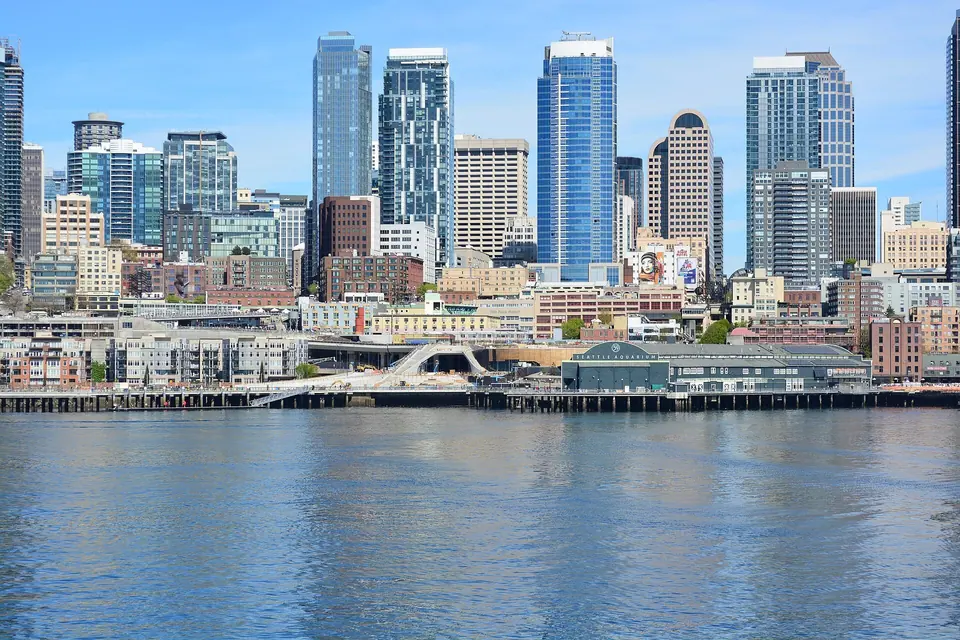
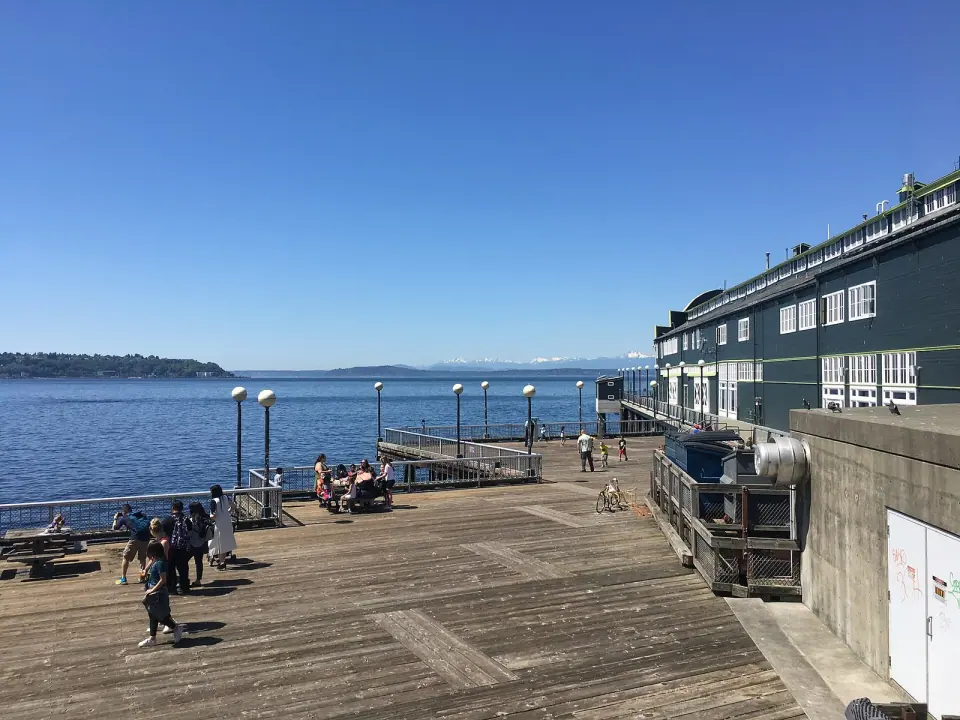
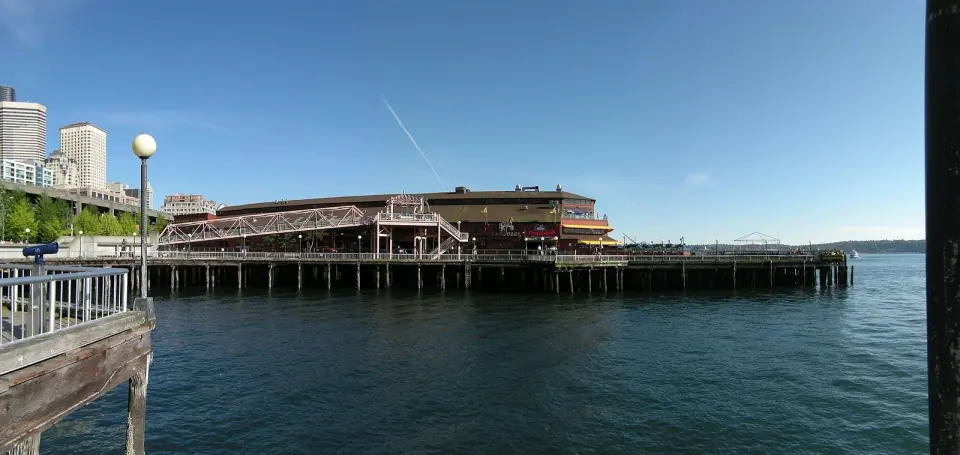
That layout turns your visit into a fascinating side-by-side comparison. Watch rockfish and lingcod from local waters, then cross over to a building filled with reef species from the far side of the Pacific.
Exploring Pier 59
Most visits begin on Pier 59, where the spotlight falls on the coastline of Washington state.
Window on Washington Waters
Step up to this 120,000-gallon tank, which recreates the state's coastal waters at depths of roughly 5 to 60 feet and is home to salmon, rockfish and sea anemones. Several times a day, divers slip into the tank wearing special masks that let them chat with you through the glass.
Touch tanks and tide pools
Roll up your sleeves at Life on the Edge, the hands-on stop where you can touch live sea stars, urchins and sea cucumbers. Two large pools with touch zones reveal tide pool life from both the outer coast and Puget Sound. Next door, Crashing Waves is a 40-foot wave tank that mimics the shoreline down to about 5 feet, where snails, limpets and other animals built for pounding surf hold their ground.
Jellies, an octopus and room for kids
- Ring of Life: stand inside a 12-foot glass donut and let moon jellies drift all around you.
- Giant Pacific octopus: circle the round tank to see the octopus and its tankmates from every side. The species is native to Puget Sound.
- A Closer Look Table: dip into a rotating set of hands-on lessons about different sea creatures.
- Caring Cove Play Space: kids and their adults can dress up, play with plush marine animals, explore pretend tide pools and settle in to read.
- Virtual Reality Experience: catch a session, offered every 15 minutes.
Pier 60: the Underwater Dome, seals and seabirds
Head next to the Underwater Dome, an original from the aquarium's 1977 opening. Here you stand inside a mostly transparent sphere set within a 400,000-gallon tank, surrounded on all sides by Puget Sound species: salmon, lingcod, sharks, sturgeon, skates and rockfish.
Spend time in the Marine Mammals area, where harbor seals, northern fur seals, sea otters and river otters can be watched both above and below the waterline. Presentations and feedings happen often, so you have good odds of catching one. Murals by Ray Troll, Grace Freeman and Marvin E. Oliver cover the enclosure walls, including two added in 2023.
Step outside to Birds and Shores, an open-air habitat for tufted puffins, rhinoceros auklets, common murres and black oystercatchers, with rocky cliffs and tide pools that support breeding. Round out Pier 60 with these stops:
- Puget Sound Fish: a three-part exhibit of eelgrass beds, deep sandy bottoms and rocky areas, where you can spot sculpins, spiny lumpsuckers, gunnels and pricklebacks.
- Salmon Life Cycle: follow the stages of a keystone species central to Puget Sound and important to Native peoples of the Pacific Northwest.
- Veterinary Care Center window: peek into the clinic where staff examine animals.
The Ocean Pavilion and its Coral Triangle sharks
Save time for the Ocean Pavilion, which opened on August 29, 2024, and replaced an older exhibit called Pacific Coral Reef. At the heart of this 50,000-square-foot building is a large tank of sharks and stingrays, joined by hundreds of species found in Indonesia's Coral Triangle.
Wander the multistory interior through areas named The Reef, The Archipelago, One Ocean Hall, At Home in the Ocean, an Animal Care Area and a Discovery Lab. The Reef gives you a big, immersive window into the main tank, while At Home in the Ocean features smaller displays, including one for garden eels.
Take a moment outside, too. LMN Architects wrapped the building in a yellow cedar exterior meant to look like driftwood, and artwork by Lummi artist Dan Friday graces the exterior and entryway. The pavilion recirculates 96 percent of its saltwater, manages tank temperatures with a heat exchanger and heat pump, and is LEED Gold certified. The project also added a new promenade with an overpass connecting to Pike Place Market.
Conservation work beyond the glass
Behind the exhibits, the Seattle Aquarium runs conservation and research programs with Indigenous peoples, governments, institutions and companies. In 2020 it cofounded ReShark, an international coalition working to restore zebra sharks in Indonesia, and as of 2023 the effort involved partners in 15 countries and 44 aquariums, with a plan to release 500 zebra shark pups in Raja Ampat. The Ocean Pavilion supports that mission with breeding space.
Closer to home, the aquarium began raising endangered pinto abalone in 2021 for release around the San Juan Islands and the Strait of Juan de Fuca, where studies in the San Juans show the species has declined by 97 percent.
Education sits at the core of the mission, with programs serving students through high school, from self-guided group visits to clinics, digital lessons and a high school volunteer program. An estimated 2 million children have taken part over the years.
How the aquarium came to the waterfront
The story starts at the ballot box, when Seattle voters approved plans for a city aquarium in the 1968 Forward Thrust initiative. The City Council first picked a site near Golden Gardens Park in Ballard in 1971, then reversed course after public outcry and chose Pier 59 the next year. Construction began in early 1975 as part of a broader Alaskan Way redevelopment that also produced Waterfront Park.
Built for $5.4 million, the aquarium opened on May 20, 1977, welcoming 1,524 visitors on day one, and opening events included releasing salmon fingerlings into Elliott Bay. Local scientists helped shape the exhibits, among them Dixy Lee Ray, then director of the Pacific Science Center and later governor.
The City of Seattle's parks department ran the aquarium at first, and a 2007 expansion added Window on Washington Waters, Crashing Waves, a gift store and a café. On July 1, 2010, the nonprofit Seattle Aquarium Society took over management under a 20-year agreement with the city. Fans of The Last of Us Part II may recognize a fictionalized version of the building from the 2020 game, and it appears in the HBO adaptation as well.
Planning your visit
Build your day around the scheduled moments, and check the times as soon as you arrive. Dive shows run several times a day at Window on Washington Waters, marine mammal presentations and feedings happen often, and the VR experience starts every 15 minutes. Bringing small children? Leave plenty of time for the touch tanks and Caring Cove.
Before you go, visit the aquarium's official website for current hours, ticket prices and online booking.