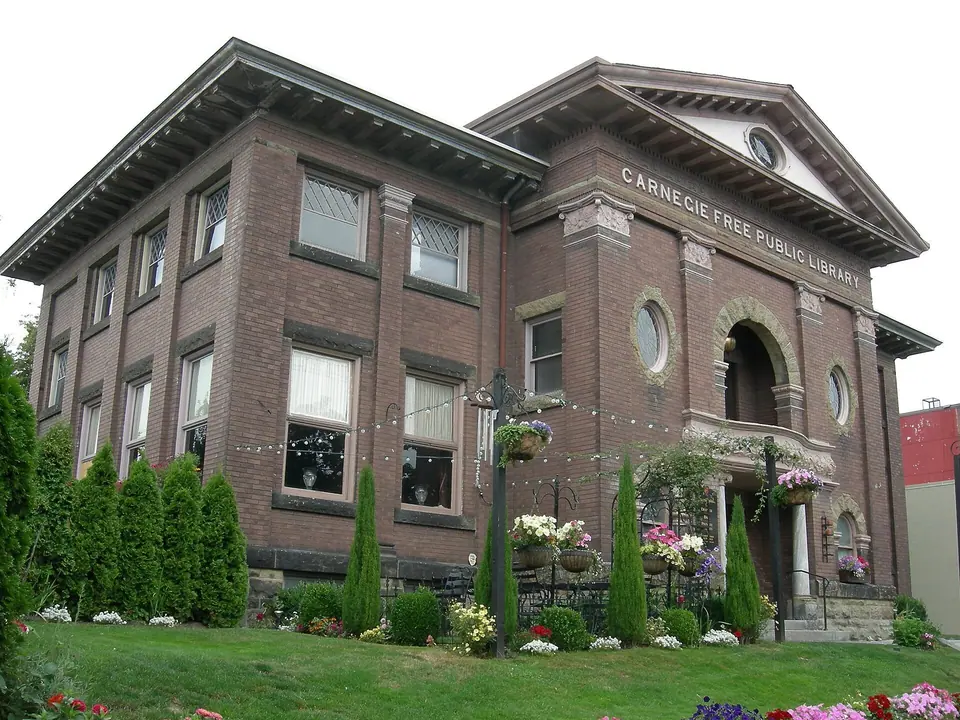
In 1903 the Ballard City Council set up a library board and asked Andrew Carnegie to help with construction. The project came together from several sources:
- A square lot measuring 100 feet on each side, bought for $2,100
- A $15,000 grant from Carnegie
- Money from local businesses and residents
- Earlier fundraising and book collections from the women's union
A chain gang handled part of the construction. As you look at the building, imagine the finished interior with its 500-seat auditorium and a men's smoking room, which was later turned into a reading room.
Opening Day Without New Books
Carnegie's grant covered the building but not a first collection, so the community stepped in. Residents and local schools set aside books for opening day, and the town appealed to citizens to donate more. In the early years, a turnstile at the entrance to the stacks counted every borrower who passed through.
From Town Library to Seattle Branch
When Seattle annexed Ballard in 1907, the Seattle Public Library took over the Ballard Carnegie Library, making it the first major branch of the city system after that annexation. Many of its early readers were Scandinavian immigrants, part of the community that shaped Ballard's identity.
The library also served as a community center in wartime. After World War I began, people gathered here to share information about the war, and the building hosted Red Cross and English language classes. In 1942, during World War II, Lucille Smith was assigned to the branch, becoming one of the first African American librarians in Seattle.
Closing in 1963 and a Long Second Life
By the 1950s the old building was seen as too small and impractical, and Seattle voters approved a bond in 1956 to replace it. The Carnegie library closed in 1963 when a newer, larger library opened in the area. Experts had also claimed the building could not withstand earthquakes, yet it has come through several since then.
After the sale, the former library welcomed a string of private businesses. Tenants have included:
- An antique store
- A kilt manufacturer
- Carnegie's, a French restaurant, from 2003 to 2010
- Ström and Ström Consulting, offering legal and marketing services to mental health professionals
- Root Integrative Health, a holistic wellness center
- The Kangaroo and Kiwi Pub, since 2012
The building is owned by Karoline Morrison and her husband, Dennis Beals.
Earning Landmark Status
Recognition arrived in two stages. Seattle architect Larry E. Johnson nominated the building for the National Register of Historic Places in 1976, and it joined the register in 1979.
Closer to home, the City of Seattle's Landmarks Preservation Board voted on November 7, 2012, to designate the Ballard Carnegie Free Public Library as a Seattle Landmark. City records list it as landmark number 374, under ordinance 124227. To see how it compares with other protected buildings, browse our guide to Seattle's designated landmarks.
A Short Walk Through Old Ballard
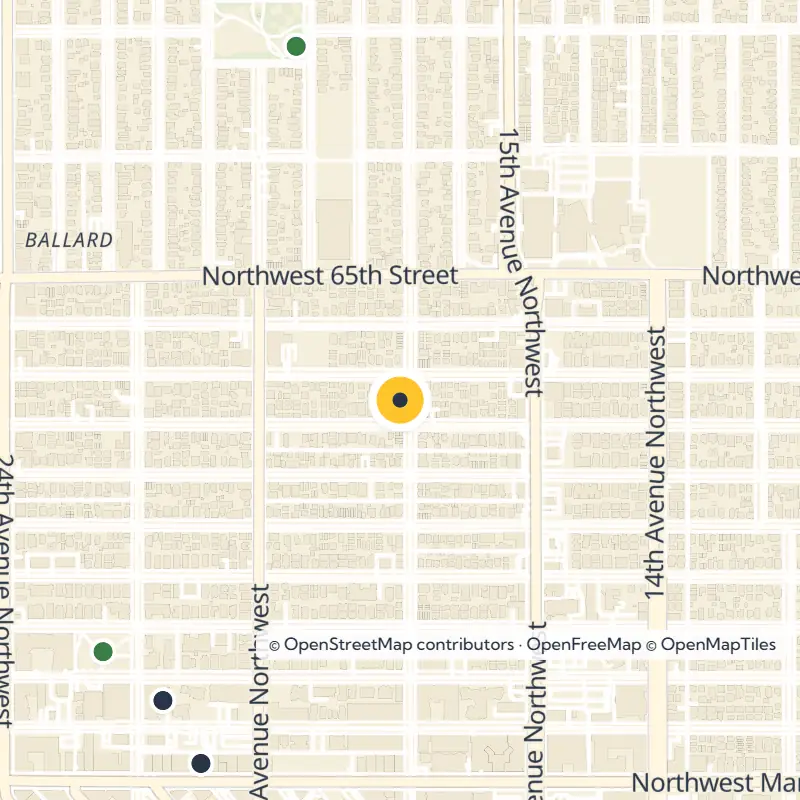
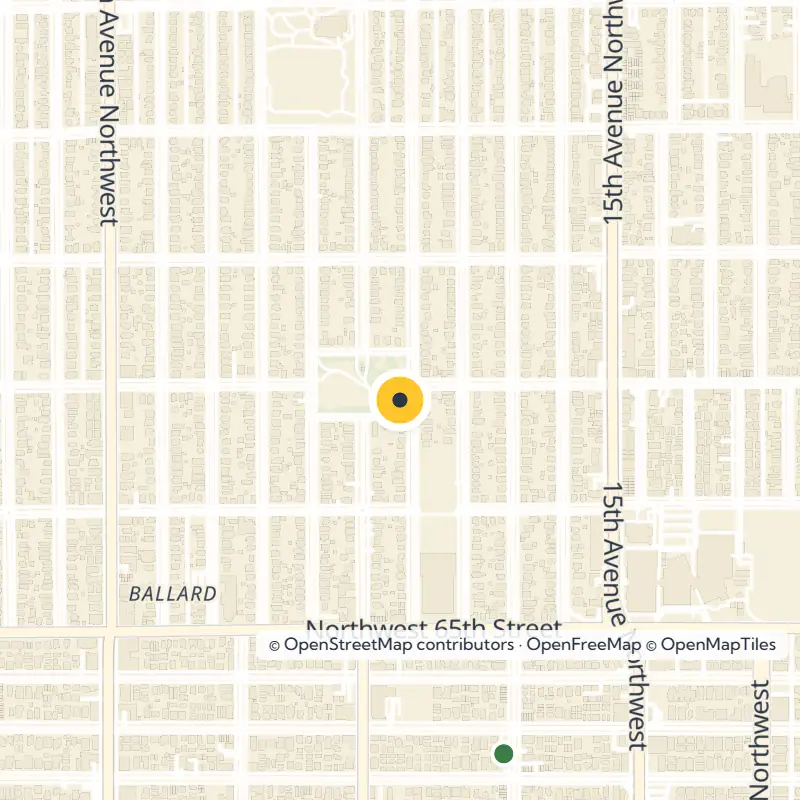
The library sits in a tight cluster of historic and public places, so it makes an easy stop on a stroll around central Ballard. Within about a tenth of a mile, you can reach:
- Old Fire Station #18, another city landmark
- Bergen Place, a small park
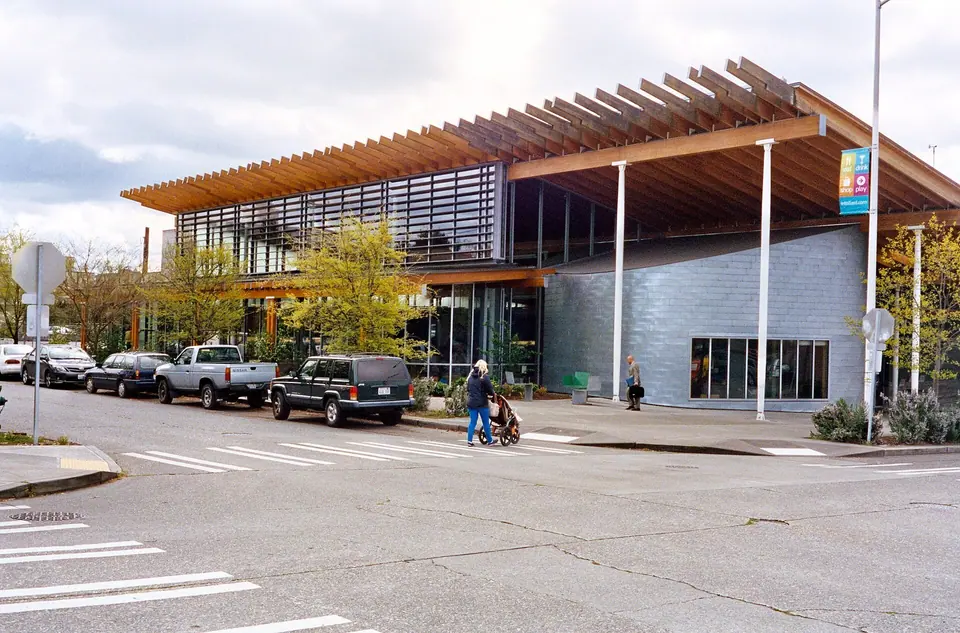
- The Ballard Branch library, the neighborhood's public library today
- Marvin's Garden, a park
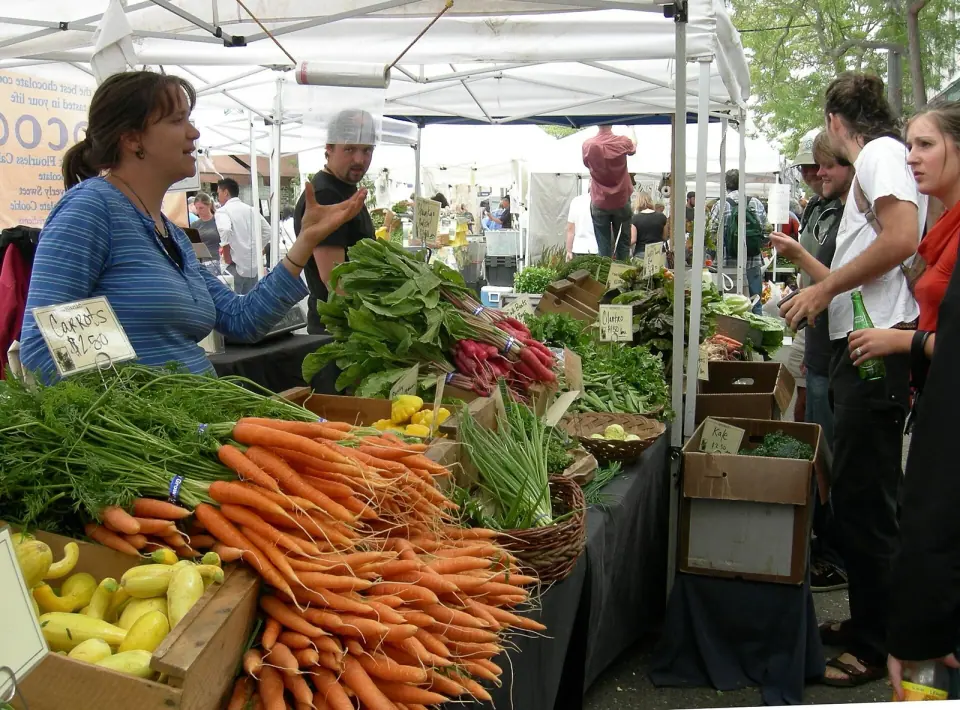
- The Ballard Farmers Market
- The Louisa Building, a landmark
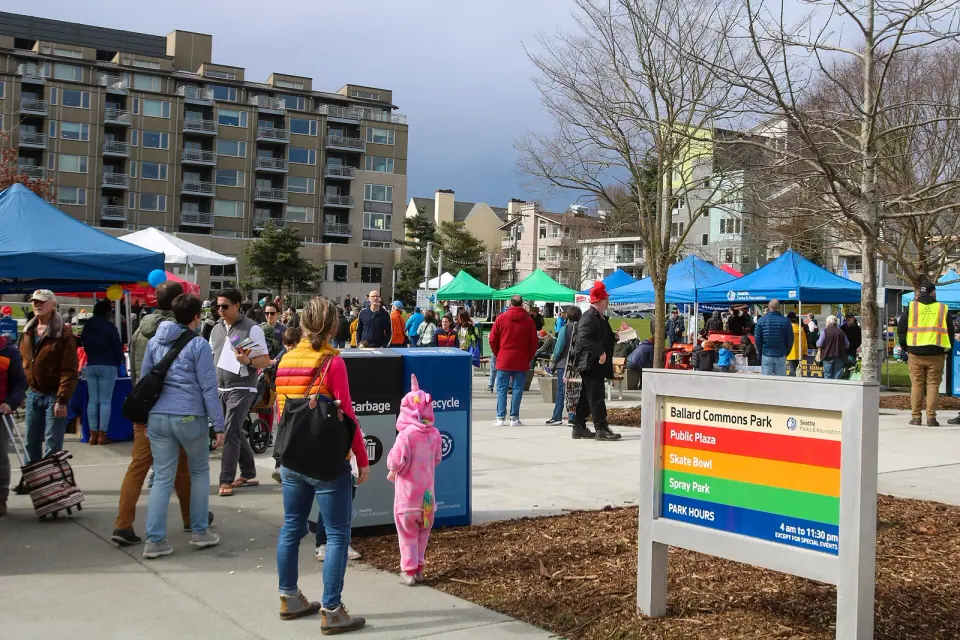
- Ballard Commons Park
Wander a little farther, about 0.3 miles, to the New Age Christian Church, also a designated landmark. Stop by the modern Ballard Branch nearby for a neat way to trace how the neighborhood's library outgrew its Carnegie home. For more places to eat, shop and explore, head to our Ballard neighborhood guide.