Where the Creek Begins Today
Ravenna Creek was once fed by those three lakes, but between 1908 and 1948 its watershed was diverted into sewers, and the creek came to rely on groundwater instead. A thick layer of clay beneath the region keeps the water table shallow, which is why you will find water seeping from the ravine's west wall.
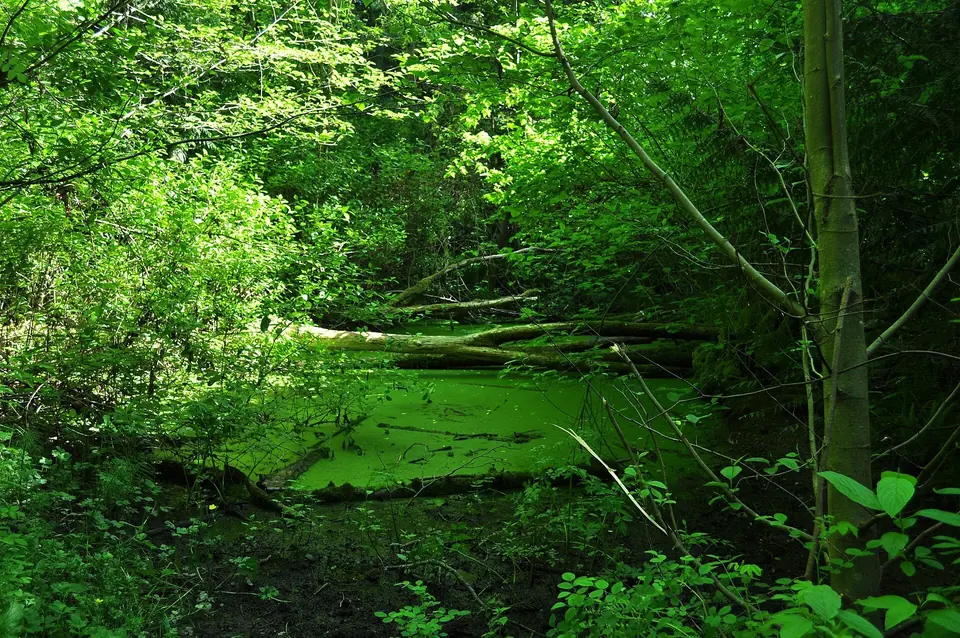
Look for the creek rising from the west face of the ravine along Brooklyn Avenue NE and from a small wetland in the northwest corner at NE 62nd Street. Then follow it to the southeastern end of the park, where a stretch that ran through a storm drain for years was brought back into daylight in 2006.
Vanished Giants and the Park's Early Years
Loggers and farmers passed this ravine by for decades, so it held on to a stand of old-growth trees that rose to nearly 400 feet. Much of the land belonged to William Wirt Beck, a mining and real estate figure who protected those trees, named the area after Ravenna, Italy, and platted one of the neighborhood's first subdivisions in 1890. You can still see the house he built east of the park at NE 60th Street and 26th Avenue NE.
Those giant trees were showcased during the Alaska-Yukon-Pacific Exposition in 1909, yet by 1926 they had disappeared under suspicious circumstances, and no trees of that size survive anywhere in the world today. Reporter William Arnold took up the story again in 1972 with a Seattle Post-Intelligencer investigation titled "The Mystery of Ravenna Park."
The city bought the park from developers in 1911. After Theodore Roosevelt died in 1919, Seattle renamed it Roosevelt Park, but residents petitioned to bring back the original name, and it returned in 1931.
Charles Cowen's Gift Next Door
Keep walking and Ravenna Park flows straight into Cowen Park, forming one continuous green space between the Ravenna and Roosevelt neighborhoods. Charles Cowen, an English immigrant from a family of South African diamond merchants, donated Cowen Park's twelve acres to the city in 1906, and a gateway inscription honors his gift.
Cowen arrived in Seattle in 1900 and bought 40 acres of logged-off land around today's park. When the nearby University of Washington campus was chosen to host the 1909 exposition, the area grew quickly, and Cowen built houses along with the Ye College Inn near the fair's main entrance.
A Park Restored by Its Neighbors
Much of what you enjoy here today comes from local activism. In the mid-1960s, a large part of the Cowen Park ravine was filled with spoils from freeway construction, and in 1986 the City of Seattle proposed using the ravine as a staging area for a large stormwater piping project.
That plan rallied neighborhoods across the watershed to stand up for the park. Since 1991, residents and the city have teamed up on major restoration, a partnership that carries on today.
Walking Ravenna Park End to End
Spread across 49.9 acres, with Cowen Park adding another 8.4, the park gives you plenty of room to roam. The main ravine runs about half a mile and links a picnic area at each end, so the creekside trail makes a natural stroll from one to the other. Expect to share the paths with hikers, joggers, cyclists and picnickers.
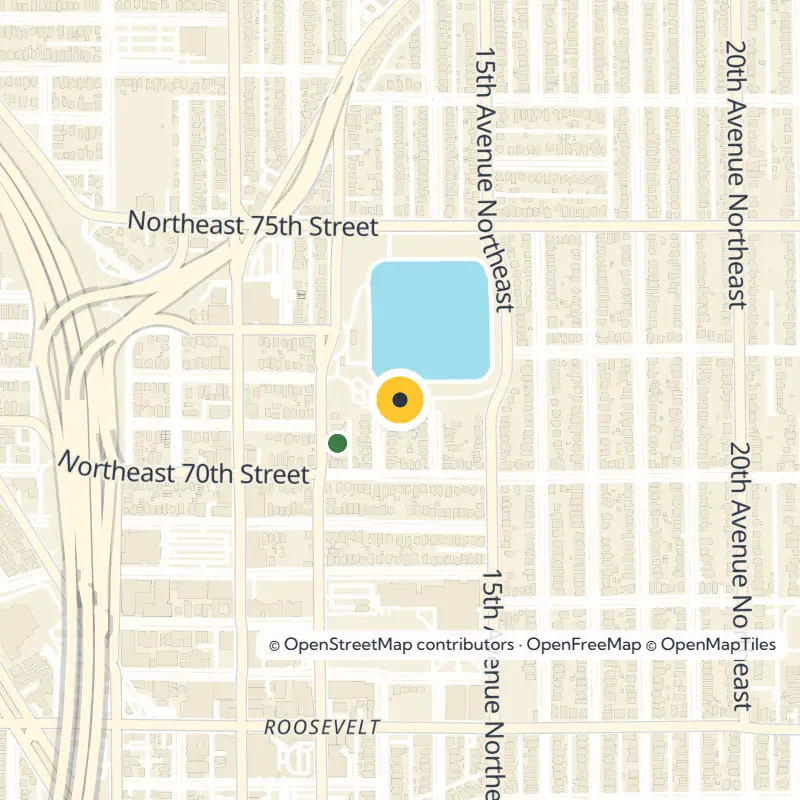
To picture a Ravenna Park map in your head, get your bearings from a few landmarks:
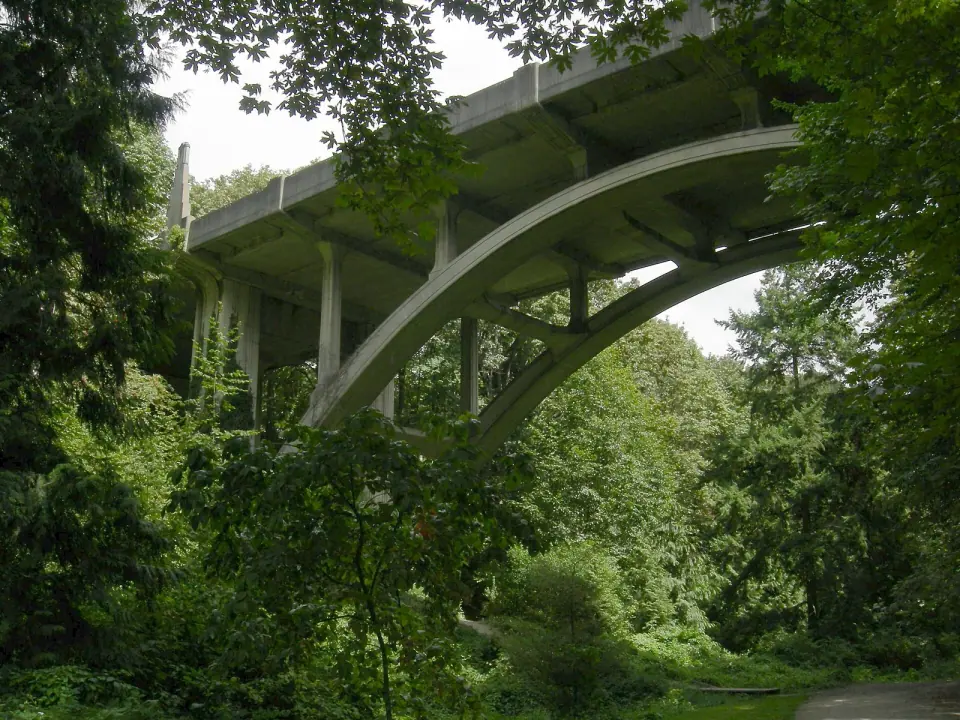
- Cowen Park Bridge carries 15th Avenue NE across the ravine, right where Cowen Park meets Ravenna Park.
- 20th Avenue NE Bridge, also called the Ravenna Park Bridge, crosses the ravine farther east and has been closed to motor vehicles since 1975, leaving it open for you to cross on foot.
- The rail trail traces the park's southern edge along the route of David Denny's old Ravenna streetcar line.
- The creek's source lies at the west end, along Brooklyn Avenue NE and the wetland near NE 62nd Street.
Before you set out on a specific route, grab the Cowen-Ravenna trail map from Seattle Parks and Recreation, the best reference for planning your walk.
Room to Play
Beyond the trails, spend an active afternoon with:
- A children's play area
- A wading pool
- A ballfield
- Tennis courts
- Picnic areas at both ends of the ravine
Check with Seattle Parks and Recreation for current hours and any seasonal schedule for the wading pool.
Native Forest Beneath the Bridges
Most of the park is wooded with native species, so look up into bigleaf maple, Douglas fir, grand fir, western hemlock, western white pine and western redcedar. A few planted newcomers mix in too, including coast redwood, incense-cedar and western larch.
Keeping this forest healthy takes steady work. The city parks department hosts work parties here, especially in April and May, and the volunteer group Friends of Ravenna Ravine pulls invasive plants such as English ivy and Himalayan blackberry and replants native vegetation.