City or Metro Area?
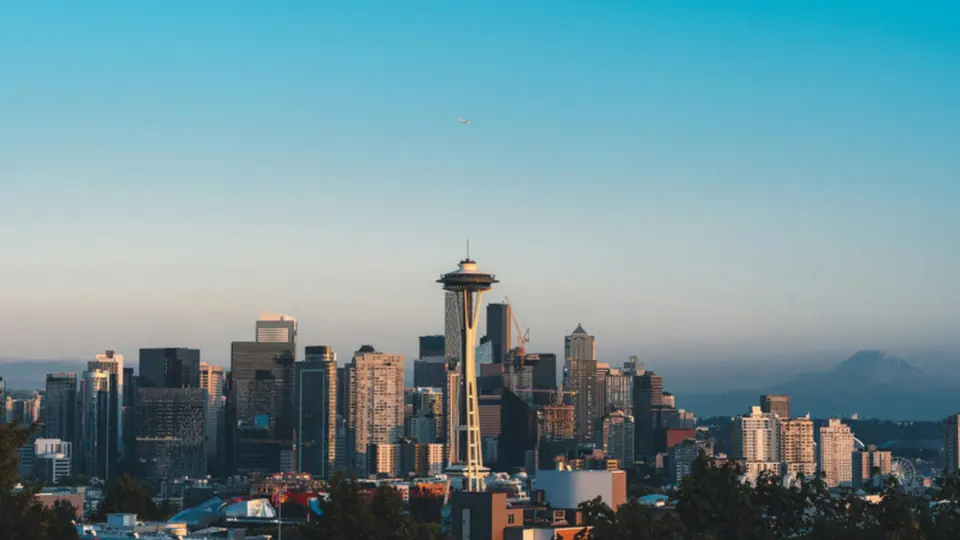
When people ask about the population of the Seattle area, they often mean the whole region. The city itself holds under 800,000 people, while the metro area tops 4.15 million. Seattle is also the county seat of King County, the most populous county in the state.
Keep that gap in mind whenever you compare cities. Seattle ranks 18th nationally as a city but 15th as a metro, since a large share of the region lives in surrounding communities. If you spot wildly different figures quoted, check whether they describe the city or the wider region.
A City That Swells by Day
Spend a weekday in Seattle and the city feels busier than its resident count suggests. Commuters arriving from elsewhere in the region raise the daytime population by roughly 30 percent. Downtown, South Lake Union and the office districts fill up in the morning and empty out again in the evening.
From Settlement to Major City
Long before European settlers arrived, this land was home to Native Americans for at least 4,000 years. The Duwamish people alone had at least 17 villages around Elliott Bay. The city carries the name of Chief Seattle, a leader of the Duwamish and Suquamish tribes.
From 188 Settlers to a Gold Rush Boomtown
Seattle began small, with the 1860 census recording just 188 people. Growth stayed modest for two decades, reaching 3,533 by 1880, and then the numbers exploded: the 1890 count jumped past 42,000, a more than elevenfold increase in ten years.
The Klondike Gold Rush brought the next big wave. After a ship arrived in 1897 carrying a famous load of gold, Seattle became the main supply point for miners heading north. Between 1900 and 1910 the population roughly tripled, rising from about 80,000 to more than 237,000.
Wartime Growth and a Long Decline
The pace slowed sharply in the 1930s, when the city added fewer than 3,000 people over the whole decade. After World War II, Boeing's aircraft manufacturing helped drive a fresh boom, and the population passed 557,000 by 1960.
Then Seattle shrank. The 1970 and 1980 censuses both showed declines, and by 1980 the city had fallen to about 494,000, fewer people than had lived here in 1960.
The Tech Rebound
Starting in the 1980s, the region turned into a technology hub, with Microsoft setting up its headquarters nearby. Software, biotech and internet companies sparked an economic revival. Between 1990 and 2000, Seattle added almost 50,000 residents and reached 563,374.
The 2010s Surge
The biggest modern jump came between 2010 and 2020, when the city grew 21.1 percent, from 608,660 to 737,015 residents. That surge made Seattle one of the fastest-growing large cities in the country. Growth has continued since, though at a gentler pace.
Who Lives in Seattle
As Seattle has grown, its makeup has shifted noticeably. Census figures describe a city that is becoming more diverse and more international, and one that is, by national standards, unusually light on households with children.
Race and Ethnicity
Current Census Bureau figures put the city at about 60 percent white alone and about 17.6 percent Asian alone. Black residents make up about 6.5 percent, about 8.5 percent of residents are Hispanic or Latino of any race, and nearly 12 percent identify with two or more races.
The long-term trend is clear. In 1980, non-Hispanic white residents made up about 78 percent of the city, but by 2020 that share had dropped below 60 percent while the Asian, multiracial and Latino shares all rose.
Seattle has the largest African American population of any city in the Pacific Northwest, with Black communities concentrated in neighborhoods such as the Central District, High Point and Rainier Beach. The Latino population is especially concentrated in South Park. To get a feel for these areas, start with our guide to Seattle neighborhoods.
A City of Newcomers
Many Seattle residents grew up somewhere else. A 2019 estimate found that fewer than 30 percent of adults in the city were born in Washington, with most coming from other states. About one in five residents was born abroad, and recent Census figures put the foreign-born share at about 20.2 percent.
Seattle also has one of the highest shares of residents who identify as LGBT among major U.S. metro areas. As of 2015, that figure was 4.8 percent, the fifth highest in the country.
Age and Households
Children make up a relatively small part of the city. Only about 13.8 percent of residents are under 18 and about 4.2 percent are under 5, while residents 65 and older account for about 13 percent.
Only around a fifth of Seattle households include minor children, and among major U.S. cities only San Francisco has a lower share. Seattle also has one of the highest rates of people living alone, and the 2010 census put the average household size at just 2.06 people.
Housing in a Growing City
Rapid growth on limited land has made housing a central issue. Census Bureau data for 2020 through 2024 show that about 43.7 percent of homes are owner-occupied, so most households rent. The median value of an owner-occupied home in that period was $938,600, though values shift with the market.
Homelessness is also part of the picture. A 2017 point-in-time count across Seattle and King County found 11,643 people experiencing homelessness, nearly half of them unsheltered. Newer counts are published regularly, so check current official reports for the latest numbers.
Population estimates are revised every year, and the decennial census resets the baseline every ten years. For a quick summary of population, age, race, housing and income, head to the U.S. Census Bureau's QuickFacts page for Seattle. To dig into specific topics with deeper tables, browse the Census Bureau's full Seattle profile.
Numbers only tell part of the story. To see how all these residents spend their time, browse our picks for things to do in Seattle or set out to explore the city's best-known Seattle landmarks.