Ride the Seattle Great Wheel
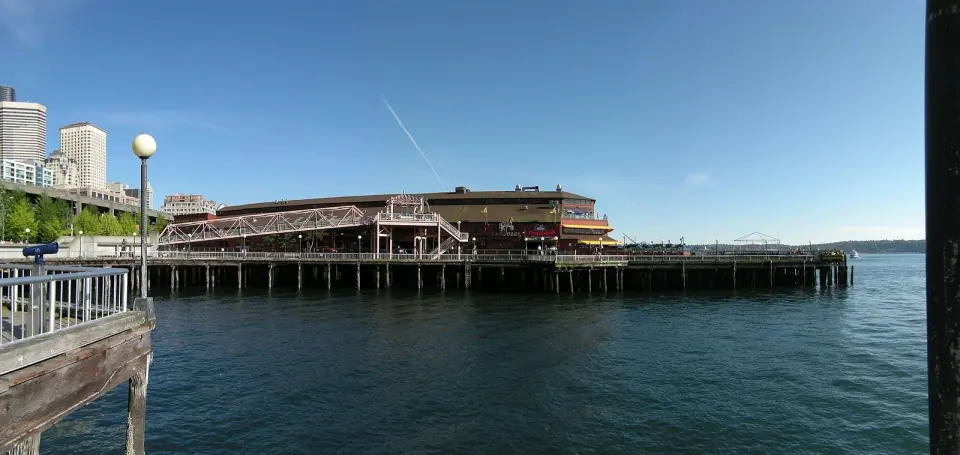
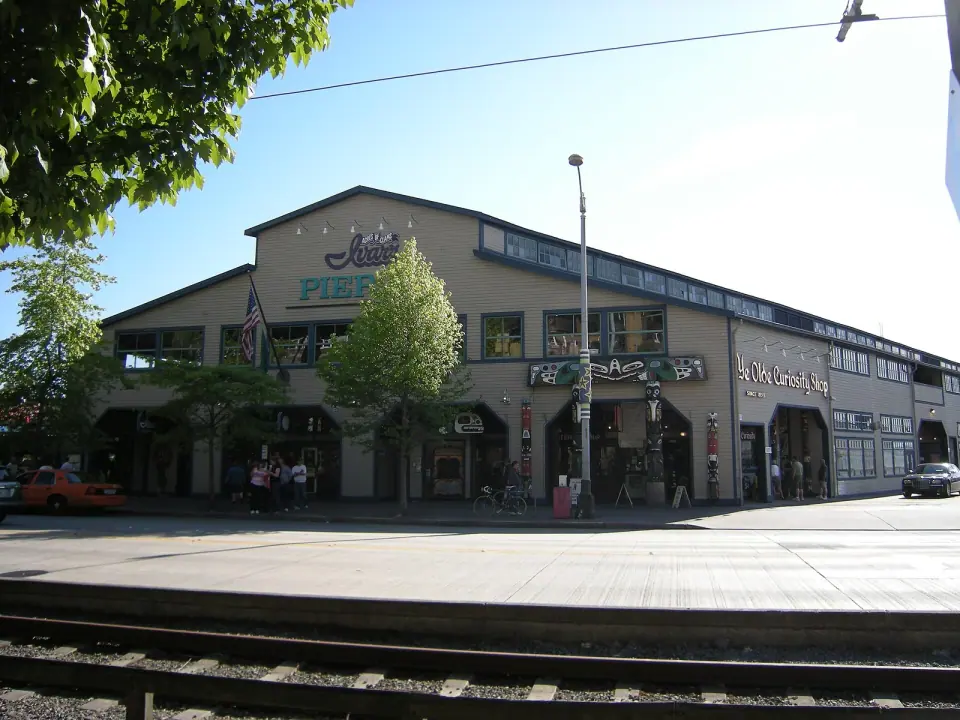
Since opening in June 2012, the Seattle Great Wheel has become the most visible feature of Pier 57. The climate-controlled gondolas keep you comfortable through Seattle's cool, damp months as well as in summer, and from the top you look out over Elliott Bay.
The wheel was a long-held dream of Seattle businessman and waterfront developer Hal Griffith, whose family owns the pier, and he spent decades hoping to see a Ferris wheel on Elliott Bay. Permit applications went in during November 2010, and the project took roughly three years, including work to strengthen the pilings that hold up the pier.
Why the Wheel Arrived When It Did
The wheel's timing was tied to big changes along the water. The Alaskan Way Viaduct, the elevated highway that once ran beside the pier, was damaged in a 2001 earthquake, and public agencies agreed to replace it with a tunnel under downtown, with early demolition and removal work starting on October 21, 2011.
Griffith worried that years of construction would keep visitors away and push waterfront businesses under. A big attraction on Pier 57 was meant to give people a reason to keep coming down to the water while the work went on.
The Pier's Story: From Pier 6 to Milwaukee Pier
Picture the pier going up as Pier 6 between March and May of 1902, built by the Miller and Geske Construction Company for the John B. Agen Company for a total of $30,000. The North American Trading & Transportation Company was its first tenant, and the structure was altered again and again over the next decade as tenants came and went.
In 1909 the pier passed to the Chicago, Milwaukee & St. Paul Railroad, the last of the four transcontinental railroads to reach Seattle. Locals knew the railroad as the Milwaukee Road, so this became the Milwaukee Pier.
Steamships and Fish Processing
Under the railroad, ships of the McCormick Steamship Line, the Munson McCormick Line and the Japanese line Osaka Shosen Kaisha used the pier as a terminal. By the middle of the 1930s it also went by the name McCormick Terminal, and during the 1950s at least part of the pier was used to process fish.
Decline, City Ownership and a Trade
By the 1960s the Port of Seattle owned the pier and cut openings in the deck so people could fish from it. The pilings were wearing out, though, and the structure had begun to settle unevenly, while cargo shipping had already moved south to the container port.
The City of Seattle bought Pier 57 from the Port in 1971 and spent the next three years renovating it. In 1989 the city traded the pier for Piers 62 and 63, and Pier 57 has stayed in private hands ever since.
A Seattle Landmark
Pier 57 is an officially designated City of Seattle landmark, recorded by the Seattle Landmarks Preservation Board as Landmark No. 307 under Ordinance 123861. It belongs to a cluster of protected piers and buildings along this short stretch of the waterfront, and you can browse all designated landmarks in Seattle to plan more stops.
Explore the Neighboring Waterfront
Pier 57 sits in the Central Business District, part of Downtown, which makes it easy to string several stops together on foot. Get to know the surrounding blocks with our Central Business District neighborhood guide.
Within about a tenth of a mile (straight-line distance), you can reach:
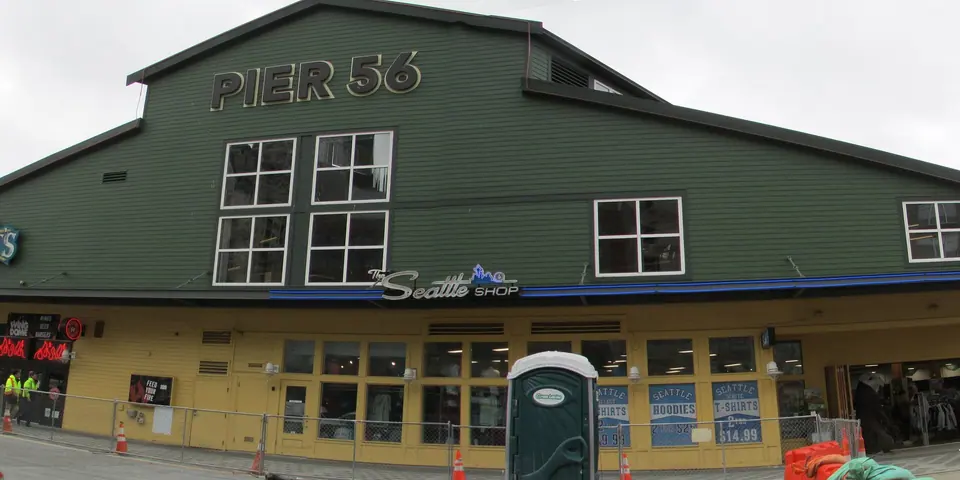
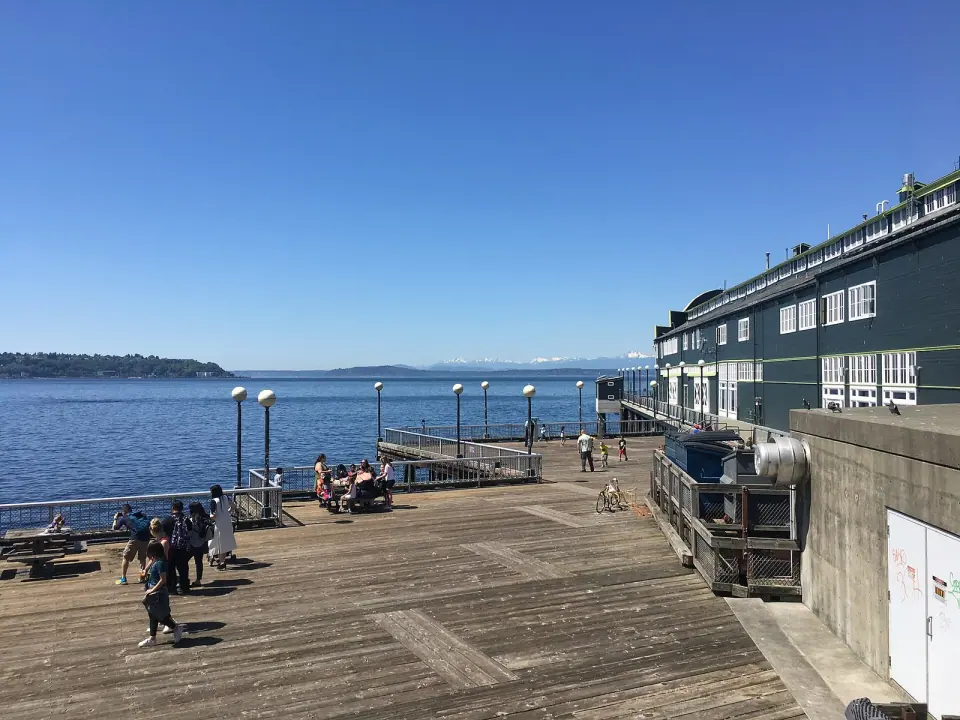
- Waterfront Park and Pier 56, both right next door
- Pacific Net & Twine Building and the Olympic Warehouse and Cold Storage Building, two more landmarks very close by
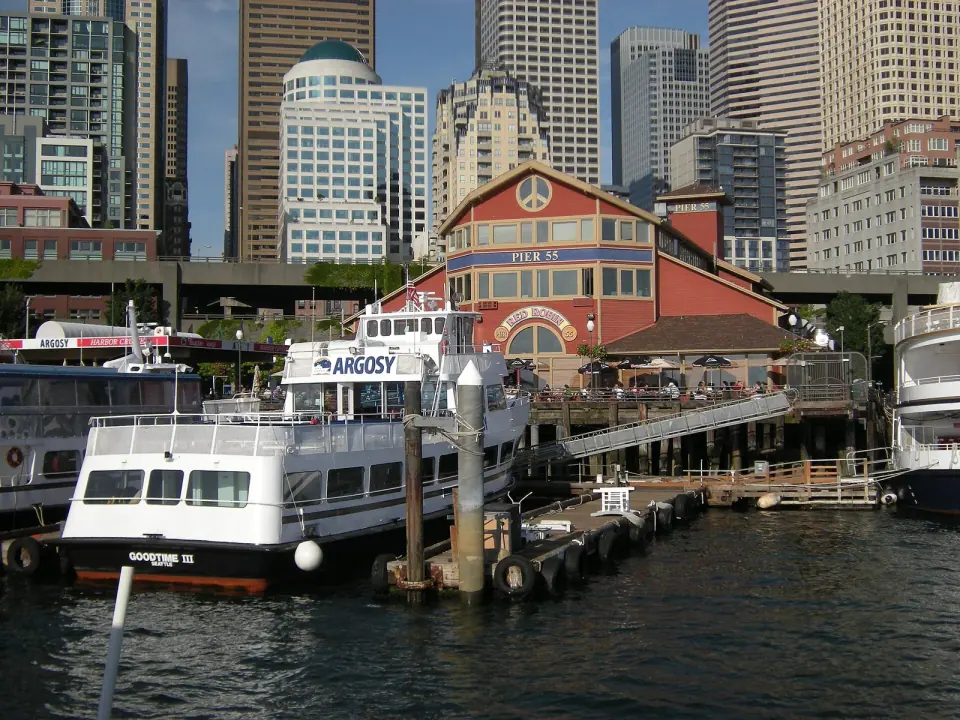
- Pier 55 and Pier 59, historic piers on either side
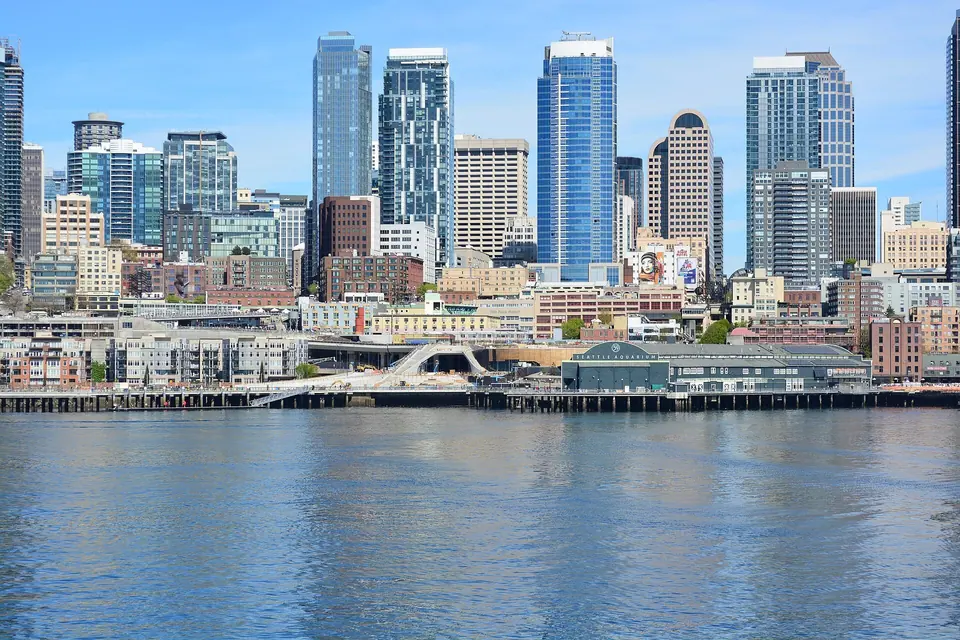
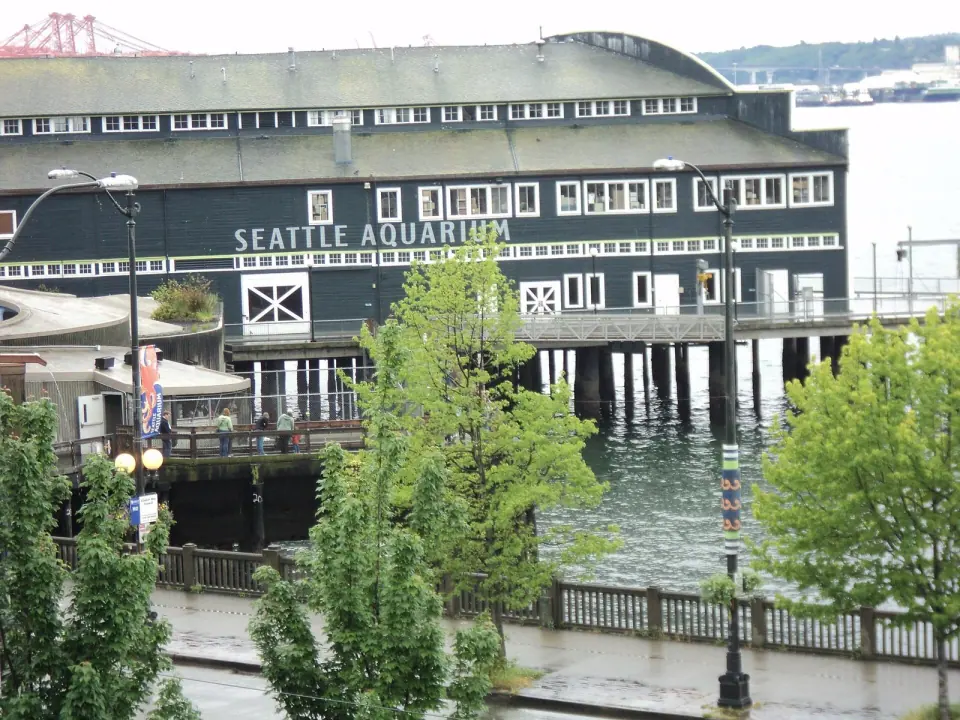
- Seattle Aquarium, a short walk along the water
- 84 Union Building/U.S. Immigration Building, another designated landmark
With so many historic piers lined up together, stroll Alaskan Way from Pier 55 to Pier 59 for a feel of how this working waterfront once looked, with Pier 57 and its wheel right in the middle.