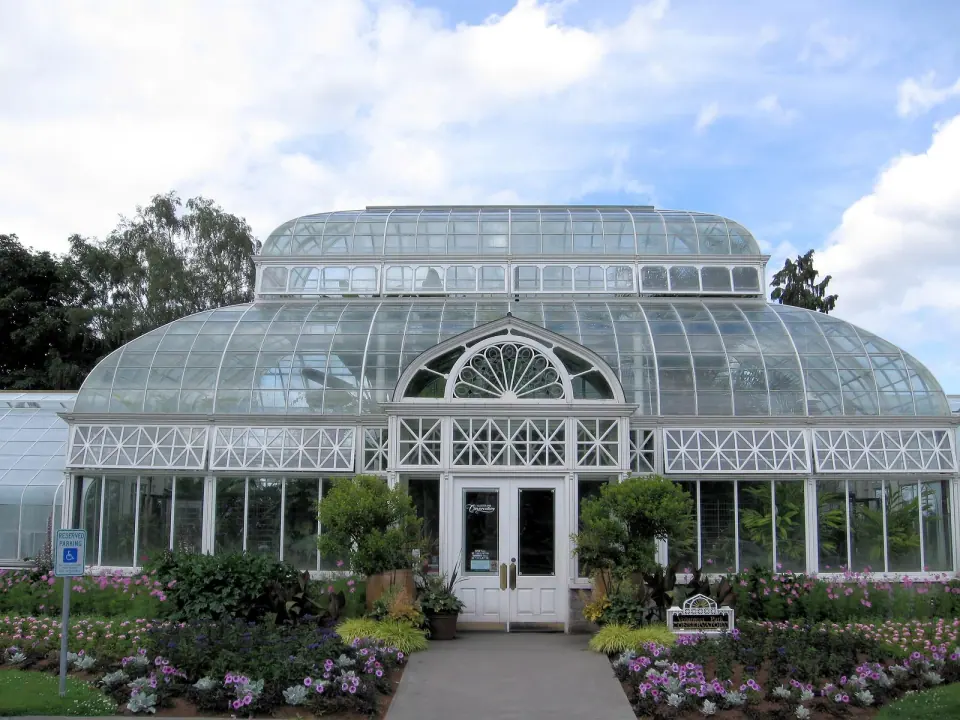
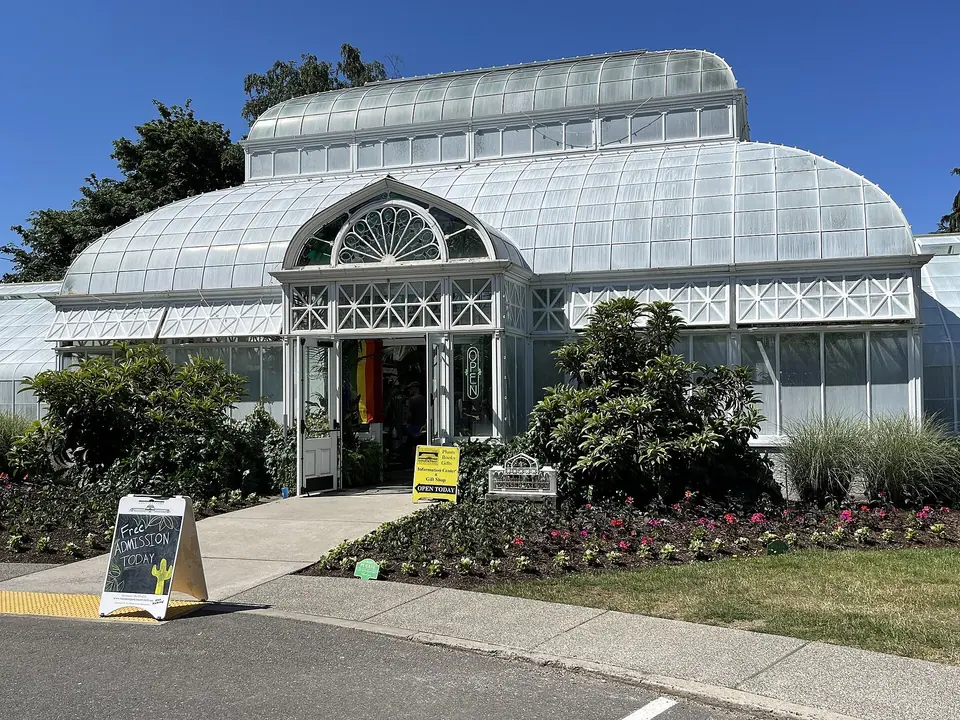
The idea for a conservatory came in 1893. The city later bought the design and structural framework from the Hitchings Company of New York, and Parks Department crews assembled the building, finishing it in 1912. Take in the style borrowed from London's Crystal Palace: a framework of wood and iron holding 3,426 panes of glass. Growing greenhouses joined it in 1922, so staff could raise and propagate plants right on site.
Explore the five display houses
Step inside and you will find the space divided into five houses. Four focus on a single plant group, rounded out with accent plants, while the fifth changes with the calendar. Thousands more specimens grow out of public view in the neighboring greenhouses, and much of the specialty collection arrived as donations from individuals.
Bromeliad House
Many bromeliads live as epiphytes, clinging to branches or rocks instead of rooting in soil, and this room shows off that habit beautifully. Look up at the wrought iron display tree covered in dozens of Tillandsia species, designed by Randy Benson and made by local iron artists. Ground-growing members of the family grow here too, including the pineapple.
Fern House
Wander among ferns that share their home with several cycads, a Mexican breadfruit (Monstera deliciosa) and tropical bloomers like passionflower and hibiscus. Bring the kids to the bog gardens, a favorite with younger visitors, where carnivorous plants such as Venus fly traps, sundews and pitcher plants wait for their next meal.
Palm House
Stroll beneath palms mixed with cycads, orchids, bananas, bird of paradise, anthurium and ginger. One windmill palm came here from the Hiram Chittenden Locks around 1953, and a sago palm, actually a cycad rather than a true palm, was about 80 years old in 2009.
Spend some time with the orchid collection, which also lives here. It began with a 1921 gift from Mrs. Anna H. Clise and now includes Bulbophyllum, Epidendrum and Dendrobium, the largest orchid genera, along with familiar Cattleya and Phalaenopsis.
Seasonal House
This room has no single theme, and that is its charm. Staff replant it entirely six times a year, cycling through poinsettias, mums, late winter flowers, azaleas, early spring flowers, hydrangeas and fuchsias, so come back in a different season and you will find a whole new display.
Cacti and Succulent House
Finish in this dry-climate room, where cacti such as Opuntia sit alongside succulents like Pachypodium, Haworthia, Agave, Aloe and Euphorbia. Seek out the jade tree: grown from a cutting taken in 1916, it ranks among the oldest plants in the building.
Rescued orchids and a famous corpse flower
Some of the plants around you took unusual routes to Seattle. The Volunteer Park Conservatory is a registered repository for the U.S. Fish and Wildlife Service, taking in restricted orchids, cycads and other plants seized by federal agents. These are quarantined first and later put on display, and since CITES bans international trade in endangered orchids, many confiscated orchids have joined the collection over the years.
The conservatory is also known for its corpse flower blooms, a rare sight because the plant tends to flower only two or three times across a 40-year life. Blooms arrived in 2005, 2008 and 2014. The 2008 plant, nicknamed Waldo, opened on July 27 after reaching 47½ inches tall, and when the 2014 bloom came, Mayor Ed Murray declared Corpse Flower Week.
Glass art at the front door
Pause at the entry before heading in and look up at the beveled glass lunette above the main door, sometimes called the peacock window. Dating to 1912, it is the only original wood and glass piece left after two renovations, and it was restored in 2000.
In the entry vestibule, admire Homage in Green, a hand-blown and stained green glass canopy by Richard Spaulding installed in 1981. More green glass pieces by Spaulding followed in 1982 and 1995.
How neighbors saved the building
By 1978, the glass and the wood and iron frame had worn so badly that the conservatory had to close during high winds. Residents rallied to restore it, and their effort led to the founding of the Friends of the Conservatory as a nonprofit in 1980. Working with the city parks department, the group sponsored an architectural restoration that ran from 1980 to 1985.
The Friends are still closely involved. They opened a gift shop and resource center in 2003, and in 2004 they led a community campaign that defeated a proposed mandatory $5 admission fee. The nonprofit helps pay for tour materials and environmental education, supports the orchid collection and a plant acquisition fund, and helps host open houses and plant sales, while more than 100 volunteers give over 2,500 hours a year.