Your Season Preview
The announced season shows off the company's range nicely. Dates and casting can change, so confirm the details on the theater's official website before you build plans around a performance.
- The Wizard of Oz is the holiday production, running from late November through December 27.
- Operation Mincemeat, the 2025 Tony winner for Best Musical, arrives for a short run from February 10 to 21, 2027. It is co-presented with Seattle Theatre Group, and tickets for this one are sold through Ticketmaster.
- Maybe Happy Ending is also part of the season.
- Alice in Neverland, a new musical that imagines Alice twenty years after Wonderland and sets up the Peter Pan story, premieres from June 11 to 27, 2027.
Seattle Theatre Group also books concerts here, so the building stays busy beyond the musical season. Check the official site for the current calendar.
Subscriptions and Single Tickets
Subscribe and you get priority seating, plus savings of up to 10 percent compared with buying each show separately. Subscription windows close at a set point in the season, so look up deadlines early. Single tickets go on sale show by show, and booking ahead pays off for popular holiday runs.
An Auditorium Built Like a Chinese Temple
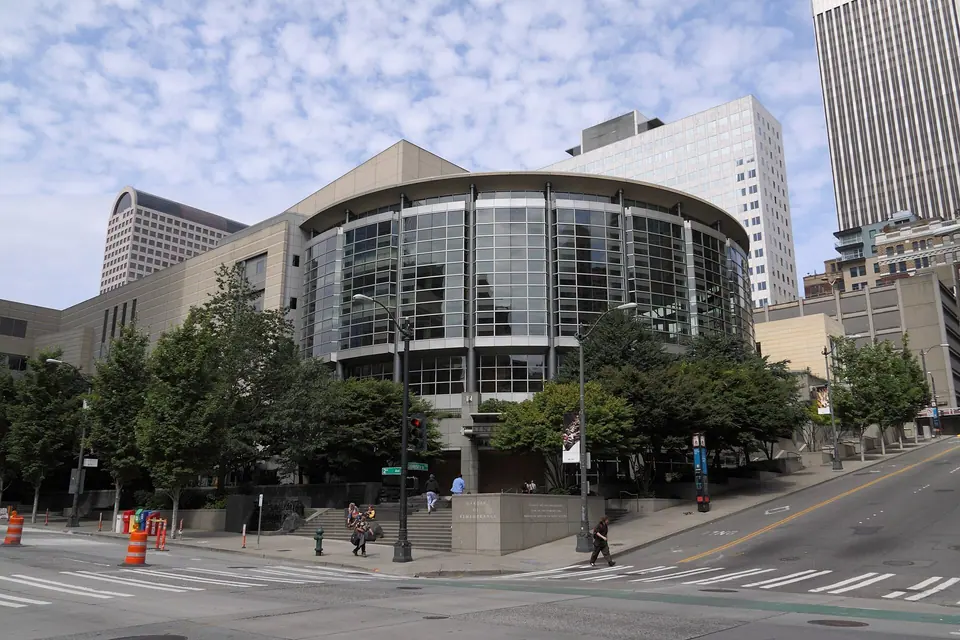
Walk past on the street and you might never guess what waits inside. The theater sits within the Skinner Building, a downtown office block with a Neo-Renaissance exterior and shops at street level, and the only hint of the interior style is the ceiling beneath the marquee.
Look up as you approach the doors. Plaster has been shaped and painted to resemble wooden beams, brackets and carved panels, decorated with stenciled dragons and flowers, while carved cloud forms hide the light fixtures and give the entry a soft, indirect glow.
The Lobby and Its Guardian Lions
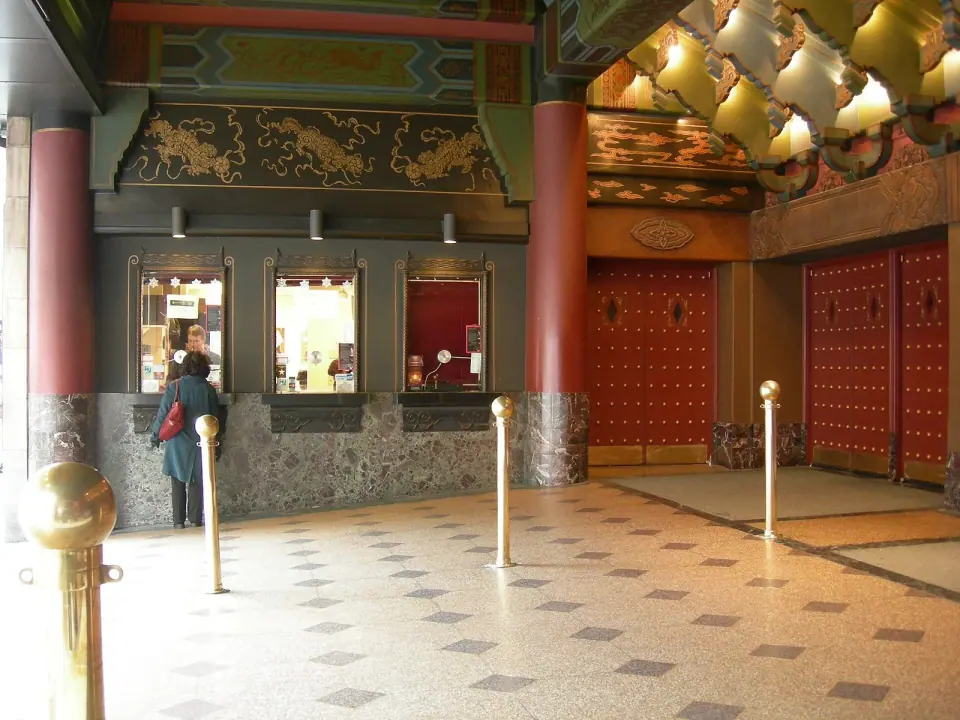
Step inside to a two-story lobby that imitates the construction of a Chinese wooden temple. Red stenciled columns rise to a painted, timbered ceiling with a bamboo canopy, all rendered in plaster. A pair of original guardian lions, often called foo dogs, keeps watch over the stairs to the balcony level.
Those lions once stood outside the entrance and moved indoors during a 1979 renovation, which also replaced the original freestanding box office with the current one off to the side. As you wander, notice the many original furnishings and light fixtures that survive throughout the building.
The Dragon Overhead
Save your best gaze for the octagonal ceiling vault above the audience. A sculpted five-toed imperial dragon springs from its center with a large glass chandelier hanging from its mouth, an image that recalls the Chinese symbol of a dragon releasing flaming pearls.
The vault was based on one in the throne room of the Hall of Supreme Harmony in Beijing's Forbidden City, and by one account Seattle's version is twice the size of its model. Before curtain, trace the dragon motif as it repeats across the ceiling coffers and beams.
Watch for the phoenix as well, the traditional emblem of the Empress. You will spot it most clearly in the grilles above the false balconies near the stage, which once concealed organ pipes. Orange blossoms, chrysanthemums and lotus flowers turn up throughout, and the proscenium and safety curtain carry the same design theme.
Why the Building Matters
The theater has been described as the largest and most authentic example of traditional Chinese timber architecture and decoration outside Asia, and it opened before Hollywood's famous Grauman's Chinese Theater. The Skinner Building joined the National Register of Historic Places on November 28, 1978.
Architect Robert C. Reamer, best known nationally for the Old Faithful Inn in Yellowstone National Park, designed the building. Norwegian artist Gustav Liljestrom created the interior, drawing on his own travels in China and on a 1925 illustrated book about Chinese architecture.
Opening Night in 1926
Construction began in October 1925 and took eleven months, at a cost of $1.5 million. The theater opened on September 24, 1926, with the silent film Young April alongside live vaudeville acts, while seven downtown blocks closed to traffic and thousands of people crowded the street to celebrate.
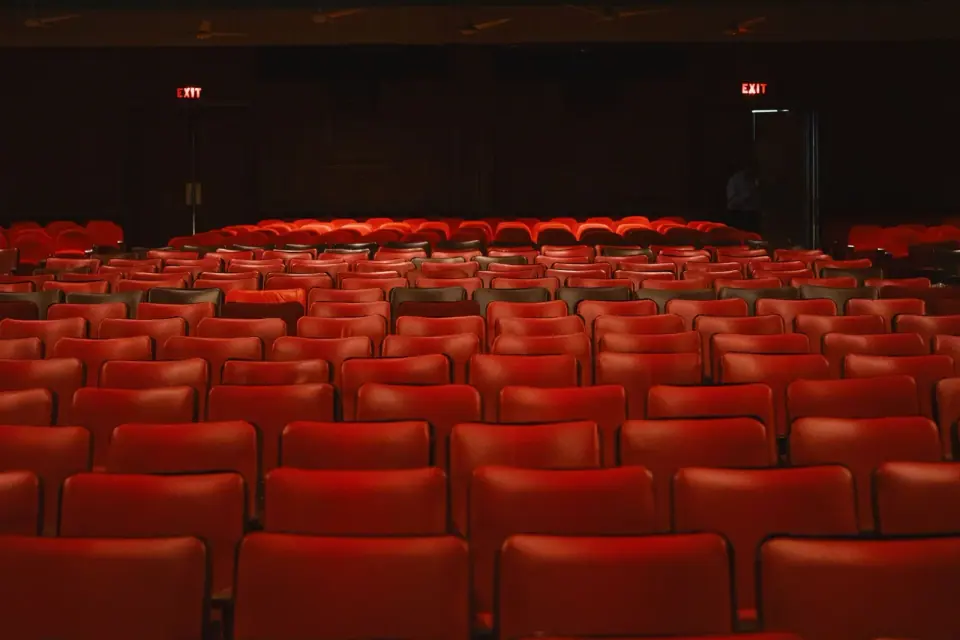
The building was designed for film and live shows alike, with an orchestra pit and a Wurlitzer organ platform that could rise from the basement to stage level. It seated about 3,000 at the start, compared with 2,130 today.
Here is one more surprise: the University of Washington owns both the building and the land, since the site was once part of the university's original campus.
More Than a Stage
The theater company is a major local employer, with more than 600 people working as performers, musicians, designers, technicians and staff, and it is described as the largest theater employer in the Puget Sound region. Funding comes from donors, government sources and ticket sales.
Education and outreach programs serve students, adults and working performers, reaching over 61,000 people each year. If you have young theater fans at home, browse the official website for current programs.
Planning Your Visit
The theater faces Fifth Avenue in the heart of downtown, so it pairs easily with dinner or a stroll through nearby Seattle neighborhoods. Head to the plan-your-visit section of the official website for directions, parking, nearby dining and audience guidelines, and rely on it for current details, since these can change.
Accessibility
The venue offers wheelchair access, a step-free entrance, accessible restrooms and assistive listening systems, along with gender-neutral restrooms. The company has also offered sensory-inclusive performances and tactile experiences for some productions, so check the accessibility page for upcoming options.
Tips for Your Evening
- Arrive early enough to explore the lobby and look up at the dragon before seating begins.
- Check whether your show is a company production or a co-presentation, because ticketing can run through different sellers.
- For holiday shows, book well in advance.
Want to round out your trip? Browse our guides to Seattle landmarks for more historic architecture, or explore our full list of things to do in Seattle to fill your day before the show.