How long is the tour?
- Bill Speidel's Underground Tour: about 75 minutes, starting beneath Doc Maynard's Public House at 614 First Avenue in Pioneer Square, between Cherry and James Streets, according to the official site.
- Beneath the Streets: its standard Underground Tour runs one hour, and its After Hours and Queer Underground History tours run 75 minutes, per its website.
Accessibility and what to wear
Expect flights of stairs, uneven terrain and spotty lighting on Bill Speidel's tour, which tells guests to dress for the weather and leave high heels at home. Neither company's site lists step-free access, so if you use a wheelchair or have limited mobility, call before you book: (206) 682-4646 for Bill Speidel's tour or (206) 624-1237 for Beneath the Streets.
Is it good for kids?
Kids who like spooky stories and old storefronts can have a great time, and Beneath the Streets lists its standard tour as open to all ages. Its After Hours and Queer Underground History tours are for guests 18 and older. Bill Speidel's tour asks groups with a significant number of children or students to call about a private tour.
Do you need to book ahead?
Book ahead on busy days. Bill Speidel's tours start on the hour every day, all year, and from June through September extra half-hour departures are sold only at the box office; on-site tours are first come, first served, so arrive early. Beneath the Streets says walk-up space is often available, but buying online is the surest way to get your time.
How Seattle Ended Up Below Its Own Streets
Picture a patchwork, not a single tunnel. The Underground is a mix of areaways, former sidewalks, building basements, and other spaces tucked beneath the modern streets of Pioneer Square, and most of it took shape during the rebuilding that followed one disastrous afternoon.
The fire of June 6, 1889
Around 2:20 in the afternoon, a fire broke out in a cabinet shop near Front Street, now First Avenue, and Madison Street. Because the commercial district was built mostly of wood, the flames spread fast, destroying much of the central business district and waterfront.
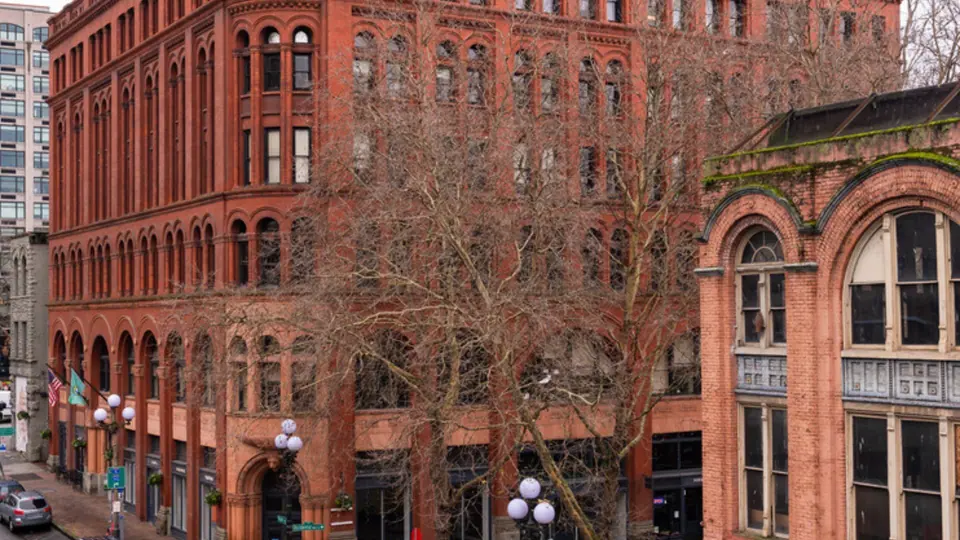
Seattle answered with new building rules meant to prevent a repeat, and masonry construction became the standard in the commercial core. That is why so much of the Pioneer Square you stroll through today is brick and stone.
Fixing the ground along with the buildings
Fire risk was not early Seattle's only headache. Much of the business district sat on low ground near Elliott Bay, some of it on tidal flats, where drainage was poor and many streets were steep.
Rebuilding offered a chance to fix all of that at once. Streets in what is now Pioneer Square were raised by several feet in some spots and by a full story in others.
Retaining walls, ladders, and glass skylights
Crews built retaining walls along the new roadway grades and filled the space between them. The gaps between those walls and the neighboring buildings stayed open beneath the sidewalks, and these gaps, called areaways, had once been at or near street level.
For a while, people climbed ladders to get between the raised street and the shop entrances below. Brick archways went in beside the roadway, and vault lights were set over the gap, walk-on skylights made of small panes of clear glass that later turned an amethyst color.
Once the new sidewalks were finished, most owners moved their businesses up to the new ground floor. Some merchants kept trading on the lower levels of buildings that had survived the fire, and pedestrians kept using the sunken sidewalks, lit from above by that glass.
Why the Underground Went Dark
Fear of bubonic plague led the city to condemn the Underground in 1907, two years before Seattle hosted the 1909 Alaska-Yukon-Pacific Exposition. After that, the lower spaces were left to decay or used for storage.
Some found a shadier second life as illegal flophouses, gambling halls, speakeasies, and opium dens. Those stories make up a big part of what you will hear from guides today.
What to Expect Underground
Two companies run tours, each covering a different section of the network. Both are guided, and both lean happily into the colorful side of the neighborhood's past.
Bill Speidel's Underground Tour
Local resident Bill Speidel launched this tour in 1965, and it still runs from the Pioneer Building and the buildings next to it. Speidel also wrote books on early Seattle, including a biography of Doc Maynard, one of the city's founders.
Plan on about 75 minutes. You begin beneath Doc Maynard's Public House, head out into Pioneer Square, then drop underground to pass abandoned storefronts, old artifacts, and several tunnel entrances. Come ready to laugh, since the guides are known for mixing jokes into the history.
Beneath the Streets
Started in 2013, this second company explores other parts of the Underground. Alongside its standard tour, catch the Queer History Tour, which focuses on the LGBTQ+ community's role in shaping Seattle, or the After Hours Tour, which digs into the district's rougher, more complicated past.
Already done the classic route? This is a good way to see new ground. Check the company's official site for current schedules and details.
Planning Your Visit
Tickets and timing
For the Bill Speidel tour, grab tickets ahead of time online, by phone at (206) 682-4646, or in person at the ticket counter at 614 First Avenue, in Pioneer Place Park. Buying ahead is a smart move on busy days.
Tours have been running daily on the hour from morning into early evening, all year, with extra departures added in the summer months and during the week after Christmas. The tour has been closed on Thanksgiving and Christmas Day, with shorter hours on Christmas Eve. Schedules and prices can change, so confirm on the official tour website before you go.
Can you explore without a guide?
Not really. Only a small part of the Underground has been restored and made safe for the public, and that part is shown on guided tours, while much of the rest remains closed.
You can still hunt for traces on your own. Glance down at some Pioneer Square sidewalks and look for the purple-tinted glass of old vault lights set into the pavement.