The real thrill is how much you can actually step inside. Several landmark aircraft are open for walkthroughs, and the collection runs from wooden World War I fighters to a jet that flew at the edge of space. If you have a car or a free afternoon, pair your visit with other things to do in Seattle.
Finding Your Way Around the Campus
The main building faces East Marginal Way South, and the campus stretches across both sides of that road. Head to the far side for the Aviation Pavilion, home of the big walk-through jets. On clear days, pause on the T. Evans Wyckoff Memorial Bridge to take in views toward Mount Rainier and Seattle-Tacoma International Airport.
Since the galleries are spread out, wear comfortable shoes and pick your must-see areas before you arrive. Grab an audio guide if it helps, with languages including English, Spanish, Japanese, Chinese, French, German and Russian.
Exploring the Galleries
The Red Barn
Begin where Boeing itself began. The two-story Red Barn dates to 1909 and was the company's original home, and after Boeing moved out during World War II, the museum bought it for one dollar and floated it two miles up the Duwamish River on a barge. Opened to the public in 1983, it tells the story of flight's early days in the Pacific Northwest.
The Great Gallery
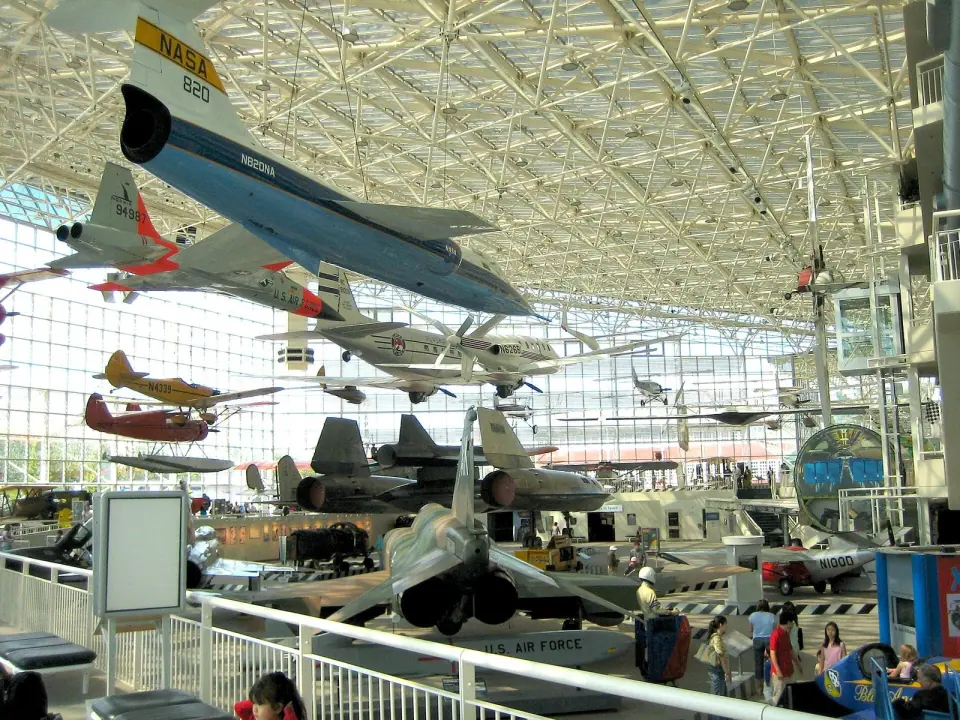
Step into the glass-roofed hall most people picture when they think of the museum. More than 20 aircraft hang from its lattice frame, among them a Douglas DC-3 weighing over nine tons. Then-Vice President George Bush and four Mercury astronauts opened this space in 1987.
At the center of the floor sits one of the museum's most famous pieces, the Lockheed M-21, the only one left, carrying a D-21 reconnaissance drone on its back. Look around for SR-71 Blackbird material, a fully restored Lockheed Electra painted to match the plane Amelia Earhart flew when she vanished, and the human-powered Gossamer Albatross II.
The Personal Courage Wing
Walk north of the Red Barn into this two-floor wing, where more than 25 aircraft from World War I and World War II are on display. It opened on June 6, 2004, exactly 60 years after D-Day. The exhibits tell the story of both wars through the eyes of pilots, nurses, photographers and support crews, and a large model collection covers every plane from the two conflicts.
Seek out the Caproni Ca.20, considered the world's first fighter plane. The one here is the only example ever built.
The Space Gallery
The Charles Simonyi Space Gallery opened in 2012 to hold a Space Shuttle the museum hoped NASA would award it. That orbiter went elsewhere, but visitors arguably got something better: the Full Fuselage Trainer, the mockup every Space Shuttle astronaut used to train.
Because it is a trainer and not a flown vehicle, you can go inside on a guided tour for an extra charge. Join the one-hour Crew Compartment Experience to see how astronauts lived and worked on a mission, and check the official site for current availability before you go.
The Aviation Pavilion
Cross the road to the Aviation Pavilion and climb aboard the big jets. Highlights open for walkthroughs include:
- SAM 970, the first jet-powered Air Force One, a Boeing VC-137B that carried presidents starting in 1959.
- Concorde G-BOAG, a former British Airways jet and one of only four Concordes displayed outside Europe.
- The City of Everett, the first flight-worthy Boeing 747, which took to the air in February 1969.
- A Boeing 787 Dreamliner, the third 787-8 prototype.
Keep walking to find a B-52 bomber nicknamed Midnight Express, which served during the Vietnam War, and the B-29 Superfortress T-Square 54, which flew combat missions in the Pacific during World War II. Prototypes of the Boeing 727 and 737 complete the story of Seattle's airliner industry.
Hands-On Exhibits and Extras
Climb into the full-scale, interactive air traffic control tower exhibit, built in 1997. It overlooks the active Boeing Field runways, so you can watch real traffic while learning what controllers do.
Add a flight simulator or a flight-themed 3D movie for an extra cost. Families should also know about the Challenger Learning Center, where students run a simulated Space Shuttle mission from a mock mission control. It mainly serves school groups and camps, so look into programs ahead of time if your kids are interested.
Rotating Exhibits and Events
Special exhibits change throughout the year, and a recent addition, Runway to Runway, explores the history of flight attendant fashion. Catch evening talks, performances and member events on the calendar, plus Hops & Props, a craft beer celebration held at the museum. Dates shift, so check the official events calendar for what is on during your visit.
Hours, Tickets and Planning Tips
The museum lists its hours as daily from 10 a.m. to 5 p.m., with last admission one hour before closing. Hours can change for holidays and private events, so confirm on the museum's official website before you head out.
Admission prices change too, and the official site is the best place for current rates and advance tickets. Buy ahead to skip the ticket line. Members enjoy free unlimited admission, along with discounts and member-only events, which can pay off for locals who plan to return.
Making the Most of Your Day
- Arrive early. With five galleries and a crossing to the Aviation Pavilion, a 2 p.m. arrival will feel rushed.
- Prioritize walkthroughs. Air Force One, the Concorde and the 747 are what many visitors remember most.
- Book the Shuttle trainer tour in advance if going inside matters to you.
- Save the shop for last. The museum store is open daily and does not require admission.
Keep in mind that not every plane in the collection is on site. The de Havilland Comet, the world's first jet airliner, is stored at the museum's restoration center at Paine Field in Everett.