Other early leaders are honored too. Walk or pedal the Cheshiahud Lake Union Loop, a 6.2-mile walking and cycling route named for a Duwamish leader who guided settlers around the lake.
Where to See Indigenous Influence Today
Native influence shows up in architecture, public art and galleries across the city. Start with these standouts:
- Ivar's Salmon House on the north shore of Lake Union is built as a replica of a Northwest Coast longhouse, so you can admire a notable piece of architecture as well as a restaurant.
- A Salish Welcome, a bronze and glass sculpture by Marvin Oliver near the Ballard Locks, celebrates the richness of the local waterway.
- Daybreak Star Indian Cultural Center shows permanent and changing collections of Native art, including a 1977 work by Roy Henry Vickers (Tsimshian) and Glenn Lafontaine (Plains Cree).
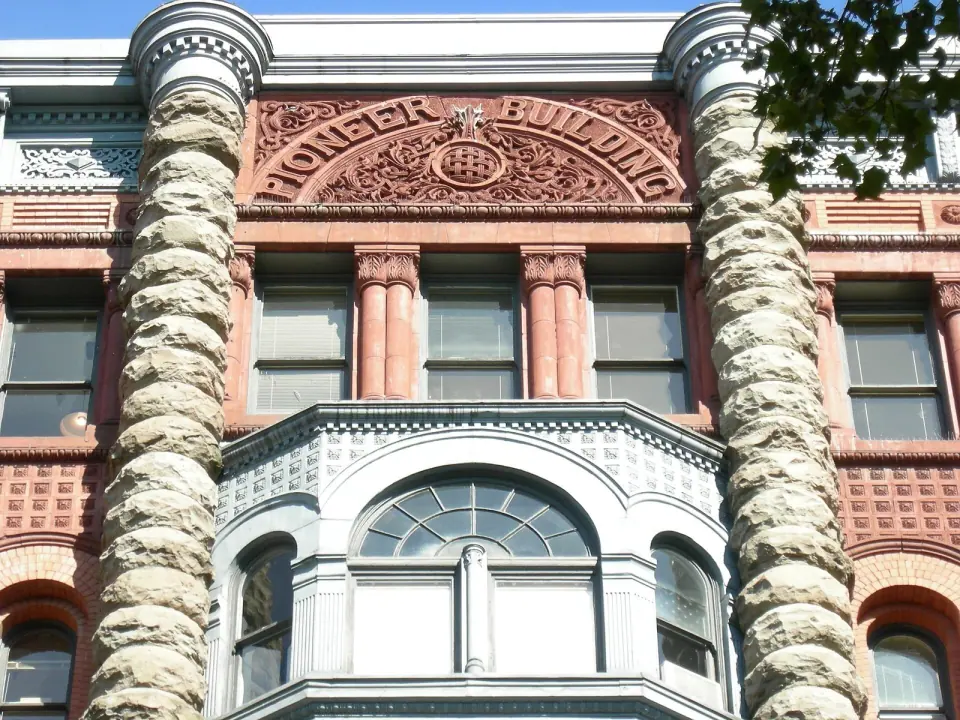
Then head downtown, where galleries in Pioneer Square and Belltown show work by emerging and established Native artists, letting art lovers extend the route.
Discovery Park, Fort Lawton and Daybreak Star
Spend an afternoon in Discovery Park and you'll find a calm landscape of tall grass, sea breezes and bluffs looking over Puget Sound. Few visitors realize it was once Fort Lawton, the scene of a protest that drew national attention.
The fort opened in 1900 on land the Duwamish and other Coast Salish peoples had lived on for centuries. It stayed fairly quiet until World War II, when it housed more than 20,000 soldiers at its peak, and by 1969 the federal government had labeled the land surplus.
Why Activists Wanted the Land
In about twenty years, Seattle's Native population had grown fivefold, and many newcomers struggled. Projects like the Grand Coulee Dam, opened in 1942, damaged Indigenous homelands and salmon runs, while tighter fishing rules squeezed traditional life. Starting in the 1950s, federal policies dissolved tribes and pushed members toward cities, where steady work and support were scarce.
Volunteers with the American Indian Women's Service League offered services and pushed for reform, but they could not secure city money for a center. Activist Bernie Whitebear and others asked Mayor Wes Uhlman and the City Council to turn Fort Lawton into a center for education and community, and at first the proposal was turned down.
The March 1970 Occupation
Inspired by the occupation of Alcatraz in California, Whitebear and fellow organizers formed the United Indians of All Tribes Federation in early 1970. On March 8 of that year, more than one hundred Indigenous protesters, joined by many non-Native allies, entered the fort through several gates.
Whitebear read a proclamation that turned the old "Doctrine of Discovery" on its head. That doctrine had let European explorers claim lands they "discovered," so the activists claimed the fort for all American Indians by the same logic. They also pointed to treaties promising that surplus military land would return to its original owners.
Today Daybreak Star stands in the park on a road named Bernie Whitebear Way. Make the center your stop here, since it is the most direct way to connect the quiet landscape with the activism that shaped it.
The Central District's Black and Jewish Beginnings
Washington Territory offered real openings to Americans seeking freedom and a fresh start. Black residents found leadership roles, and by 1886 the First African Methodist Episcopal Church had formed. It still holds services on Capitol Hill.
Jewish pioneers put down roots early too, and in 1875 Seattle elected Bailey Gatzert, who was Jewish, as mayor. Later arrivals from Europe and the Ottoman Empire worked in dry goods, retail and fishing.
Both communities trace their Seattle roots to the Central District, and one building captures that overlap. Look for the Langston Hughes Performing Arts Institute, housed in a Byzantine-style former synagogue designed by B. Marcus Priteca, a Scottish-Jewish architect.
Chinatown-International District and the Panama Hotel
The Klondike Gold Rush of the late 1890s put Seattle on the map, and by the early 1900s immigrants from China, Japan, the Philippines and elsewhere were settling in what became the Chinatown-International District.
Stroll the neighborhood today and you'll see many early brick buildings that survive in a district that remains multiethnic and is listed on the National Register of Historic Places. Then step into the Panama Hotel, which has operated for more than 110 years. Its teahouse offers a view into the basement where Japanese residents stored belongings while they were incarcerated during World War II.
Japantown, Bainbridge Island and Wartime Incarceration
Japanese immigrants began arriving in the 1880s and worked in lumber, farming, mining, fishing and railroads. Around S Main Street and Sixth Avenue they built a Nihonmachi, or Japantown, filled with hotels, groceries, laundries and other small shops. By the 1930s most Seattle Nikkei were US-born, yet immigrants could not become citizens, and a state law barred them from buying land.
Executive Order 9066
Fear swept the country after Pearl Harbor. On February 19, 1942, President Franklin D. Roosevelt signed Executive Order 9066, letting the military remove people of Japanese descent from parts of the West Coast. Citizenship made no difference, there was no evidence of spying, and about 5,000 Japanese Americans were already serving in the Army.
On March 30, 1942, the 227 Japanese Americans on Bainbridge Island were ordered from their homes, among the first steps in the incarceration of roughly 120,000 people. Decades later, the federal government called it a national mistake.
The Story of Bainbridge Gardens
Zenhichi Harui arrived in 1908 and built a store, a gas station and a 20-acre Japanese-style garden known for bonsai pines over goldfish ponds. To avoid incarceration, his family leased out the business and moved to Eastern Washington. The family still runs Bainbridge Gardens, and third-generation owner Donna Harui has said many visitors are stunned to learn this history.
Ballard's Nordic Heritage
By 1910, Nordic immigrants were the largest ethnic group in Washington, and the mountains and tall forests reminded many of home. In Ballard, early residents worked in mills, on fishing boats and in boatyards.
That heritage is still easy to find. Catch an event at the Sons of Norway's Leif Erikson Lodge, then browse local bakeries and specialty shops for Kringle, pickled herring and Scandinavian sweets. Pair the stop with the Marvin Oliver sculpture near the Locks for two layers of history in one outing.
Newer Chapters
People of Hispanic or Latino origin now form the state's largest immigrant group. Many families came from Mexico, El Salvador, Guatemala and Nicaragua in the decades after World War II, adding another layer to the city's story.