Getting In and Getting Up
Finding the Fourth Avenue Entrance
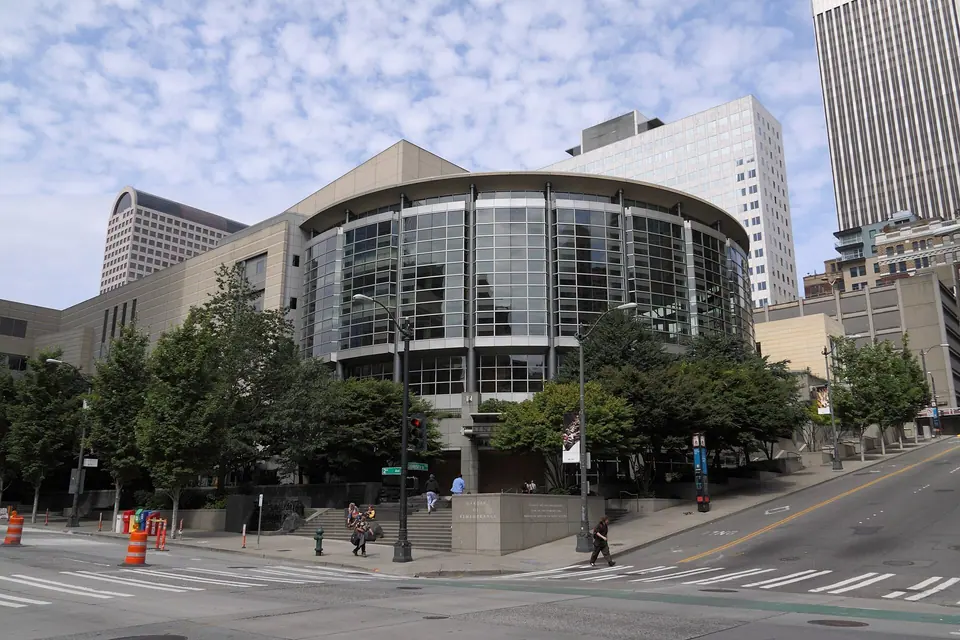
Columbia Center fills most of the downtown block framed by Fourth and Fifth Avenues and Cherry and Columbia Streets. Head to the Fourth Avenue lobby, where the observatory's own direct elevator begins. Its updated wide wooden staircase and places to sit make it an easy spot to meet your group before you ride up.
Coming in from the side streets? Expect a climb on foot, since the ground on the Fifth Avenue side sits noticeably higher than on Fourth. The stretch of Cherry Street beside the tower has a 17.1% grade, one of the steepest in the downtown core.
Tickets and Timing
Buy your tickets through the official Sky View Observatory website, which also posts the current hours, and check them before you go since they can change. Keep one firm rule in mind: ticket sales and the last elevator both stop one hour before closing time, so arriving late can mean missing the ride entirely.
Planning a trip with a crowd? Groups of 10 or more can now book online directly, a handy option for family reunions, school trips and office outings.
Private Events
The observatory also hosts corporate gatherings, association meetings, family celebrations and social events. Reach the events team through the official site, and arrange a site visit before you book.
The Story Behind the Tower
A Loophole That Added Height
Developer Martin Selig announced the project in 1980, Washington architect Chester L. Lindsey designed it, and construction ran from 1982 to early 1985. City rules at the time aimed to cap towers at roughly 50 stories, but the law granted bonus height for retail space with street access. Thanks to the sloped site, three separate floors opened onto the street, and the developer earned a bonus for each, which reportedly was never what the law intended.
It could have climbed even higher. Lindsey's original plan called for about 1,006 feet, but the Federal Aviation Administration would not permit that height so close to Sea-Tac Airport. The debate over the tower's size helped lead to tighter downtown building limits in 1989.
What to Notice From the Street
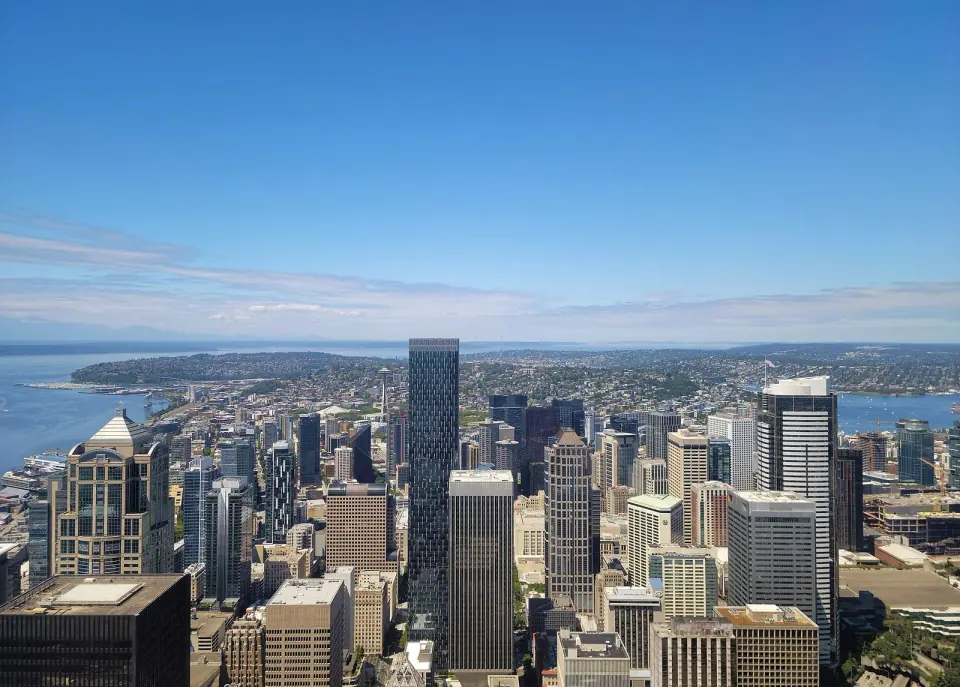
Before you head inside, step back and take in the shape. Three concave faces with two setbacks make the tower read like three slim towers standing shoulder to shoulder. At the base, Rosa Purino Carnelian granite gives the entrance its warm reddish tone.
A Few Name Changes
You may still hear locals use an older name. The tower opened as Columbia Seafirst Center, after its main tenant and lender, and later became the Bank of America Tower, picking up the nickname "BOAT." In November 2005 it returned to Columbia Center.
Other Floors Worth Knowing
The observatory is not the only upper-level space. A sky lobby on the 40th floor connects by express elevator to the Fifth Avenue lobby, while the top two floors, above the observatory, long belonged to the private Columbia Tower Club, which opened with the building in 1985 and closed in April 2026. The observatory is the public way to reach these heights.
Below ground, a concourse links the tower's second floor to the Seattle Municipal Tower and 800 Fifth Avenue, a useful route on a wet day.
Climbing It the Hard Way
Each year the tower hosts the LLS Firefighter Stairclimb, billed as the largest on-air firefighter competition in the world. About 2,000 firefighters climb 69 floors and 1,311 steps in full turnout gear while breathing from their air tanks, all in support of the Washington and Alaska chapter of the Leukemia and Lymphoma Society.
Want to try it yourself? The sister event, the Big Climb, is open to the public, with around 6,000 people racing up the tower, and anyone 8 or older can sign up. Together the climbers raise more than $3 million for the same cause, so check with the event organizer for current dates and registration.