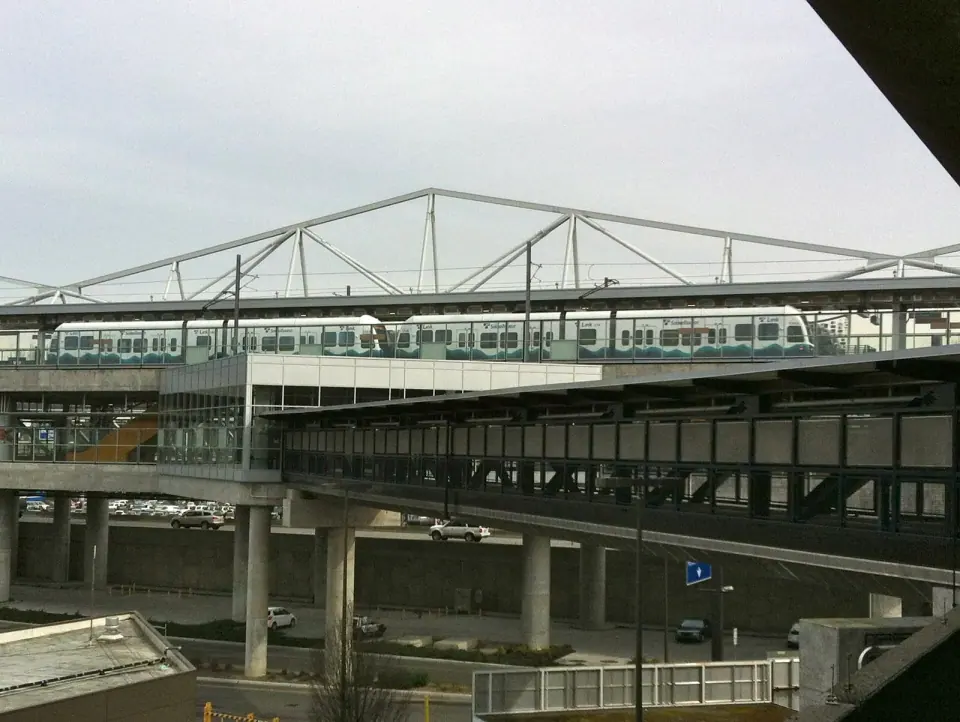
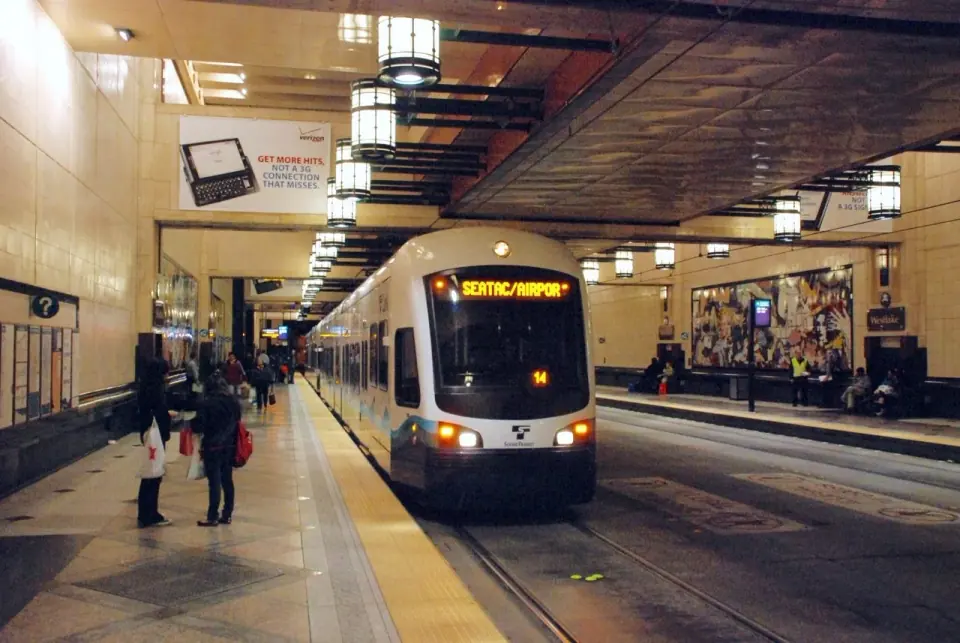
You will be riding a busy, proven service. In 2025 the line carried more than 35.5 million passengers, averaging close to 103,000 riders on a typical weekday.
Paying Your Fare
For anyone watching their budget, the key point is that light rail lets you skip pricier ways into town and pay a standard transit fare instead. Fares no longer depend on how far you travel, since distance-based pricing ended in August 2024. Check Sound Transit for the current fare before you ride, because amounts can change.
ORCA card, paper ticket or app
Pick from three ways to pay. The regional ORCA card works across the system and suits anyone planning more than one ride, while paper tickets come from the vending machines found at every station. Prefer your phone? A mobile app is the third option and works well if you like to buy on the go.
Proof of payment and fare checks
You will not find turnstiles to push through. Sound Transit relies on a proof of payment system instead, with fare ambassadors and transit police carrying out random inspections on board. Buy or tap before you ride, and keep your card, ticket or app screen ready until you step off.
When Trains Run
Trains run about 20 hours a day on weekdays and Saturdays, with a shorter day of roughly 18 hours on Sundays and holidays. At peak times, a train can arrive as often as every six minutes. Landing very early or very late? Confirm first and last train times with Sound Transit before you count on the train.
Room for Bags, Bikes and Wheelchairs
Most trains run with three or four cars, and each car holds 194 people, with 74 seats plus space for wheelchairs and bicycles. That capacity helps when you are rolling luggage aboard, though peak hours can still feel crowded.
Going Beyond Downtown
Stay on board past downtown and the same train continues north to the University District, Shoreline, Mountlake Terrace and Lynnwood. Ride south instead to reach Kent, Des Moines and Federal Way. Every station offers bus connections and bike parking, and several have park and ride lots, which helps if you are meeting someone who drives.
Getting Outside Once You Arrive
After a long flight, a walk among trees can be the best reset. Head to Discovery Park in Magnolia, where 534 acres of forest and bluffs open onto Puget Sound views. For a gentler stroll, follow the mostly level loop at the Washington Park Arboretum past the wetlands of Union Bay.
Bird watchers often make for the interior trail at Seward Park on Lake Washington. In northwest Seattle, Carkeek Park traces Pipers Creek through dense woods toward views of the Sound.