Before the plaza: a hotel and a flagship drugstore
The ground beneath your feet has a longer story than the plaza itself. Its triangular shape goes back to 1905, when the new Westlake Boulevard sliced through the block at 4th Avenue and Pine Street.
A flatiron hotel, 1906 to 1935
Samuel Rosenberg bought the freshly cut parcel in April 1905 and hired architect A. W. Spaulding to design a four-story flatiron building, with shops at street level and a hotel above. That November he sold the property to Charles D. Stimson, who built it, and the building was finished by February 1907.
The hotel changed names several times over the years. It opened as the Plaza Hotel, became the Hotel Wingfield and grew to eight stories by 1913, then was operating as the Georgian Annex Hotel by 1923. The idea of a park here surfaced early: neighboring landowners suggested it in January 1907, and the city's Planning Commission put forward a park plan again in 1929.
Bartell Drugs moves in, 1936 to 1984
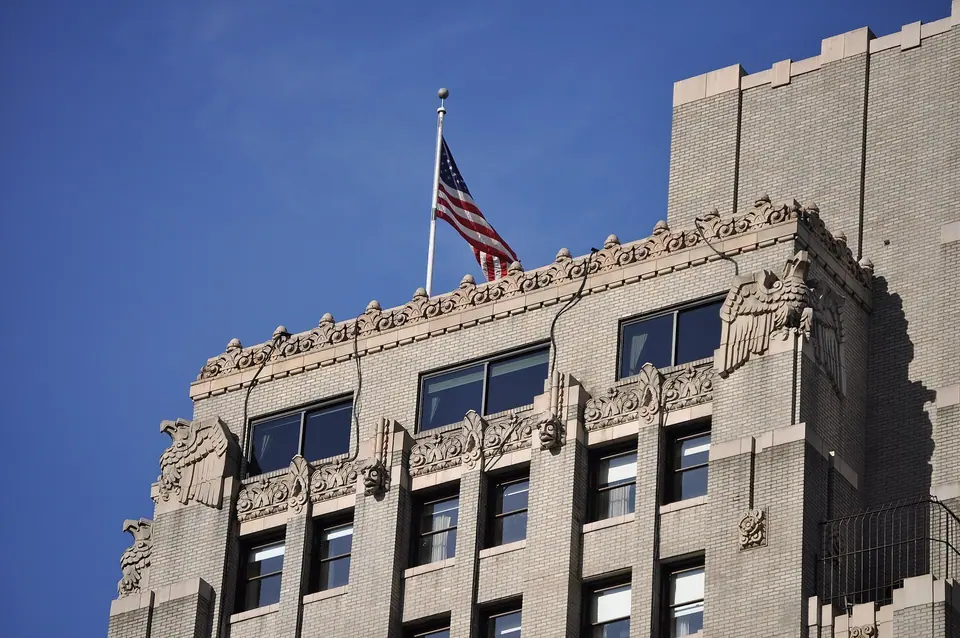
Stimson's company tore down the hotel in August 1935. In its place came a two-story concrete building clad in Tennessee marble, designed by R. C. Reamer and open by January 1936. Bartell Drugs leased it as its flagship store, paying more than twice the rent the hotel had brought in.
The drugstore held on until April 1984, even after investors bought the building in 1959. A J.K. Gill store followed, and in January 1987 the building came down to clear the way for the park.
Twenty years of planning and the Nightmare on Pine Street
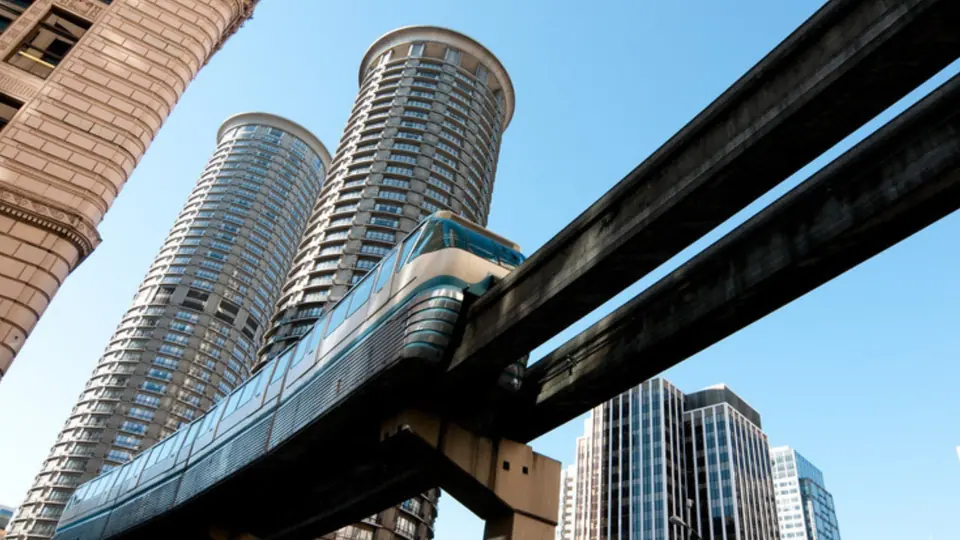
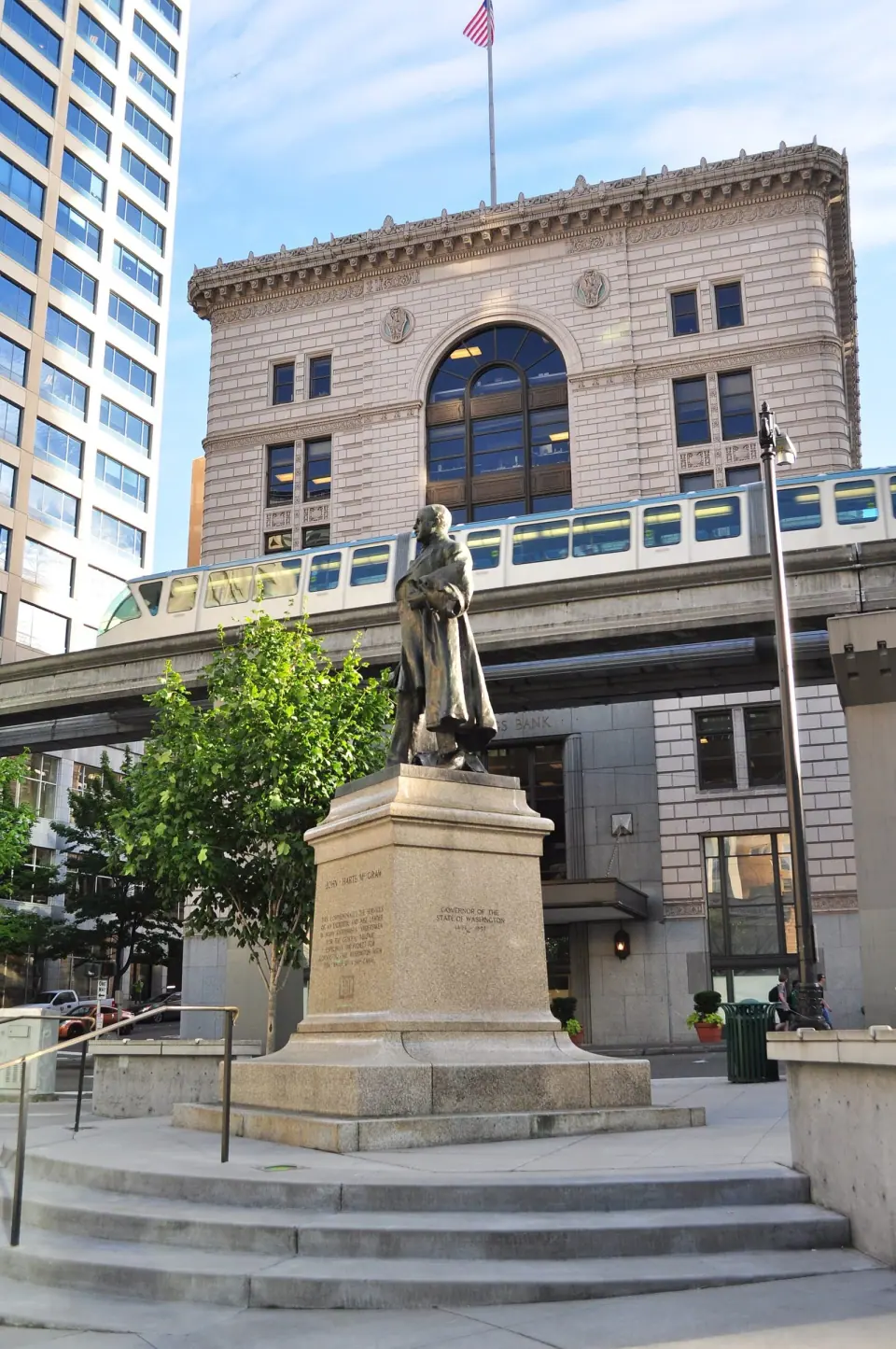
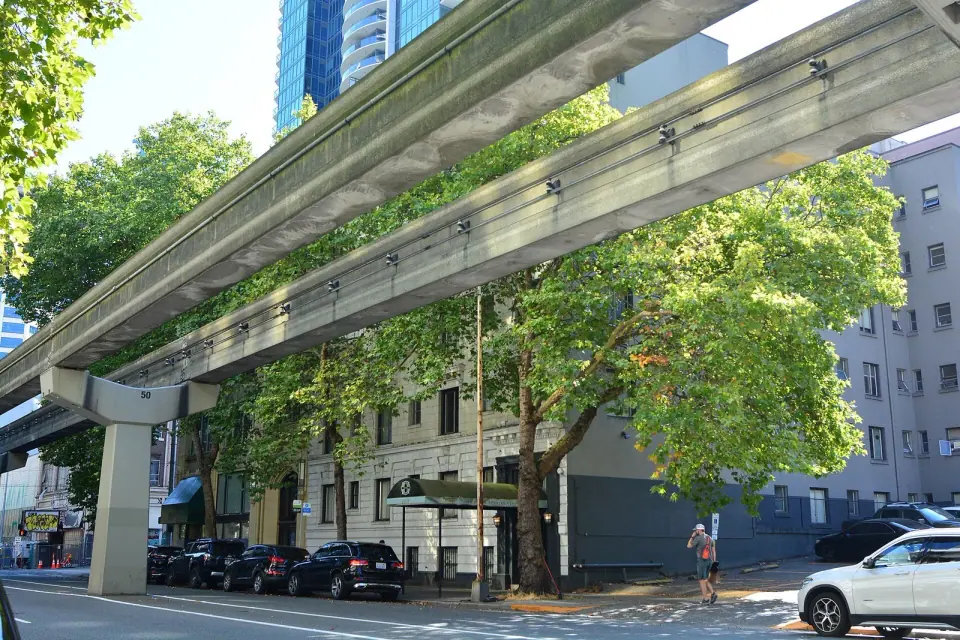
Seattle first floated a pedestrian mall between Pike and Stewart streets in 1959. In the early 1960s, the block of Westlake Avenue between Pike and Pine closed to cars so the monorail could have its original southern terminus there, ready for its 1962 debut alongside the Century 21 Exposition.
The Central Association (now the Downtown Seattle Association) proposed today's park and mall in 1968, and it took two decades and several lawsuits to see them built. Soon after the 1988 opening, a design flaw cracked granite pavers along Pine Street and into the 4th Avenue intersection, earning the mess the nickname "Nightmare on Pine Street." The city sued the designer and settled out of court for $515,000, which covered the $472,000 repair, with work starting in June 1989.
The fight over Pine Street
Once the Downtown Seattle Transit Tunnel opened in 1990, the City Council kept Pine Street closed to through traffic, effectively folding it into the park. Voters reopened the street in 1995 as part of the deal that brought Nordstrom into the former Frederick and Nelson flagship, a landmark just half a block away. The mid-1990s also brought a run of guerrilla art pranks to the plaza by Jason Sprinkle and the Fabricators of the Attachment, ending in a bomb scare that shut several downtown blocks.
Playground, games and a new manager
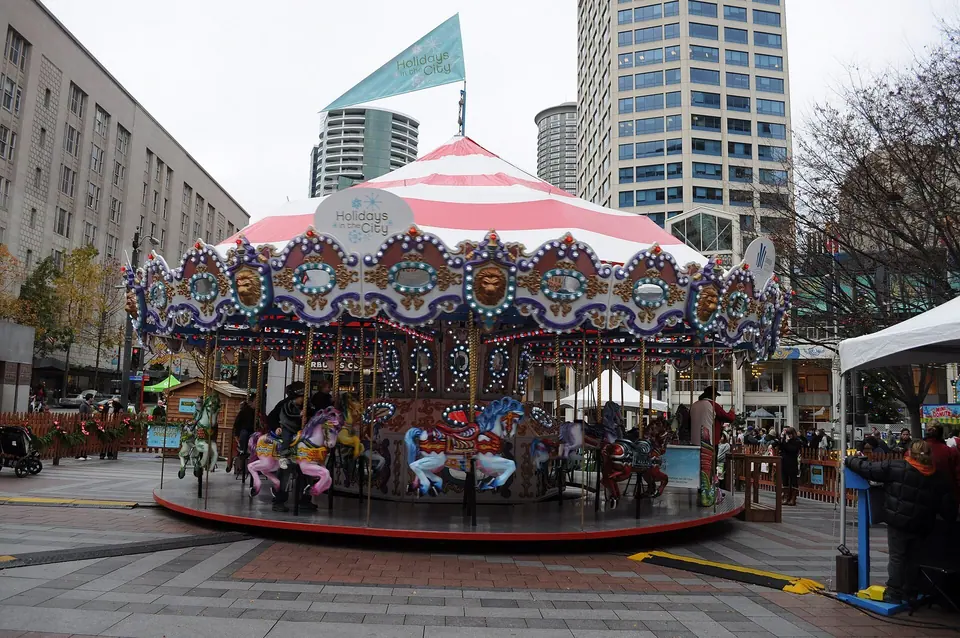
A children's playground joined Westlake Park in 2013. In 2015, the Downtown Seattle Association took over management of both Westlake Park and Occidental Park in Pioneer Square, aiming to bring more activity to each space. At Westlake, that push added furniture, chess boards, ping pong tables and other amenities for anyone pausing in the plaza.
The World Cup makeover
Westlake Park closed in October 2025 for a $4 million renovation timed for the 2026 FIFA World Cup. The project removed the fountain and the arch, added traffic bollards and other protection against vehicle crashes, and brought in new landscaping.
Not everyone welcomed the changes. Speeches had traditionally been given at the arch, and some saw its removal as a way to limit protests, while other structures, including artwork, were also taken out amid complaints that the public comment process was incomplete. The park reopened on May 28, 2026, and spent several weeks hosting World Cup watch parties.
Events and gatherings
With its central location, Westlake Park is a natural stage for downtown crowds, from speeches and rallies to appearances on the Westlake Center balcony. The 2026 World Cup watch parties showed how well the renovated plaza can handle large public viewing events.
Programming shifts through the year, so check with Seattle Parks and Recreation or the Downtown Seattle Association for current events, hours and any closures before you plan your day around a specific gathering.
Getting here by monorail and light rail
Few spots in Seattle are easier to reach without a car. Westlake Center connects to the Seattle Center Monorail and to Link light rail at Westlake station, so you can step out of the station and into the plaza within a minute or two. When you are ready to move on, hop the monorail for the quick ride to Seattle Center.