As you gaze up, keep in mind that the architects reportedly gave special thought to earthquakes. The 1906 San Francisco earthquake was still fresh in memory, and that disaster shaped how the tower was planned.
Brick, Terracotta and Renaissance Revival Style
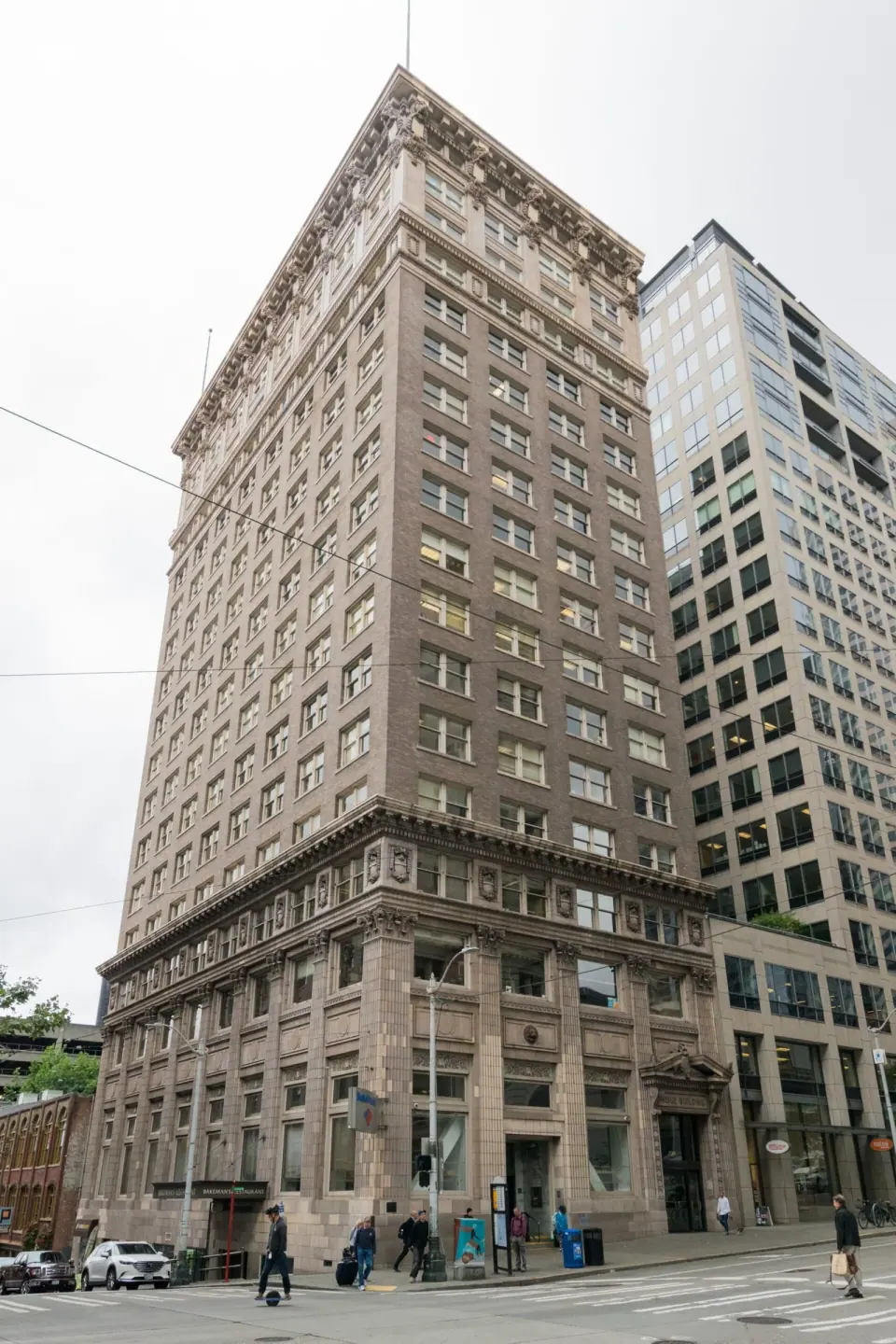
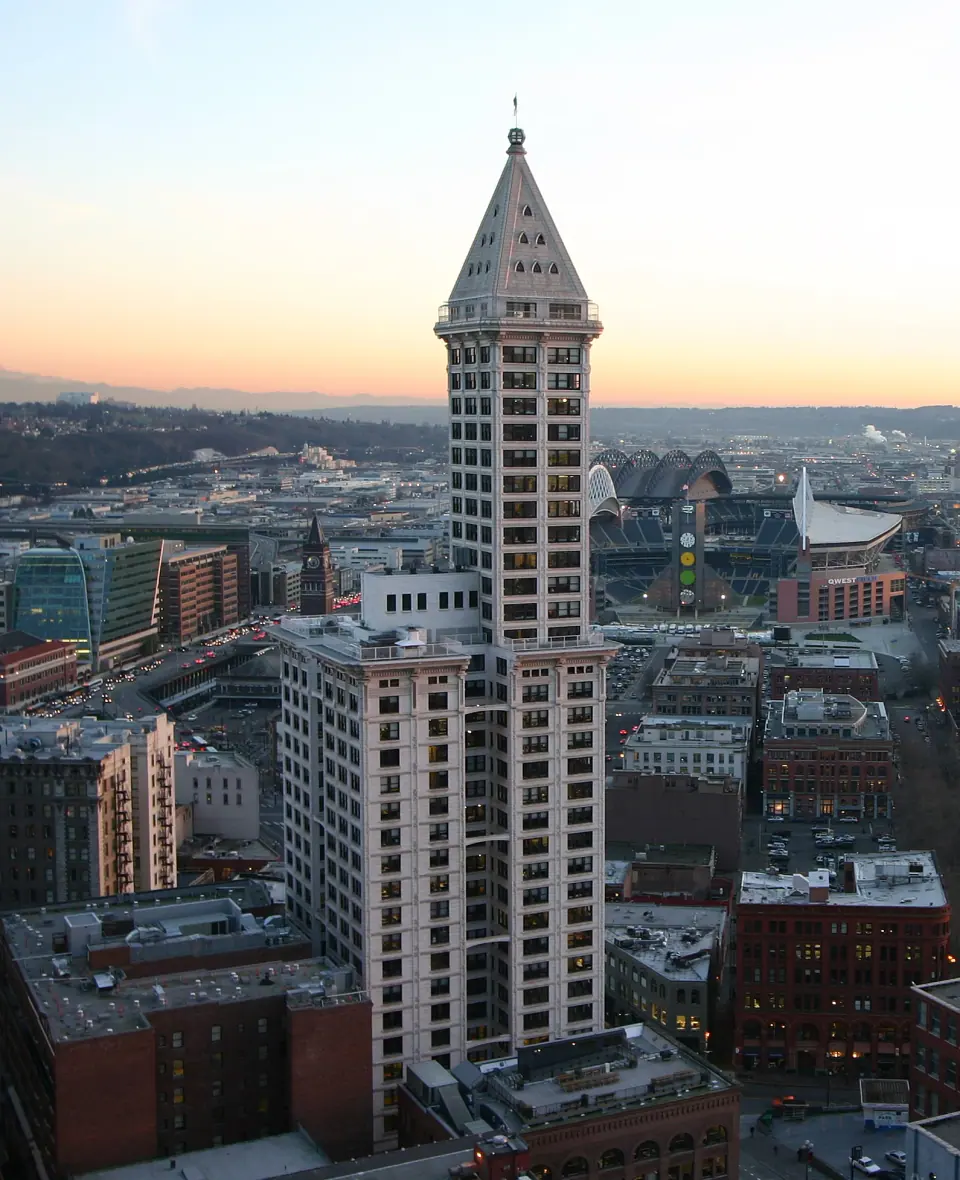
Take a slow look at the facade, mostly tan brick and terracotta hung on a steel frame. The design follows the Second Renaissance Revival style with touches borrowed from Beaux Arts architecture, so the tower reads as a dignified early skyscraper rather than a plain commercial block.
Hoge hired the firm of Charles Bebb and Louis Mendel for the commission. The exterior is the main draw for architecture fans, and you can take it all in from the public sidewalks that surround the building.
The Story Beneath the Corner
Long before the tower went up, this corner had a story of its own. Carson Boren's cabin once stood here, reputedly the first house built by a white settler in what became Seattle.
Later, a row of one- and two-story shops faced Cherry Street on the site, and the Great Seattle Fire destroyed every one of them.
Soon after the fire, John Hoge, a wealthy businessman from Zanesville, Ohio, and the uncle of James D. Hoge, bought the property and put up a three-story brick building. Its tenants included:
- His own Washington Territorial Investment Company
- The Seattle Post-Intelligencer
- Washington National Bank
- Several smaller businesses
A Century of Banking at Street Level
Banking runs through the building's story from the very start. James D. Hoge founded Union Trust and Savings Bank in 1903, and it became the ground-floor tenant of his new tower. The bank was later renamed Seattle Trust Bank and eventually merged with Seafirst Bank.
In 1991, one of the last branches of Dexter Horton Bank moved in from its own longtime home, and a Bank of America branch later occupied the ground floor. As of January 2020, that commercial space stood empty.
The Hoge family held onto the building for decades, selling it in 1986, two years after it gained landmark status.
Seattle Landmark No. 155
The Seattle Landmarks Preservation Board oversees the city's designated landmarks, and the Hoge Building joined that list in 1984. It carries City Landmark No. 155, with its designation made under Ordinance 111889. Browse more protected buildings in our guide to all Seattle landmarks.
Historic Neighbors Within a Block
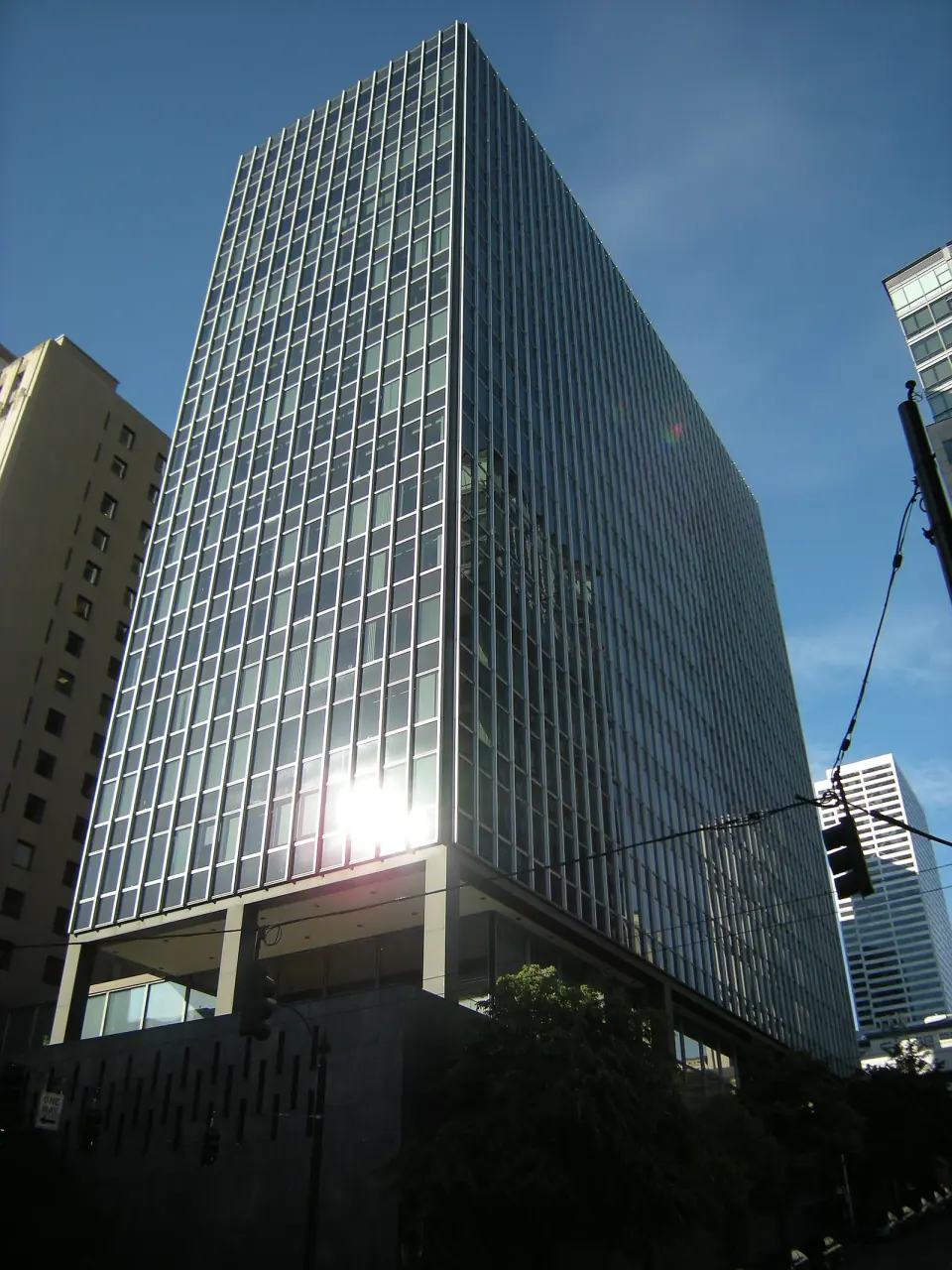
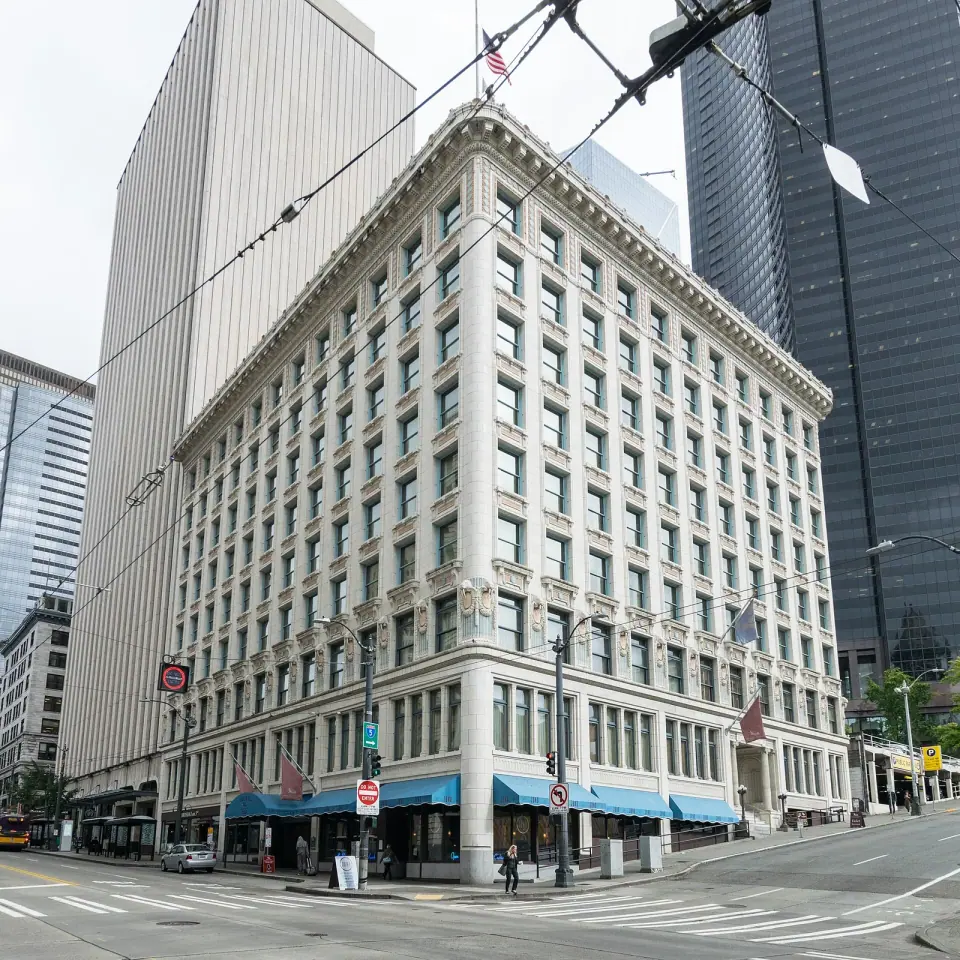
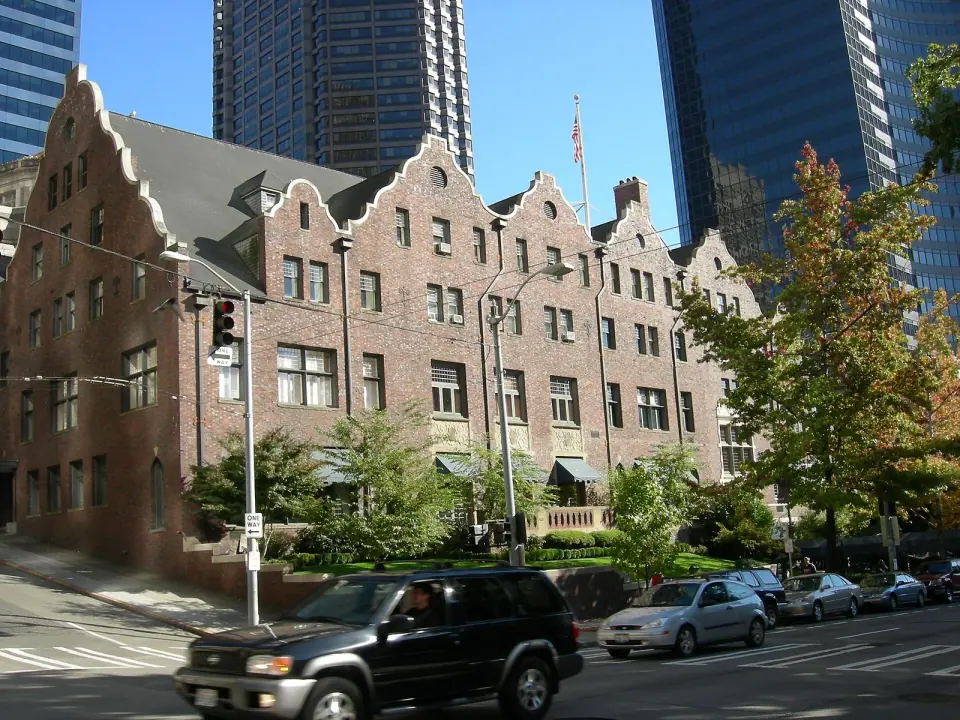
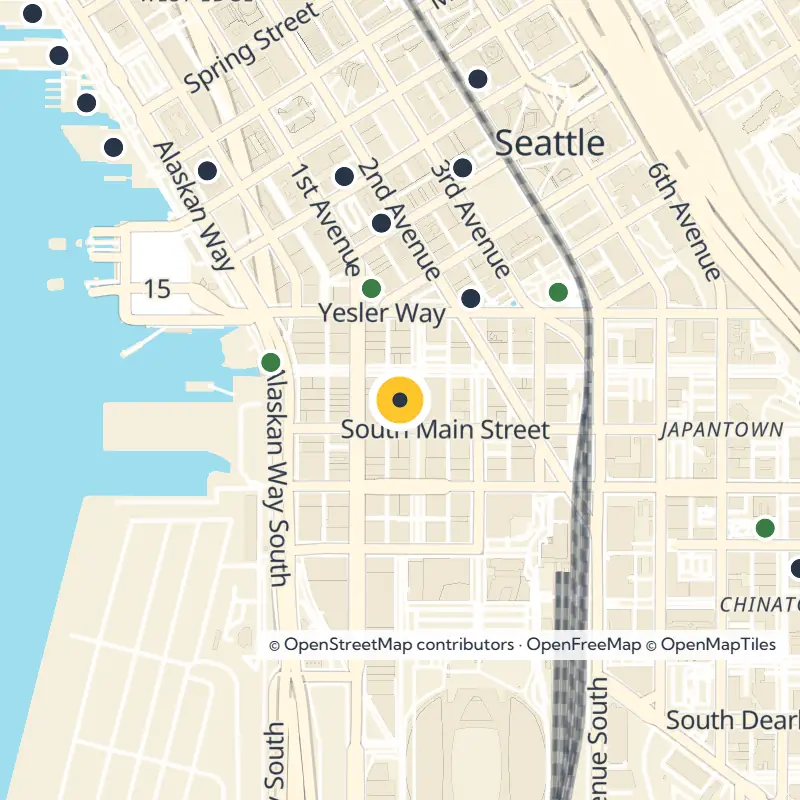
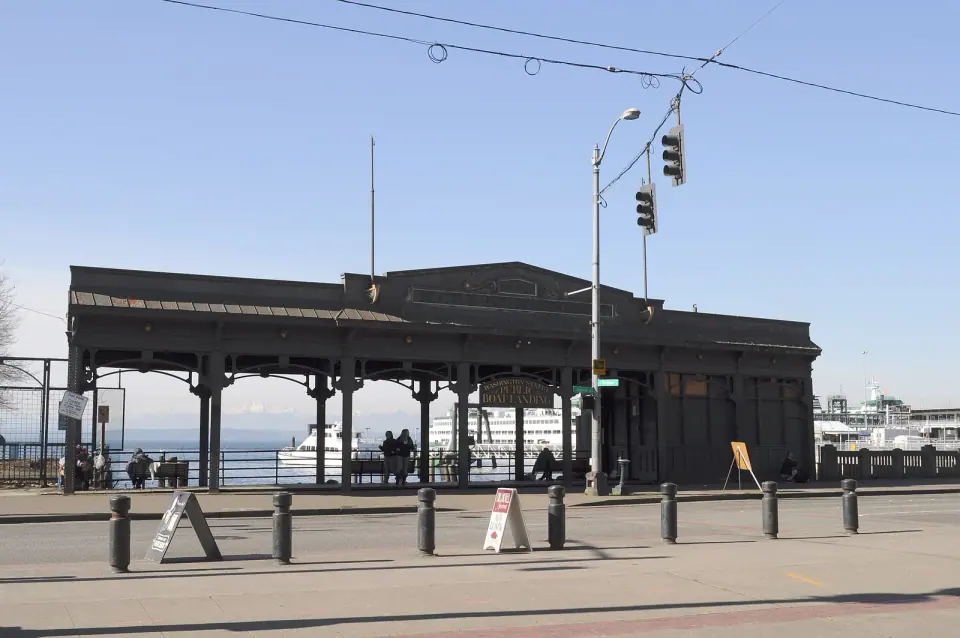
Stroll out from the corner and you are in one of downtown's densest clusters of landmarks, close to the edge of Pioneer Square. Every stop below lies less than 0.1 mile away in a straight line, so a short walk carries you through several eras of Seattle building:
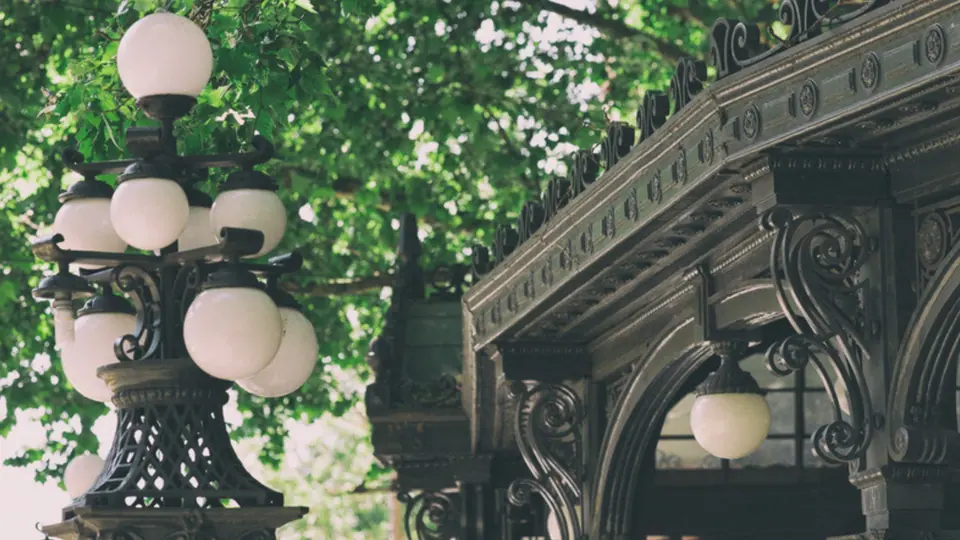
- Pioneer Square, the park at the heart of the city's oldest district
- Dexter Horton Building, tied by name to the bank that later kept a branch in the Hoge
- Seattle National Bank (United Way Building)
- Puget Sound Bank (Bank of California)
- Norton Building
- Lyon Building
- Chamber of Commerce Building
- Street Clock: Hong Kong/Shanghai Banking Co., a landmark timepiece right on the street
When you are ready to eat, shop and explore around these blocks, head to our Central Business District neighborhood guide.