An early plan from the firm Baker, Vogel & Roush pictured a twelve-story Gothic Revival building at Sixth and University. Sign-ups lagged, however, and Clarke left the board in May 1928. A new board of 26 prominent businessmen stepped in, set the original design aside and hired Sherwood D. Ford.
Sherwood Ford's bold design
Ford's first drawing showed a twelve-story Mission Revival building with a rooftop pool. Club leaders then sent him across the country with Kenneth McCleod, manager of San Francisco's Olympic Club, to see how athletic clubs in other big cities were built.
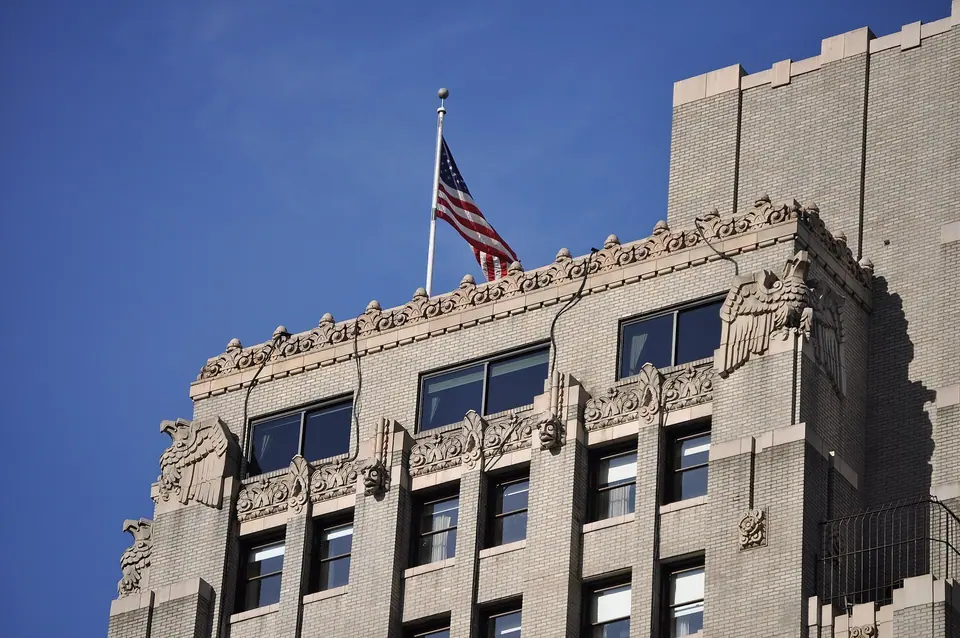
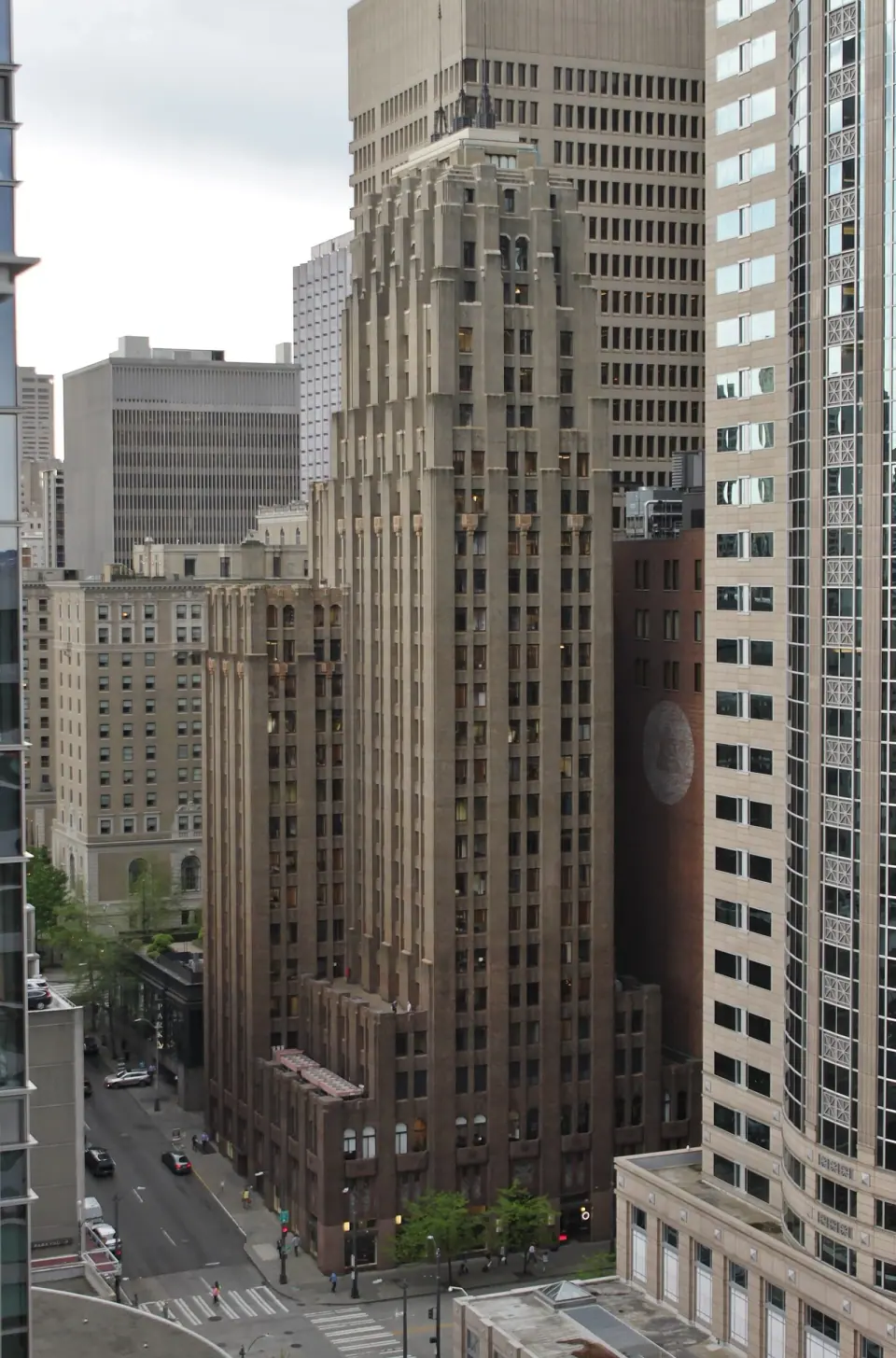
He came home with something far more ambitious: a 21-story Art Deco skyscraper with a central tower, framed in steel and reinforced concrete and dressed in brick and decorative terracotta. Crews broke ground on December 16, 1929, a few weeks after the stock market crash, which Seattle did not feel right away.
The Wallace Bridge Company fabricated and assembled the frame from more than 1,200 tons of steel, and each beam spanning the main ballroom weighed 18 tons. The work came at a human cost, since construction superintendent Albert J. Triggs was killed in April 1930 when part of the concrete structure collapsed. The finished building cost $2.5 million.
Opening Night at the "Skyscraper of Sports"
Exactly a year after groundbreaking, on December 16, 1930, the club threw open its doors with a week of dining, dancing and building tours. Local press dubbed it the "skyscraper of sports," and some writers even claimed it topped the Northern Life Tower, though that building had more floors.
Picture the original layout, with a few details that still charm:
- No 13th floor: the elevator buttons skipped straight from 12 to 14.
- Separate quarters for women: women members had their own entrance, their own elevator and dedicated floors, including a dining room lit by crystal chandeliers.
- A two-story pool: the swimming pool filled all of the seventh and eighth floors.
- Rooms in the tower: the twelve-story tower held 125 rooms for members, crowned by a conference room at the very top.
Olympians in the Pool
The Washington Athletic Club soon became a gathering place for the state's athletes and a training ground for professional and Olympic hopefuls. The club hired swimming coach Ray Daughters away from the Crystal Pool Natatorium, and his young protege Helene Madison followed him, which is why the club's pool carries her name today.
When the 1936 Berlin Olympics arrived, 23 athletes represented the WAC and the University of Washington. Among them was swimmer Jack Medica, who set a world record in the 400 meter (about 1,300 foot) freestyle.
Weathering the Great Depression
The timing could hardly have been worse. Soon after opening, about 500 members quit, and the club reportedly lost $10,000 a month in its first three months. Club president W.D. Comer was swept up in the financial fallout and jailed in 1931, leaving the club facing receivership.
Businessmen Victor Elfendahl, Gilbert Skinner and William Edris bought the building and refinanced it, then made the club a warmer place to spend time, with cheaper restaurant items, more family events, extra card rooms and a quiet room. A premium membership drive aiming for 1,200 new members succeeded quickly and kept the doors open.
Eddie Bauer, Century 21 and a Growing WAC
In May 1940, Eddie Bauer moved his growing sporting goods business into the building's ground-floor retail space, later relocating to Third and Virginia.
After World War II, members voted to buy the building outright for $1.35 million from the holding company that had rented it to them since 1936. Since the payments matched the old rent of $12,500 a month, the club owned it within about five and a half years.
By the 1950s, more than 5,000 members were filling the clubhouse, and several milestones followed:
- 1954 to 1955: a three-story annex designed by Harrison Overturf rose on the lot to the south, opening for the club's Silver Jubilee in 1955.
- January 1955: club members first dreamed up the idea for the Century 21 Exposition inside the building.
- 1970: eight more stories went onto the annex. The Sixth Avenue entrance moved into the newer building, and the original three-story entrance arch was removed.
Inside the WAC Today
The Washington Athletic Club is still a private club, and by 2000 it counted more than 21,000 members, which the club says makes it the largest health club membership in the country.
Members and their guests can enjoy:
- A 25-yard pool, a full-size basketball court and a running track
- Handball and racquetball courts, plus pilates and yoga studios
- A full-service day spa and a wellness center offering nutrition, physical therapy and naturopathic services
- Three restaurants, a private ballroom, social areas and many meeting rooms
The top ten floors hold the Inn at the WAC, a 109-room boutique hotel, and the club also hosts lectures, social events and a steady stream of business meetings. Since most of the building is open only to members and their guests, check directly with the club for membership terms and hotel details.
A Protected Seattle Landmark
The Seattle Landmarks Preservation Board named the Washington Athletic Club a City of Seattle landmark in 2009, making it landmark number 313, protected under ordinance 122948. In 2018, the Sixth Avenue building joined the National Register of Historic Places as well.
Pause on the Sixth Avenue sidewalk and look up to admire Ford's central tower and the brick and terracotta skin that made the building stand out on the 1930 skyline.