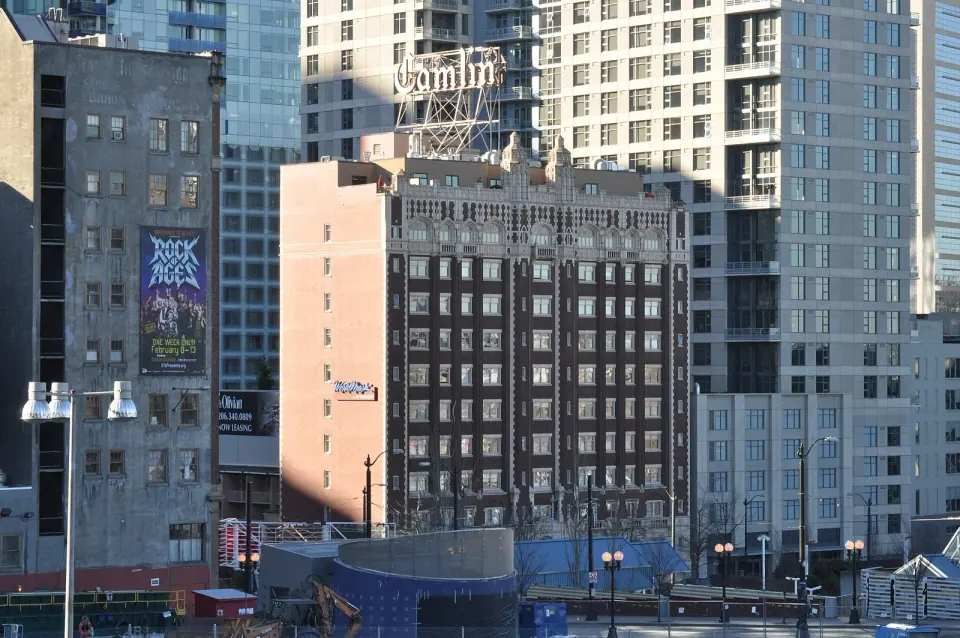
The Camlin Apartment Hotel officially opened on October 31, 1926, with 94 apartments. Each one offered what were then modern comforts, including shower baths, dinettes and kitchenettes, while the entire 11th floor was given over to a single penthouse.
The local press welcomed it warmly. The Seattle Times admired the striking exterior, the views of Puget Sound and the Olympic Mountains from the upper rear windows, and the money poured into its construction, calling the hotel a match for anything on the Pacific Coast.
The Scandal Behind the Construction
The Camlin's backers were Adolph Linden and Edmund W. Campbell, president and vice president and secretary, respectively, of the Puget Sound Savings & Loan. In May 1926, a bank employee noticed questionable withdrawals and reported them to the board, and among them was $866,000 used to finish the hotel.
Instead of closing the institution, W.L. Nicely, the state's supervisor of savings and loans, met with the officers and directors on October 2. With his backing, they agreed that Linden and Campbell would turn over their personal holdings, the Camlin included, under a trust agreement meant to repay shareholders as far as possible. The same officers stayed on, and work on the hotel was allowed to continue.
Finalizing and recording the trust took a year. Valued at $1.75 million, it covered everything the two men owned, though the arrangement was kept from the public at the time. Before the Puget Sound Savings and Loan failed in 1931, the Camlin was sold to the Vance Lumber Company, which already owned the Vance Hotel in Seattle.
The Cloud Room Era
The penthouse never did as well as its builders hoped, so in 1942 Vance proposed turning the top floor into a cocktail lounge. The space became the Cloud Room, and at the same time the original rooms were made smaller so fifty new rooms could be added.
The Cloud Room grew into one of the Camlin's defining chapters. Picture the smoky mood of a speakeasy paired with the comfort of a fine restaurant, with live entertainment as the main draw. Several acts got their start up there.
Famous faces at the Cloud Room
Over the years, the rooftop lounge welcomed a remarkable roster of performers and guests, including:
- Frank Sinatra
- Dean Martin
- Elvis Presley
- Dizzy Gillespie
- Miles Davis
- Bonnie Raitt
- John Lee Hooker
- Elvis Costello
The Cloud Room on screen
Film fans can spot the Cloud Room in The Fabulous Baker Boys. A popular rumor claims Michelle Pfeiffer's famous piano-top performance of "Makin' Whoopee" was shot there, but that scene was actually filmed in the Crystal Ballroom of the Biltmore Hotel in Los Angeles.
The Camlin played a part in local broadcasting, too. During the 1950s, radio station KVI AM 570 kept its studios and offices in the building.
Pool Days, a Sinking Yacht and the World's Fair
In 1960, with the 1962 World's Fair on the horizon, the Camlin added 52 cabana units, a pool and a sun deck in a project that cost $2 million in all.
The years after 1960 brought some colorful tenants and stunts. The Italian Consulate set up at the Camlin, and as a promotion, a 40-foot yacht was floated in the hotel's pool. When its bilge pump failed and the boat began taking on water, the mishap became even better publicity: a boat sinking in downtown Seattle.
In the late 1960s, the Camlin also housed performers for the Sky River Rock Festival, held in Sultan, Washington.
From Many Owners to Worldmark Seattle: The Camlin
The late 1980s and 1990s brought a parade of different owners. In 1990, one of them planned to sell off the hotel's antique furniture, a plan stopped only when the Washington State Attorney General's office placed a lien on it over tax evasion.
Trendwest Resorts bought the Camlin in 2003, intending it as the showpiece of its properties worldwide. The remodel took more than a year and cost $21 million, closing the Cloud Room and turning its space into penthouse units before the building reopened as Worldmark Seattle: The Camlin. For current details on staying there, check the property's official website.
Why the Camlin Earned Landmark Status
The Camlin joined the National Register of Historic Places in 1999. That same year, the work of the Seattle Landmarks Preservation Board led to its designation as City of Seattle landmark number 220, under ordinance 119470.
The honor recognizes a building that follows a long arc of Seattle life, from 1920s ambition and scandal to a midcentury nightlife scene, World's Fair boosterism and a modern restoration. Browse more protected buildings in our guide to all landmarks in Seattle.
Landmarks Just Around the Corner
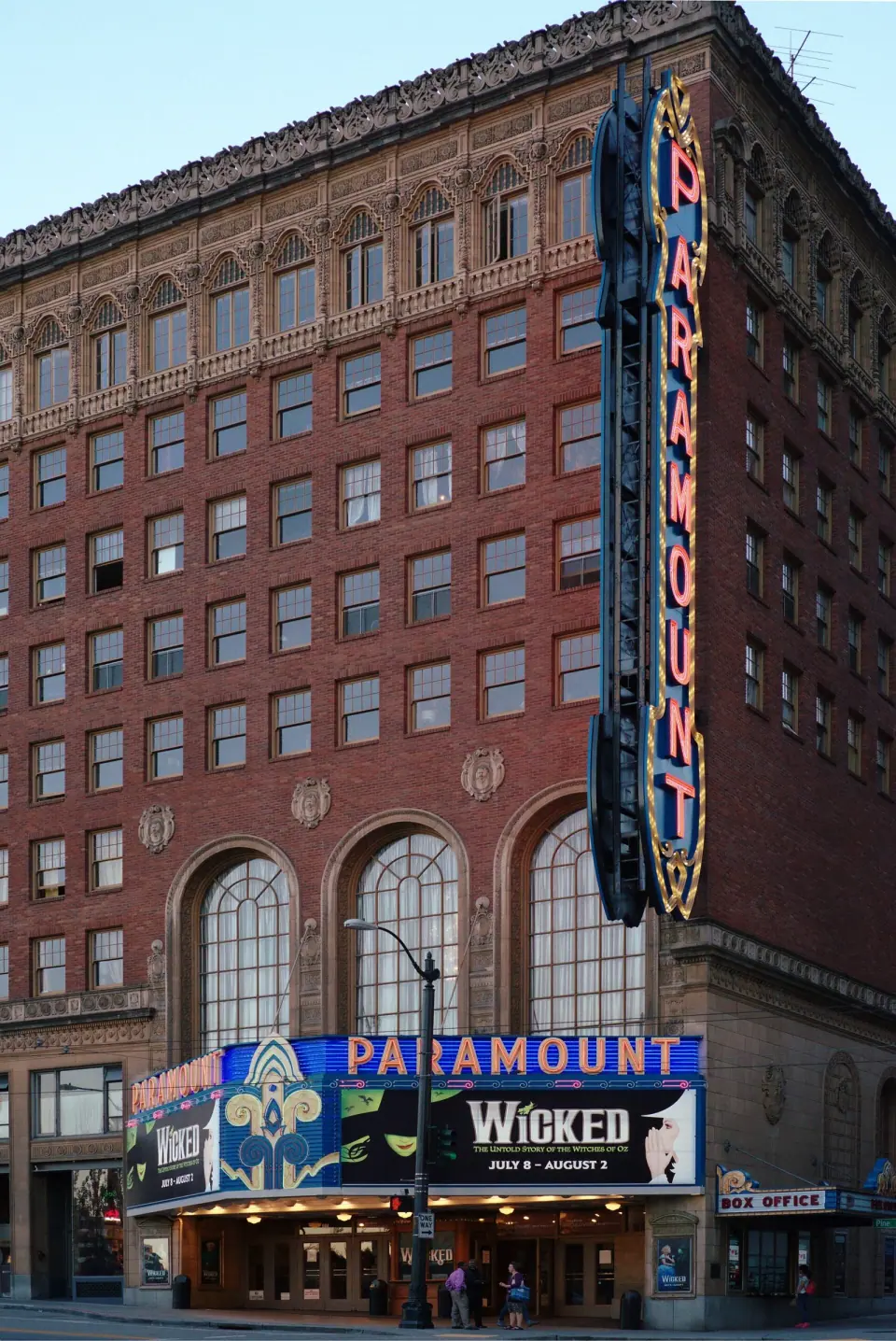
The Camlin sits in a part of the Central Business District packed with historic buildings. The Paramount Theatre and Building is the closest, less than a tenth of a mile away in a straight line.
Walk about 0.2 miles and you can reach several more designated landmarks and a small green space:
- Lloyd Building
- Shafer Building/6th and Pine Building
- Eagles Temple Building
- Decatur Building
- Frederick and Nelson Bldg
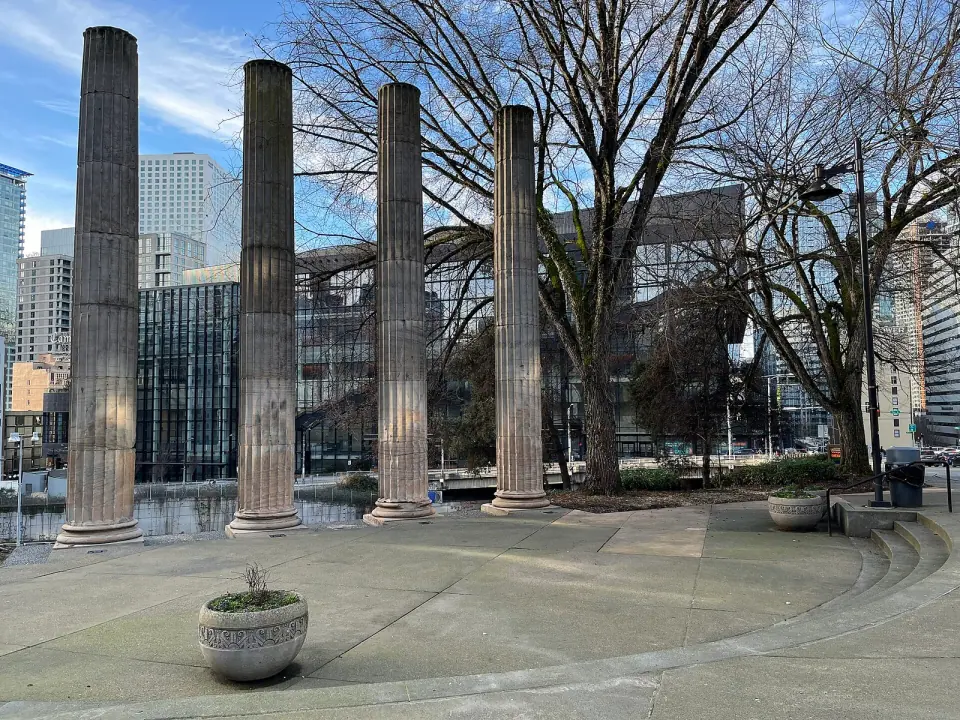
- Plymouth Pillars Park, which includes a dog park
Pair the Camlin with the Paramount, then loop past these buildings for an easy self-guided walk through downtown's architectural history.