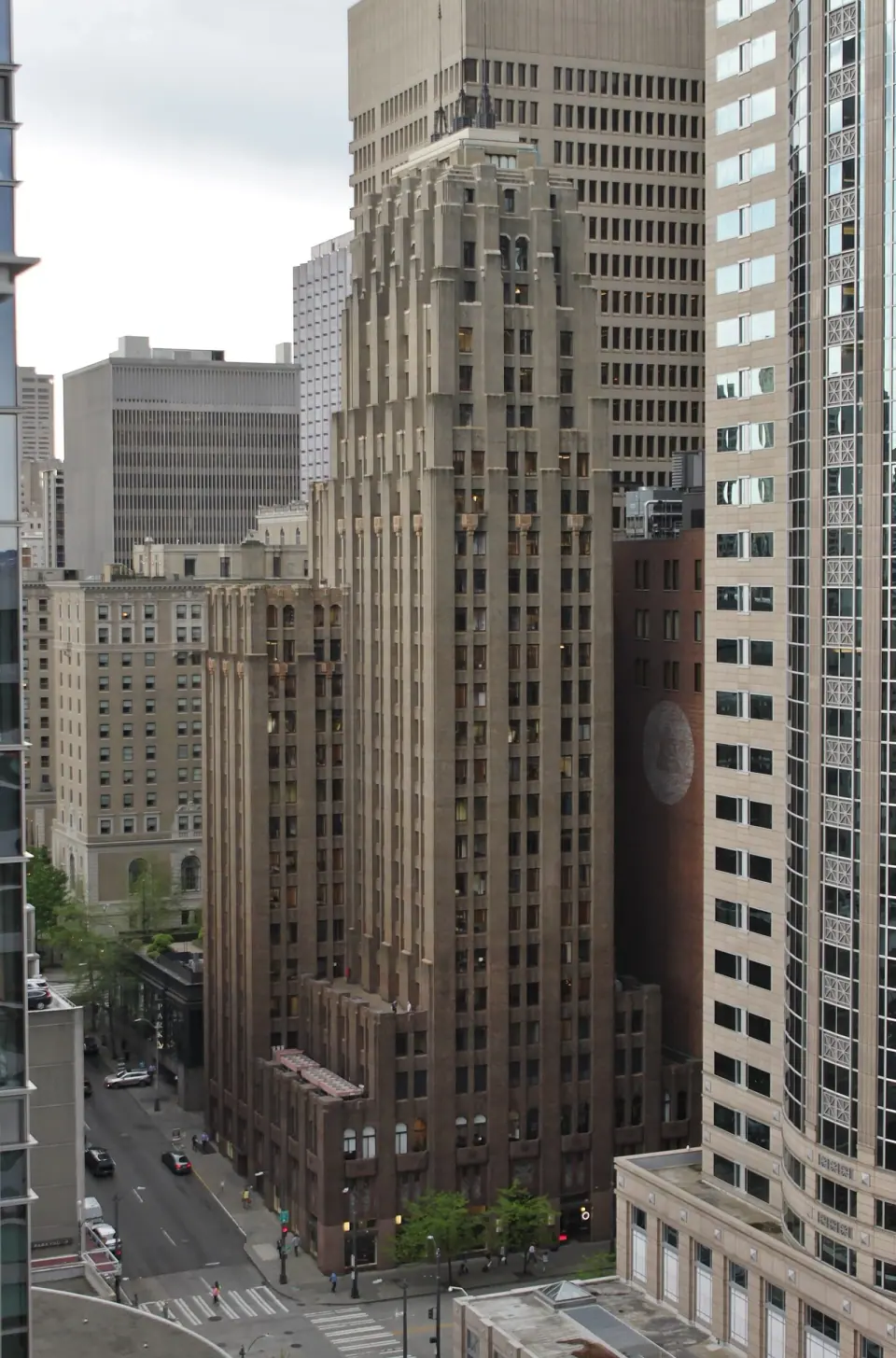
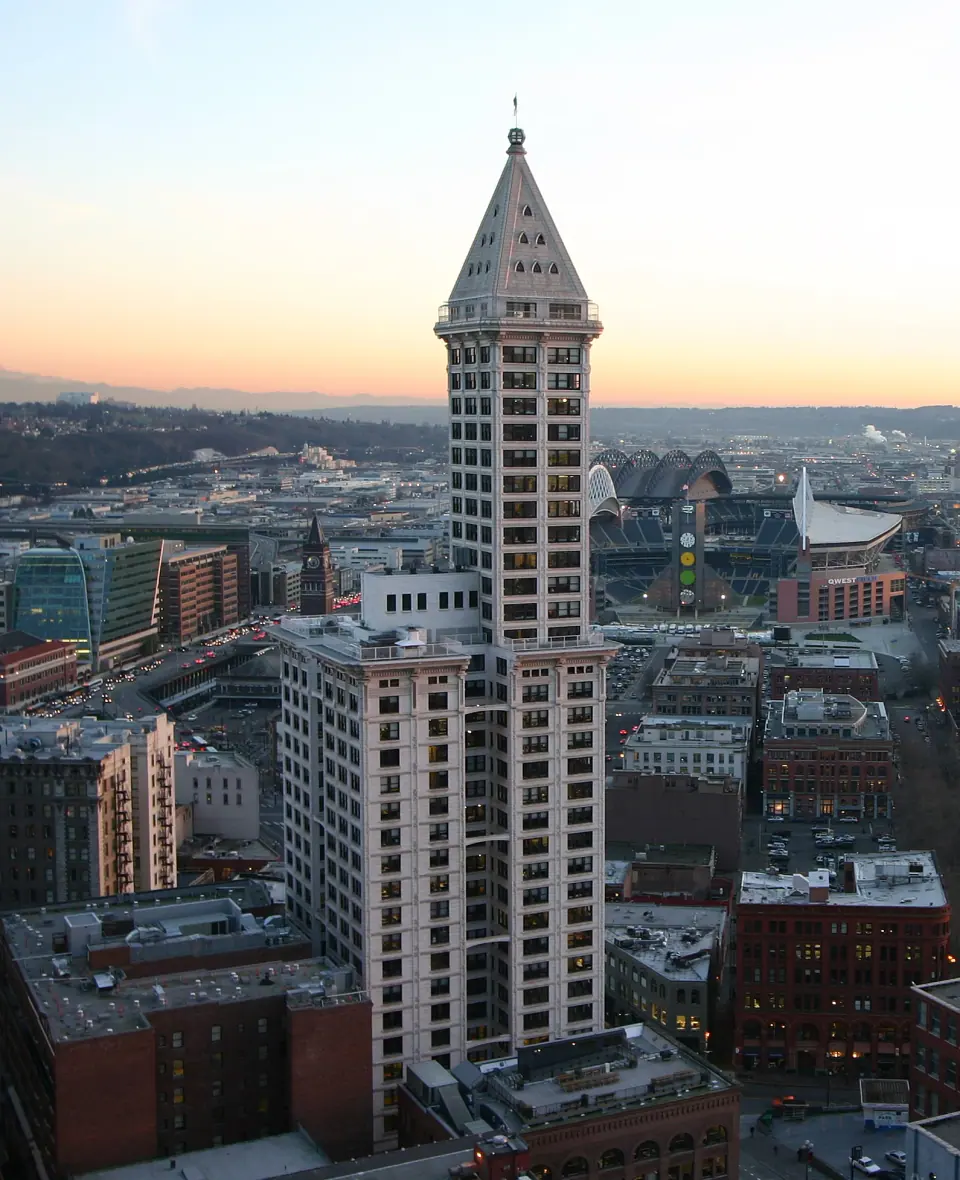
The tower was first planned at 24 stories, then raised to 27. When it opened in 1928, its top stood one floor higher above sea level than the Smith Tower, which had long been billed as the tallest building west of the Mississippi. Today the building carries the name Seattle Tower.
The Seattle Tower building and its 33 shades of brick
The most striking feature of Seattle Tower is its skin. The exterior is clad in 33 shades of brick, arranged so the color grows lighter as the building rises. The effect is said to draw on local rock formations, giving the tower a quiet link to the Northwest landscape.
The shape matters too. Seattle Tower steps inward as it climbs, a ziggurat form that gives it a strong vertical pull. Because the color gradient runs the full height, the design reads best when you can see the building from top to bottom.
A break from classical styles
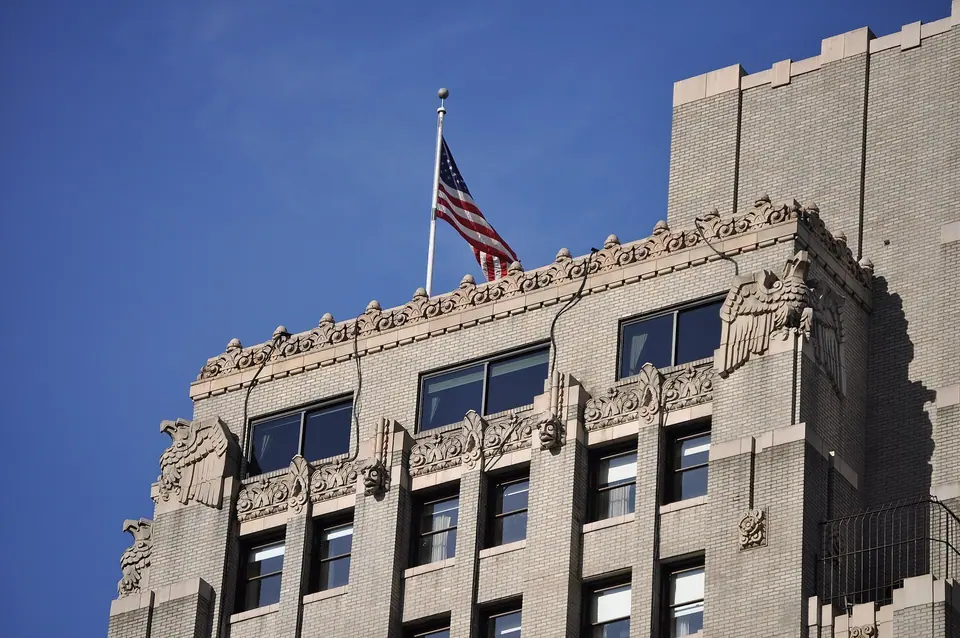
Seattle buildings from the early 1900s mostly borrowed from classical models. By the 1920s, many architects wanted designs that expressed speed, efficiency and the power of modern technology. Seattle Tower was the first building in the city to show this new direction, now known as Art Deco or Art Moderne.
The design traces back to Eliel Saarinen's well-known entry in the Chicago Tribune tower competition, which placed second. Seattle Tower follows that idea with a smooth, simple, almost machine-like surface instead of columns and classical ornament.
The lights that imitated the aurora
When Seattle Tower was new, more than 200 floodlights once lit the whole building. They blended into one another in a shifting display meant to echo the aurora borealis. The northern lights theme played on the insurance company's name, and it reflected a belief of the era that science could recreate the wonders of nature.
Those lights are gone now. Newer and taller towers also surround the building, so it no longer dominates the skyline. Even so, Seattle Tower is still regarded as one of the most elegant Art Deco buildings in the Northwest.
Landmark status
Seattle Tower was added to the National Register of Historic Places in 1975. It is also an officially designated City of Seattle landmark, number 130, protected under ordinance 125836 through the Seattle Landmarks Preservation Board. You can explore more of the city's protected buildings in our guide to all Seattle landmarks.
A short historic walk around 3rd Avenue
Seattle Tower sits among a dense cluster of other designated landmarks, which makes it an easy starting point for a downtown architecture walk. Within roughly a tenth of a mile, you can find:
- Continental Hotel, under 0.1 mile away
- Brooklyn Building, under 0.1 mile away
- Mann Building, about 0.1 mile away
- 1411 4th Ave Building, about 0.1 mile away
- YWCA Building, about 0.1 mile away
- Great Northern Building, about 0.1 mile away
- Federal Reserve Bank of San Francisco building, about 0.1 mile away
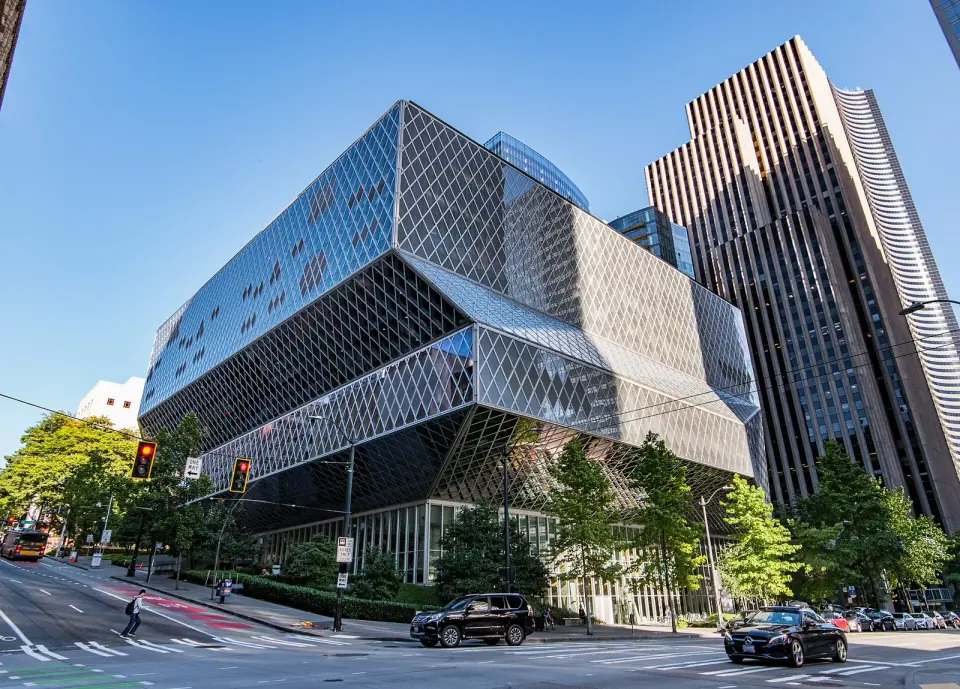
The Central Library is also about 0.1 mile from Seattle Tower, a good stop for a contrast between 1920s Art Deco and a much more recent design. For more on the surrounding streets, see our Central Business District neighborhood guide.